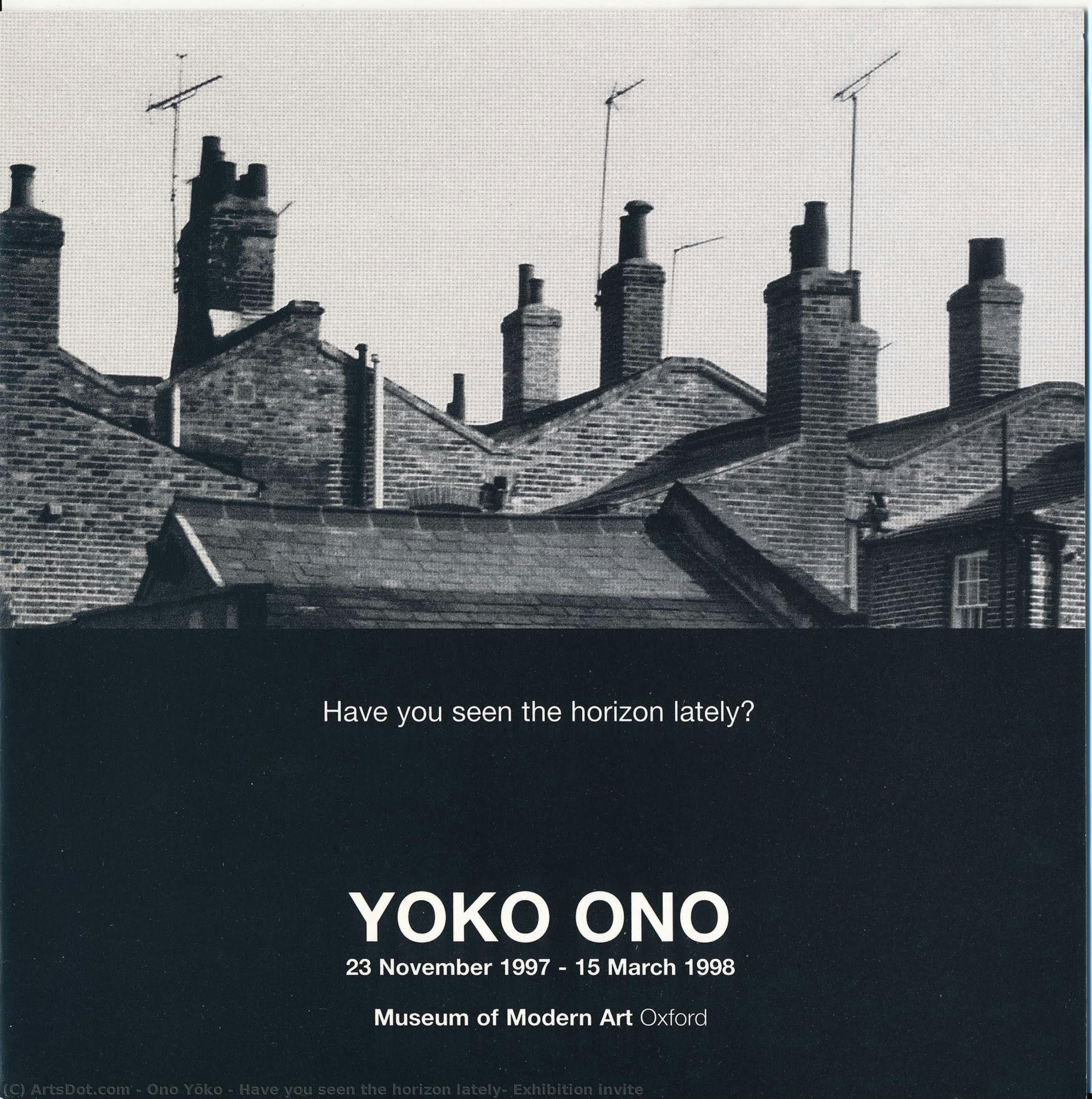
A Visionary Gaze: The Poetics of Perspective
In the quiet, monochrome depths of Yoko Ono’s "Have you seen the horizon lately?", we encounter more than just an exhibition invitation; we enter a profound meditation on awareness and the unseen. This striking black and white work presents a cityscape defined by the rhythmic, vertical ascent of chimneys rising from a sea of rooftops. The composition is masterfully balanced, utilizing a wide panoramic view that pits the heavy, horizontal expanse of urban architecture against the singular, upward thrust of industrial silhouettes. It is a piece that demands a pause, inviting the viewer to shift their gaze from the immediate foreground to the distant, hazy edges of the frame, much like the artist herself invites us to reconsider our place within the world.
The technical execution of this work relies on the subtle power of tonal gradation. Eschewing the distraction of vibrant color, the monochrome palette focuses the eye on the interplay of light and shadow across the textured brickwork and slate. The lighting is soft and diffused, casting a gentle veil over the urban landscape that softens harsh edges and imbues the scene with an atmosphere of quiet observation. This restraint in technique mirrors the contemplative nature of Ono’s broader oeuvre, where the absence of noise allows for a deeper resonance of thought and feeling.
Symbolism and the Industrial Soul
Beyond its aesthetic beauty, the artwork serves as a potent vessel for symbolism. The chimneys, standing like sentinels over the rooftops, act as dual emblems of human achievement and environmental fragility. They represent the relentless march of industrial progress, yet their stark presence against the sky also whispers of potential degradation and the encroaching shadows of modernity. This tension is perfectly encapsulated in the evocative title, "Have you seen the horizon lately?"—a question that functions as both a gentle nudge and a subtle rebellion against the complacency of modern life. It challenges us to look past the familiar structures of our daily existence and seek out the boundaries where the earth meets the infinite.
For the collector or the interior designer, this piece offers a sophisticated layer of intellectual depth. It is not merely a decorative element but a conversation starter that brings a sense of historical weight and philosophical inquiry into a space. The geometric precision of the chimneys and the rhythmic repetition of the rooftops provide a structured, calming visual anchor, while the underlying themes of environmental consciousness and social awareness ensure the work remains profoundly relevant in our contemporary era.
A Legacy of Quiet Rebellion
To understand this work is to understand the spirit of Yoko Ono herself. Emerging from the avant-garde movements of the late 1960s and early 1970s, Ono’s art has always been a bridge between the conceptual and the deeply personal. This piece, captured during her landmark 1997 exhibition at Modern Art Oxford, reflects her lifelong commitment to peace, activism, and the exploration of consciousness. It embodies the essence of the Fluxus movement—challenging established aesthetic conventions by finding profound meaning in the mundane and the overlooked.
Owning a high-quality reproduction of this work means bringing a piece of art history into one's home—a piece that celebrates the beauty of the industrial landscape while urging a more mindful engagement with our surroundings. It is an invitation to look closer, to breathe deeper, and to never stop searching for the horizon.