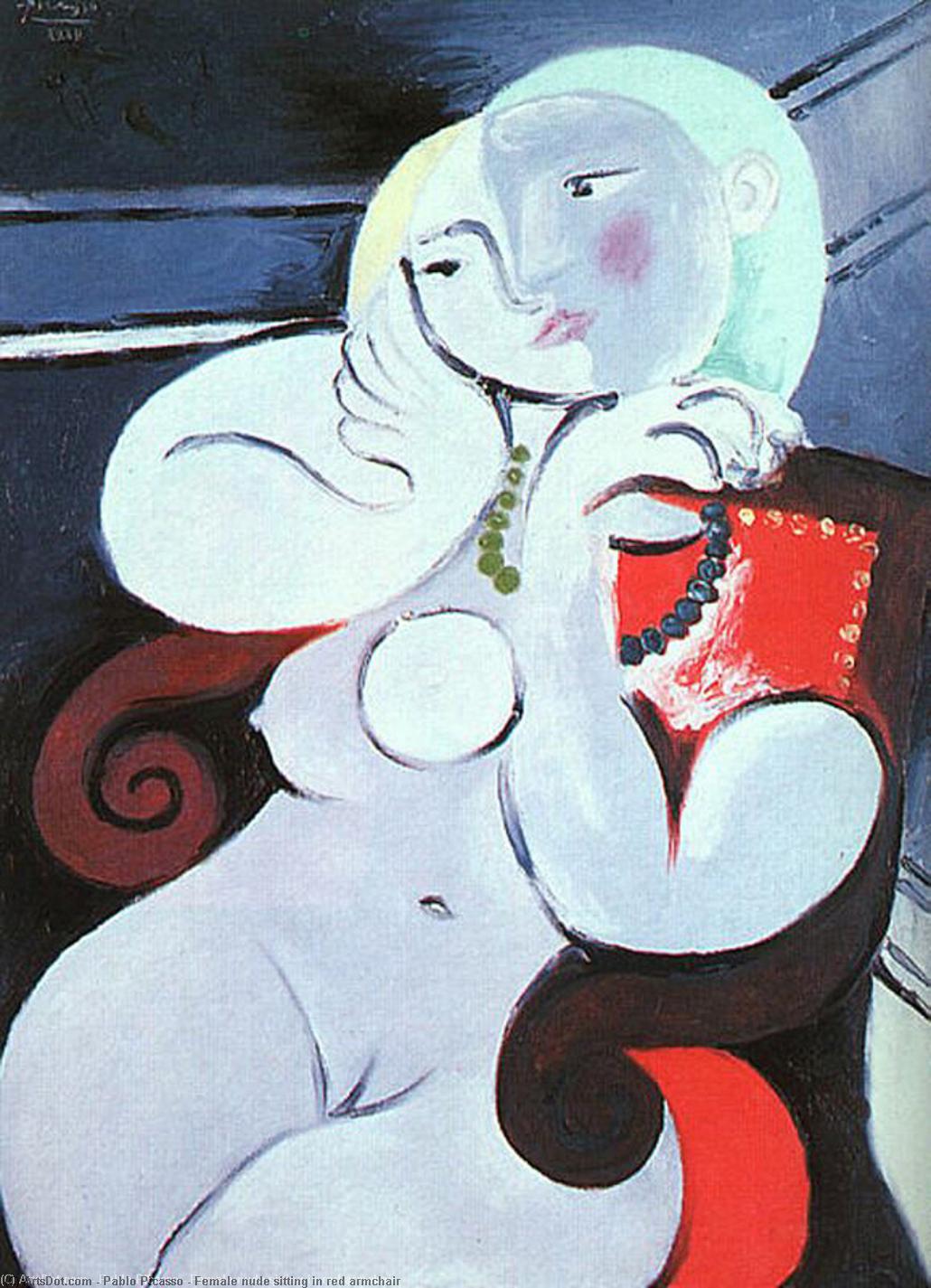
Discover Pablo Picasso’s "Female Nude." This 1932 Primitivist masterpiece showcases a striking nude in red, embodying simplicity & emotion. Explore this iconic artwork today!
Entdecken Sie Pablo Picassos revolutionäre Kunst! Kubismus, Blaue & Rosafarbene Periode, Guernica & sein bleibender Einfluss auf die moderne Kunst des 20. Jahrhunderts.
A Moment of Intimate Reflection: Picasso’s ‘Female Nude Sitting in Red Armchair’
Pablo Picasso's 1932 painting, *Female Nude Sitting in Red Armchair*, is a captivating work that transcends mere portraiture. Measuring 130 x 97 cm, this oil on canvas exemplifies the artist’s foray into a style often associated with Naive Art – or Primitivism – characterized by its deliberate simplicity and emotive power. While Picasso wasn't self-taught in the traditional sense of *naïve* artists, he consciously adopted elements of their aesthetic to explore new expressive avenues.
Decoding the Style: Primitivism & Picasso’s Innovation
The painting is a striking example of how Picasso engaged with ‘Primitivism,’ a movement where established artists drew inspiration from non-Western art and the unrefined aesthetics of folk traditions. This wasn't about literal imitation, but rather an embrace of directness, emotional honesty, and a rejection of academic conventions. Picasso’s interpretation isn’t simply *naïve*; it’s a sophisticated distillation of those qualities filtered through his already revolutionary artistic lens. The flattened perspective, simplified forms, and bold color choices all contribute to this unique stylistic blend.
A Composition of Quiet Details
The central figure – a nude woman seated in a vibrant red armchair – immediately draws the eye. Her pose is one of inward contemplation; her hands gently touching her face suggest a moment of private thought or perhaps melancholy. Around her, Picasso strategically places seemingly mundane objects: a book resting near the upper right corner hints at intellectual pursuits, while a vase on the lower left and a clock above the chair subtly anchor the scene in time and space. These elements aren’t merely decorative; they contribute to a narrative of domesticity and introspection.
Symbolism & Emotional Resonance
The symbolism within the painting is open to interpretation, adding layers of depth. The nude figure itself has long been associated with vulnerability and honesty. The *red armchair* – a bold splash of color – could represent comfort, passion, or even a sense of confinement. The clock serves as a reminder of time’s passage, perhaps hinting at the fleeting nature of beauty or youth. Overall, the painting evokes a feeling of quiet solitude, inviting viewers to project their own emotions and experiences onto the scene. It's not a depiction of overt sensuality but rather an exploration of inner life.
Technique & Artistic Legacy
Picasso’s brushwork is visible and expressive, adding texture and dynamism to the composition. The oil paint is applied with confidence, creating a sense of immediacy. This painting belongs to a prolific period in Picasso's career, following his groundbreaking Cubist experiments and preceding his engagement with Surrealism. It demonstrates his remarkable ability to constantly reinvent himself while maintaining a distinctive artistic voice. Works like *Claude with a ball*, *Woman with book*, and *Matador* from the same era showcase this ongoing exploration of form, color, and subject matter.
For Collectors & Interior Designers
*Female Nude Sitting in Red Armchair* is more than just a beautiful image; it’s a powerful statement about the human condition. Its bold colors and simplified forms make it a striking focal point for any interior space, particularly those seeking a touch of modern sophistication with an undercurrent of emotional depth. A high-quality reproduction captures not only the visual beauty but also the intellectual weight of this iconic work, offering a lasting source of inspiration and contemplation. Its enduring appeal lies in its ability to resonate with viewers on multiple levels – as a masterpiece of artistic technique, a poignant exploration of human emotion, and a testament to Picasso’s revolutionary vision. This painting is a timeless addition to any art collection or thoughtfully designed interior.