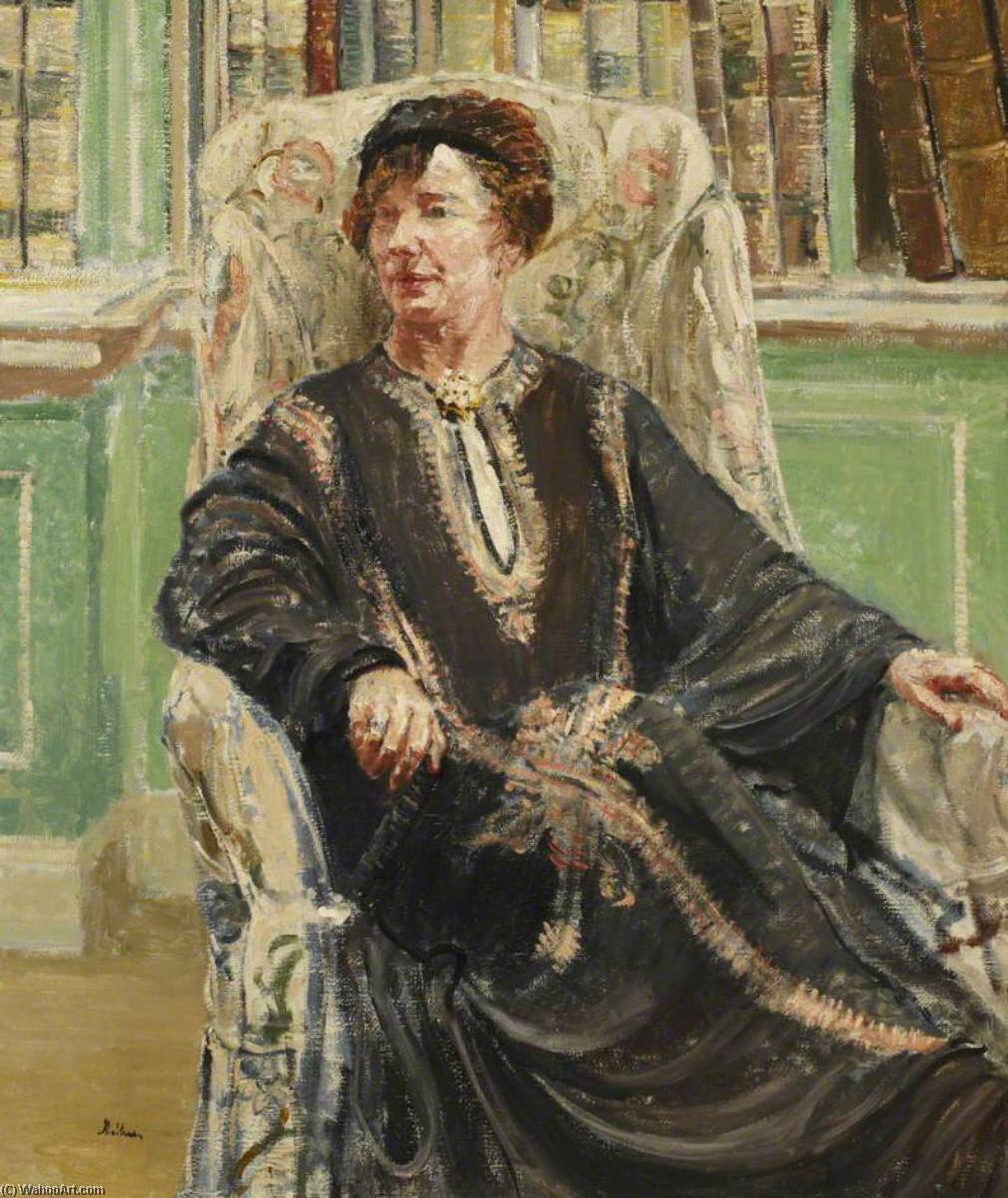
Ein beeindruckendes Ölgemälde von Dame Freya Stark im Stuhl von Paul Ayshford Methuen (1886-1974). Stilvoll und detailliert - eine Meisterleistung der britischen Kunst des frühen 20. Jahrhunderts.
Entdecken Sie den Künstler Paul Ayshford Methuen (1886-1974): Maler, Zoologe & Baron. Landschafts-, Stadtansichten & sein Erbe der Restaurierung von Corsham Court.
Erforschen Sie die faszinierende Welt Asiens bei der Royal Asiatic Society! Gegründet 1823 bietet sie Forschung, Vorträge und das renommierte FRAS-Stipendium – ein Zentrum für Kunstgeschichte und kulturellen Austausch Londons.
A Portrait of Dignity and Quiet Contemplation: Paul Ayshford Methuen’s Dame Freya Stark
Paul Ayshford Methuen's 1934 depiction of Dame Freya Stark stands as a testament to British Impressionism, capturing not merely an image but a mood—one imbued with nostalgia and understated elegance. Executed in oil paint on canvas, this artwork transcends mere representation; it’s a thoughtful meditation on intellect, leisure, and the enduring spirit of exploration. The painting's centerpiece is undoubtedly Dame Freya Stark herself, seated gracefully in an ornate armchair, occupying nearly half of the frame—a deliberate compositional choice that emphasizes her presence and invites contemplation.
Technical Brilliance: Impasto Texture and Light’s Dance
Methuen skillfully employs impasto technique – applying paint thickly onto the canvas – creating a rich textural surface that breathes life into the scene. Visible brushstrokes ripple across the fabric of Stark's dress and the chair upholstery, mirroring the subtle movements of light as it filters through the window behind her. This masterful manipulation of pigment lends an immediacy to the artwork, conveying a palpable sense of atmosphere and capturing the ephemeral quality of illumination—a hallmark of Impressionistic sensibilities. The artist’s meticulous attention to detail extends beyond mere surface appearance; he utilizes linear perspective to establish depth, albeit subtly flattened, suggesting a two-dimensional space that prioritizes emotional resonance over strict realism.
Symbolism Within Still Life: Books and Comfort
The bookshelf laden with books serves as more than just decorative backdrop—it’s a potent symbol of knowledge and intellectual curiosity, reflecting Dame Freya Stark's celebrated adventurous spirit and scholarly pursuits. Simultaneously, the armchair embodies comfort and repose, hinting at moments of quiet reflection amidst a life dedicated to exploration and discovery. These carefully chosen elements contribute to the artwork’s overarching narrative, inviting viewers to consider themes of erudition, tranquility, and the rewards of purposeful living. The muted color palette—primarily earthy tones—further enhances the painting's contemplative mood, fostering an atmosphere of serenity and understated beauty.
Historical Context: A Moment Frozen in Time
Painted in 1934, Dame Freya Stark reflects the artistic currents of its era – primarily Impressionism, influenced by artists like Walter Sickert and Charles Holmes—who championed capturing fleeting impressions of light and color rather than striving for photographic accuracy. Methuen’s work aligns with this movement's desire to convey emotion and atmosphere above all else, prioritizing subjective experience over objective observation. The painting’s subject matter – a portrait of Dame Freya Stark—was itself significant during the period, celebrating a woman who had achieved remarkable feats of adventure and scholarship.
A Legacy of Elegance: Methuen’s Artistic Vision
Paul Ayshford Methuen (1886-1974), British painter, zoologist & Baron, skillfully blended scientific observation with artistic expression—a duality that characterizes his oeuvre. His dedication to capturing the beauty of the natural world alongside a profound appreciation for visual art resulted in works like “Helford River” and “St Paul’s Cathedral,” demonstrating his versatility as an artist. Methuen's legacy extends beyond individual paintings; he revitalized Corsham Court, transforming it into a vibrant cultural center—a testament to his belief that art could enrich lives and foster connections with the environment. This portrait of Dame Freya Stark remains a captivating example of British Impressionism’s ability to distill complex ideas into evocative visual form.