Erkunden Sie die revolutionäre Kunst von Paul Cézanne (1839–1906), einem Postimpressionisten, der Impressionismus und Kubismus miteinander verband. Entdecken Sie seine geometrischen Formen, seine einzigartigen Pinselstriche, Stilllebenmalereien und seinen bleibenden Einfluss auf die moderne Kunst. #Cézanne #PostImpressionismus
Entdecken Sie das Metropolitan Museum of Art! Tausende Jahre Kunst aus aller Welt – von antiken Artefakten bis zu Meisterwerken. Ein Muss für Kunstliebhaber!
Madame Cézanne in A Yellow Chair: An Icon of Post-Impressionist Vision
Paul Cézanne’s
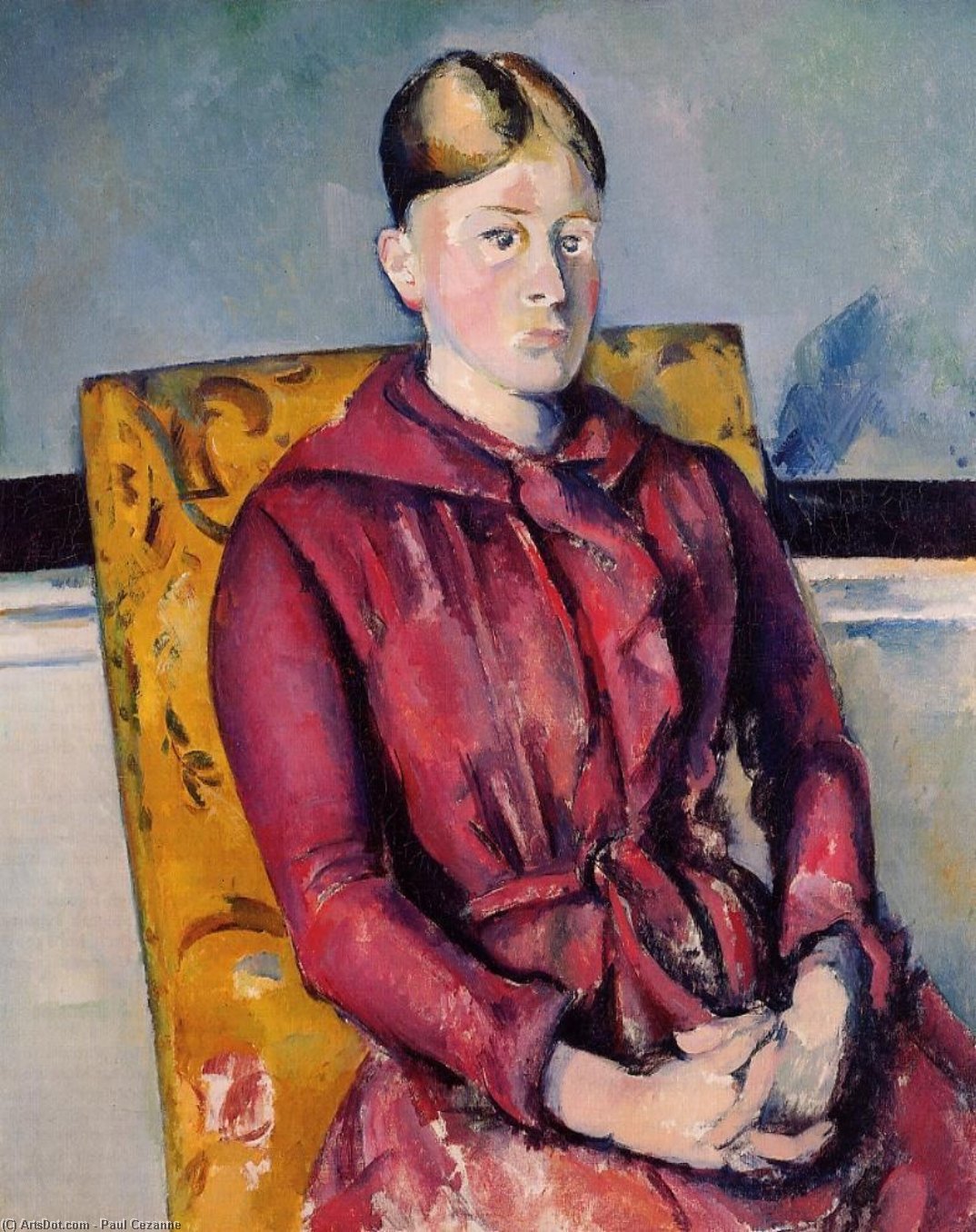
Madame Cézanne in a Yellow Chair, painted in 1890, stands as an undeniable cornerstone of Cézanne’s artistic legacy and the broader Post-Impressionist movement. More than just a portrait of Hortense Fiquet—Cézanne's wife—it embodies a radical reimagining of pictorial representation, marking a decisive break from Impressionistic conventions and paving the way for Cubism’s groundbreaking innovations. Its presence in the Metropolitan Museum of Art underscores its enduring significance within art history.
The Subject: Hortense Fiquet – A Domestic Landscape
The painting depicts Hortense Fiquet seated comfortably in a high-backed yellow chair, positioned against an interior backdrop that exudes understated elegance. Cézanne meticulously captures her gaze directed towards the viewer—a subtle gesture of intimacy and engagement—suggesting a moment of quiet contemplation within the confines of their home life. The setting itself is deliberately constructed to convey spatial complexity; mottled blue walls, dark red wainscoting, and a prominent mirror over the fireplace contribute to an immersive experience for the observer. Cézanne wasn’t merely depicting a scene; he was attempting to distill its essence into a harmonious composition.
Artistic Style: Bold Strokes and Vibrant Color – Cézanne's Revolutionary Approach
Cézanne’s distinctive style is immediately recognizable through his assertive brushstrokes—thick, impastoed marks that build up layers of pigment onto the canvas—creating palpable textural richness. The dominant hue—the radiant yellow of the chair—serves as a focal point against which Cézanne contrasts the cooler tones of the background wall and fireplace. This deliberate juxtaposition generates visual tension and depth, reflecting Cézanne’s preoccupation with capturing underlying geometric forms rather than merely reproducing optical impressions. He prioritized structure over illusion, fundamentally altering artistic practice.
Post-Impressionism: Beyond Impressionistic Light
Post-Impressionism represents a pivotal shift away from Impressionism’s focus on fleeting moments of light and color. Cézanne, like Gauguin and Van Gogh, sought to express emotion and psychological insight through art—a goal that demanded a new visual vocabulary. He achieved this by simplifying forms into basic geometric shapes—cylinders, cones, and planes—creating images that resonate with permanence and solidity. This approach anticipates the radical experimentation of Cubism, demonstrating Cézanne’s profound influence on subsequent artistic developments.
Relevance to Art History: A Lasting Legacy
Madame Cézanne in a Yellow Chair remains an exemplar of artistic innovation and continues to inspire artists today. Its careful consideration of form and color—coupled with its evocative depiction of domestic life—solidifies Cézanne’s position as one of the most important figures in modern art history. Consider exploring other works by Cézanne, such as
Madame Cézanne (Hortense Fiquet, 1850–1922) in a Red Dress and
Madame Cézanne (Hortense Fiquet) in a Yellow Chair for further insight into his artistic vision. To delve deeper into the broader context of Post-Impressionism, visit
Post-Impressionism Art Movement Introduction. Cézanne’s influence extends beyond painting; artists like Picasso and Matisse recognized his transformative impact on artistic expression.