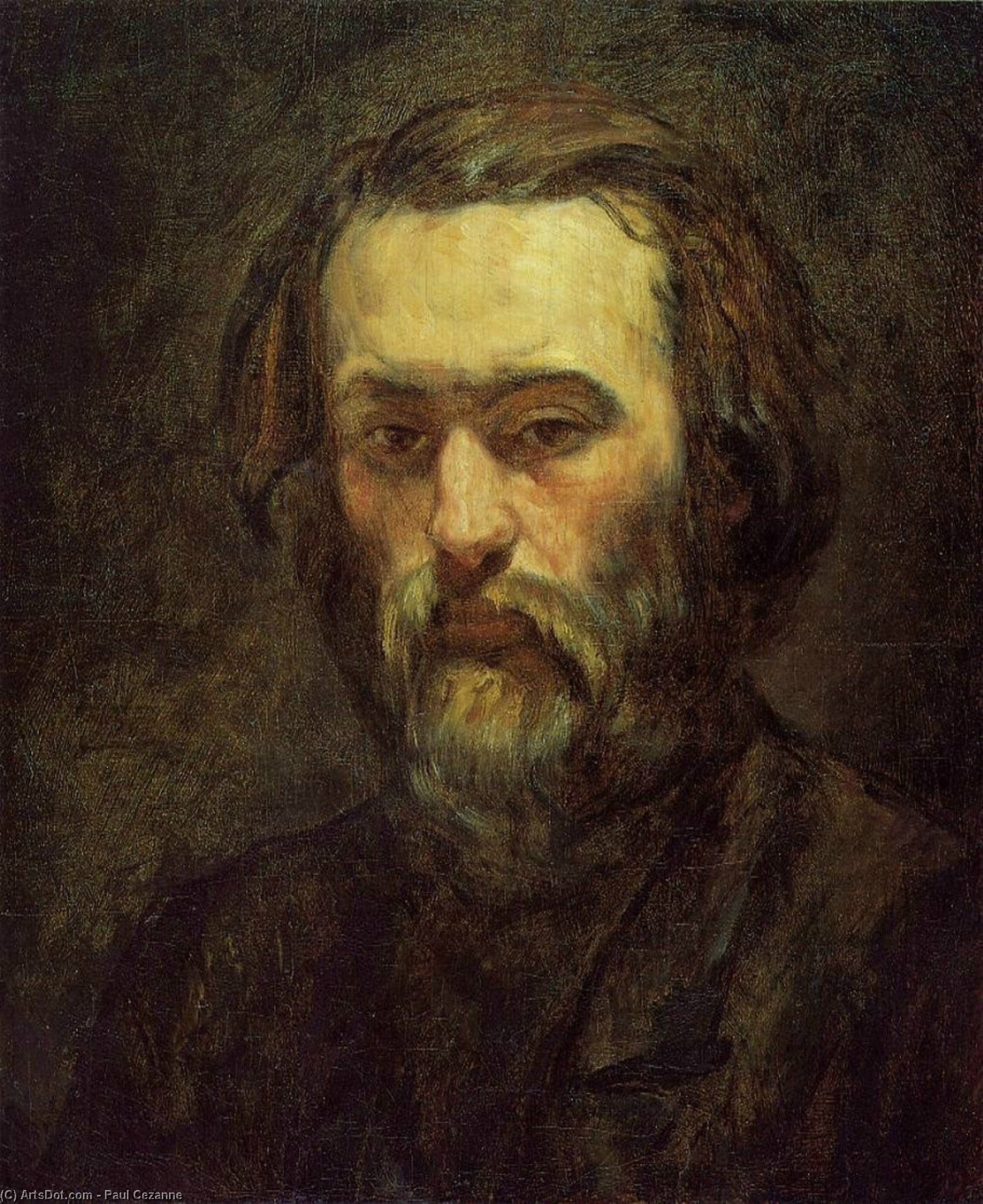
Paul Cézanne’s “Portrait of a Man” – A Window into the Soul
Paul Cézanne's "Portrait of a Man," painted around 1864, isn't merely a likeness; it’s a profound exploration of human character and a pivotal moment in the artist’s evolving artistic vision. This relatively small canvas, now residing within the esteemed collection of the Musée d'Orsay in Paris, offers an intimate glimpse into Cézanne’s nascent style – a style that would ultimately revolutionize modern art. The painting depicts a man with a thoughtful, almost melancholic expression, framed by a meticulously rendered beard and mustache. He possesses a quiet dignity, his gaze directed outwards as if contemplating the mysteries of existence.
Cézanne was deeply influenced by the artistic currents of his time, particularly the Impressionists, yet he deliberately pushed beyond their fleeting depictions of light and color. He sought to capture not just what *looked* like a man, but what *felt* like a man – his inner life, his inherent structure, and the weight of experience etched upon his face. This is evident in Cézanne’s deliberate use of form; he doesn't simply sketch the features, but rather builds them up with carefully placed brushstrokes, creating a sense of solidity and presence that transcends mere representation. The background, rendered in muted earth tones, serves not as a distraction, but as a subtle counterpoint to the subject’s intensity, drawing attention directly to his face and its complex emotions.
The Seeds of Cubism – A Revolutionary Approach
While often categorized as an Impressionist work, “Portrait of a Man” foreshadows Cézanne's later development towards Cubism. He began experimenting with breaking down objects into their fundamental geometric forms—planes and angles—a technique he would master in his still lifes. Notice how the man’s face is constructed from distinct planes, suggesting an underlying structure beneath the surface. This fragmentation of form, a hallmark of Cézanne's work, anticipates Picasso and Braque’s groundbreaking explorations into Cubism decades later. Cézanne wasn’t interested in creating a photographic likeness; he was dismantling reality to rebuild it according to his own visual logic.
The painting also reveals Cézanne’s fascination with the interplay of light and shadow. He employs a subtle chiaroscuro, using variations in tone to model the face and create a sense of depth. However, unlike the dramatic contrasts favored by Caravaggio or Rembrandt, Cézanne's lighting is diffused and atmospheric, contributing to the painting’s overall mood of quiet contemplation. The use of earth tones—ochre, umber, and sienna—further enhances this effect, lending the portrait a sense of warmth and intimacy.
Symbolism and Emotional Resonance
Beyond its formal innovations, “Portrait of a Man” is imbued with a subtle symbolism. The man’s serious expression suggests introspection and perhaps even a hint of sadness. His beard and mustache, symbols of maturity and experience, reinforce this impression. The painting invites the viewer to project their own emotions and interpretations onto the subject, creating a deeply personal connection. It's not simply a portrait; it’s an invitation to contemplate the complexities of human existence.
Interestingly, some art historians believe that Cézanne may have been depicting himself in this portrait – a theory supported by similarities in facial features and overall demeanor. Regardless of its precise identity, “Portrait of a Man” remains a powerful testament to Cézanne’s artistic genius and his profound ability to capture the essence of human character through innovative technique and evocative symbolism. It stands as a crucial bridge between Impressionism and the revolutionary art movements that would follow.
Conservation and Display at the Musée d'Orsay
Currently housed within the prestigious collection of the Musée d’Orsay, “Portrait of a Man” benefits from optimal conservation conditions, ensuring its preservation for future generations. The museum meticulously controls temperature and humidity levels to safeguard the delicate pigments and canvas weave. Visitors can admire this masterpiece in a setting that complements its historical significance, surrounded by other pivotal works from the late 19th century.
For those seeking to delve deeper into Cézanne’s artistic journey, resources such as Wikipedia and the Musée d'Orsay website offer invaluable insights into his life, techniques, and influences. Reproductions of “Portrait of a Man” are readily available, allowing art enthusiasts to bring this iconic work into their own homes – a tangible reminder of Cézanne’s enduring legacy.