A Dreamscape of Steel and Shadow
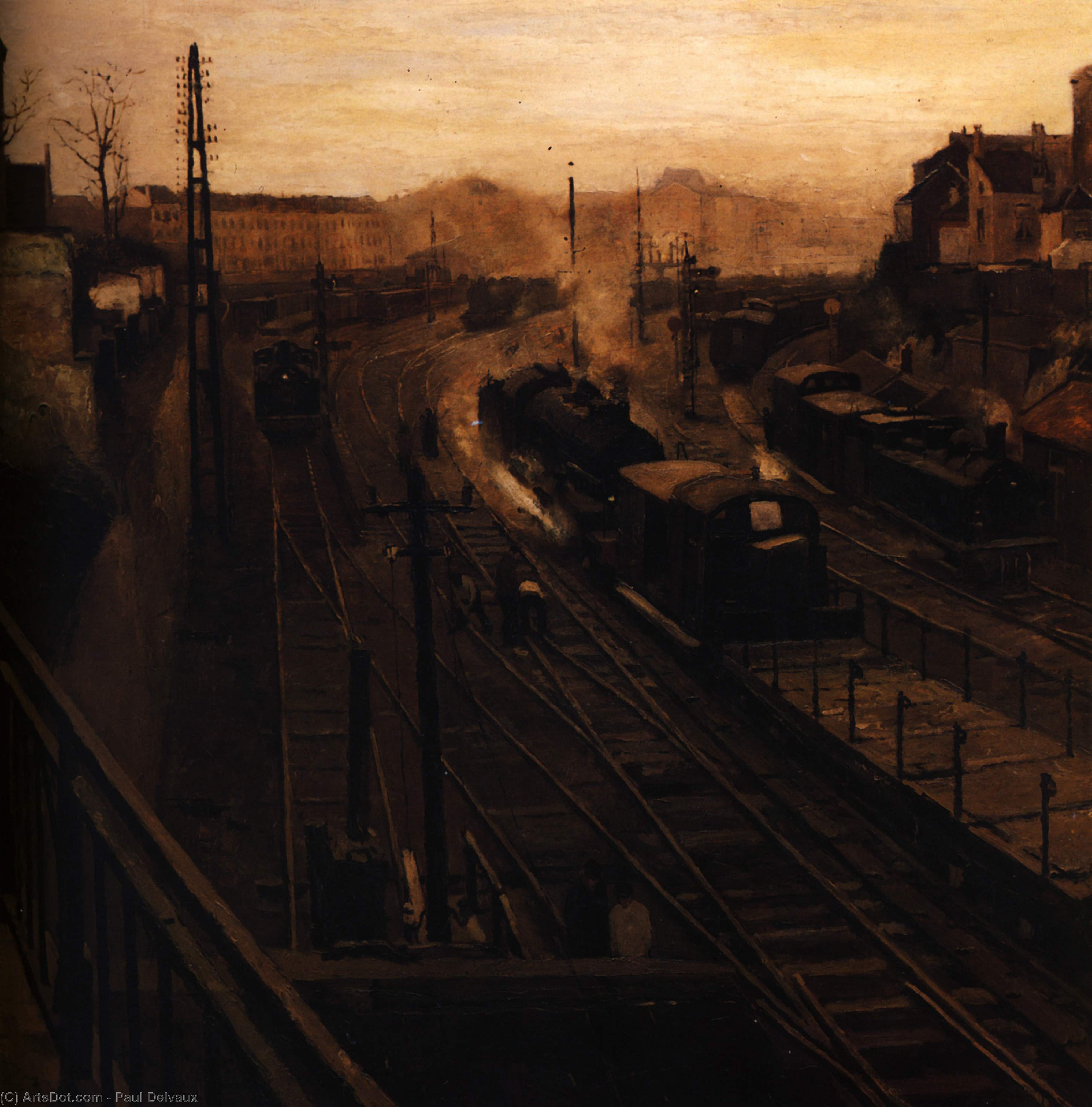
In the heart of 1922, amidst the burgeoning industrial pulse of Europe, Paul Delvaux captured a moment that transcends mere historical documentation. For the Brussels Luxembourg Station is not simply a depiction of a bustling transit hub; it is a profound psychological landscape where the mechanical and the metaphysical collide. As one gazes upon the canvas, the eye is immediately arrested by the colossal steam engine locomotive, a titan of iron and steam that dominates the composition. Its immense scale serves as a dual symbol of progress and isolation, looming over the station platform with an almost sentient presence. The station itself, teeming with passengers and secondary trains, becomes a stage for a silent, surreal drama, where the boundaries between the tangible world and the subconscious begin to blur.
Delvaux’s technical mastery lies in his ability to marry the rigorous precision of academic training with the unsettling distortions of the Surrealist imagination. Utilizing a technique characterized by hyper-realistic textures, he renders the dampness of the stone platforms, the polished sheen of metal, and the weathered surfaces of the station with breathtaking clarity. Yet, this very realism is what makes the painting so disconcerting; as the viewer settles into the familiar details, they realize that the proportions are subtly skewed. Figures appear strangely elongated or compressed, creating a sense of spatial vertigo. This mastery of chiaroscuro—the dramatic interplay between deep, swallowing shadows and piercing light—amplifies the atmosphere of mystery, casting the bustling crowd into a state of dreamlike suspension.
The Architecture of Anxiety
To understand this masterpiece, one must look toward the historical currents that shaped Delvaux’s vision. Emerging during the interwar period, the painting reflects the profound societal anxieties of an era caught between rapid technological advancement and the lingering trauma of global conflict. Influenced by the burgeoning field of Freudian psychoanalysis, Delvaux sought to tap into the hidden recesses of the human mind. The locomotive, while a marvel of modern engineering, acts as an oppressive force, mirroring the overwhelming nature of urbanization and the relentless march of industrialization. Every element within the frame—from the scattered, ambiguous figures to the vast, echoing architecture—contributes to a sense of metamorphosis and existential unease.
For the discerning collector or interior designer, this artwork offers more than just visual splendor; it provides a profound emotional anchor for any space. The painting’s ability to evoke both awe and introspection makes it an extraordinary centerpiece for a sophisticated gallery or a thoughtfully curated living environment. It invites conversation, challenging the viewer to look beyond the surface of the industrial scene to find the poetic, often haunting, truths hidden within. Whether viewed as a tribute to the grandeur of the locomotive era or as a window into the surrealist psyche, For the Brussels Luxembourg Station remains an enduring testament to the power of art to transform the mundane into the monumental.