A Moment Frozen in Watercolor: Exploring Paul Klee’s “In The Ostermundingen Quarry Two Cranes”
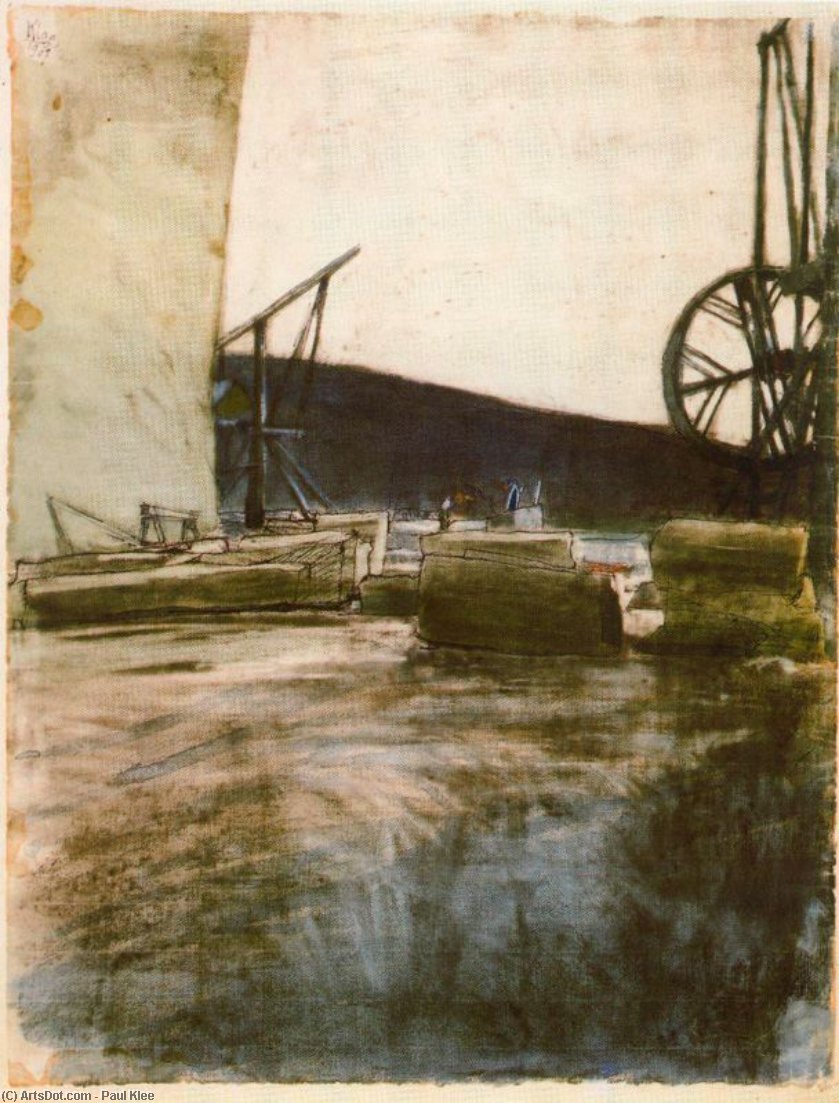
Paul Klee's "In The Ostermundingen Quarry Two Cranes," painted in 1907, isn’t merely a depiction of a waterfront scene; it’s an embodiment of Impressionism distilled into its purest form—a testament to capturing fleeting atmospheric conditions and conveying emotion through subtle color harmonies. This unassuming landscape holds profound artistic significance, reflecting Klee's pioneering approach to abstraction and his unwavering dedication to exploring the expressive potential of watercolor as a medium. The artwork immediately draws the eye with its hazy palette dominated by muted browns, creams, and grays—a deliberate choice that evokes a palpable sense of nostalgia and transports viewers back to a bygone era of maritime activity.
- Composition & Technique: Klee’s masterful use of watercolor lends an ethereal quality to the scene. Loose brushstrokes blend seamlessly together, creating soft textures and diffusing light—a technique characteristic of Impressionism that prioritizes capturing the essence of perception over precise visual representation. Horizontal lines dominate the canvas, mirroring the tranquil surface of the water and establishing a stable compositional framework.
- Subject Matter: The focal point is a dock area populated by boats and punctuated by the presence of cranes—symbols of industry and movement juxtaposed against the stillness of the water. However, Klee eschews narrative storytelling; instead, he invites contemplation on the beauty inherent in simplicity and the evocative power of color.
- Color Palette & Symbolism: The subdued tonal range contributes significantly to the painting’s mood—a melancholic yet serene atmosphere that speaks to Klee's fascination with exploring psychological states through visual imagery. The colors aren’t intended to represent reality but rather to convey feelings and impressions, aligning perfectly with Impressionistic principles.
- Historical Context: Created during Klee’s formative years as an artist, “In The Ostermundingen Quarry Two Cranes” exemplifies his early engagement with abstraction and foreshadows the stylistic innovations that would define his oeuvre throughout his career. It stands alongside other works demonstrating Klee's exploration of musical influences in visual art.
- Emotional Impact: Ultimately, this painting transcends mere observation; it invites viewers to immerse themselves in a sensory experience—a quiet contemplation of beauty and an appreciation for the subtle nuances of color and texture. Like many Impressionist masterpieces, “In The Ostermundingen Quarry Two Cranes” lingers in the memory long after viewing, prompting reflection on themes of time, place, and emotion.
Further Exploration: Zentrum Paul Klee & Kunstmuseum Bern
To delve deeper into Paul Klee’s artistic vision and appreciate his enduring legacy, we encourage you to visit Zentrum Paul Klee in Bern (
Zentrum Paul Klee) – home to the world's largest collection of Klee artworks—and Kunstmuseum Bern (
Kunstmuseum Bern), which houses significant pieces showcasing his artistic evolution. These institutions offer invaluable insights into Klee’s creative process and provide a context for understanding the broader significance of his contributions to modern art.
Discovering Reproductions: Bringing Klee's Vision Home
ArtsDot offers exceptional reproductions of “In The Ostermundingen Quarry Two Cranes,” allowing you to experience the beauty and tranquility of this iconic artwork in your own space. Explore our curated selection of high-quality prints on canvas or paper—each meticulously crafted to faithfully capture Klee’s distinctive style and emotional depth.