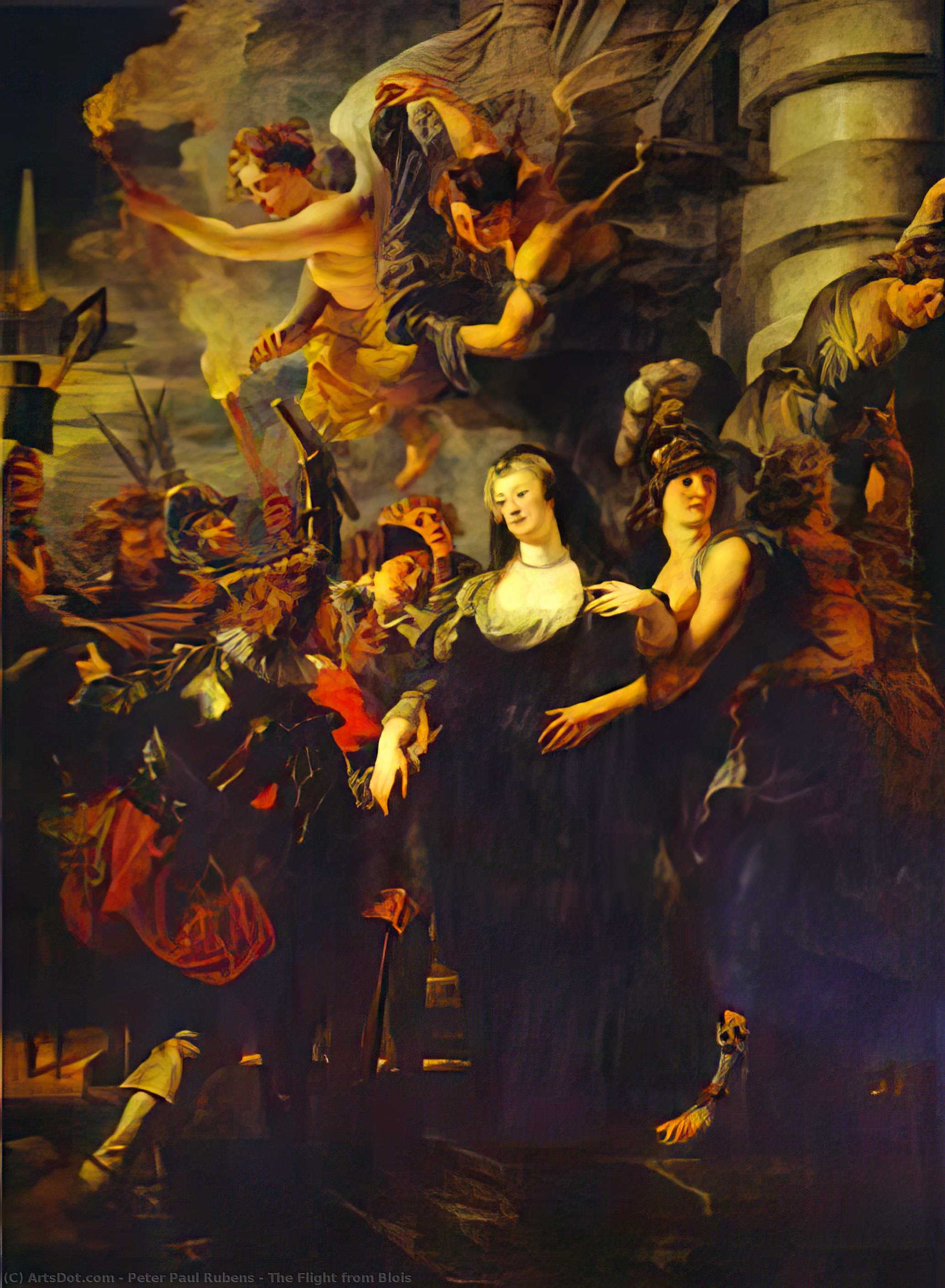
The Flight from Blois
“The Flight from Blois,” painted by Peter Paul Rubens in 1622–1625, stands as one of the most arresting depictions of royal drama within the Marie de’ Medici cycle—a monumental achievement that transcends mere historical record to embody Baroque artistic ideals. Commissioned by Queen Marie de’ Medici herself, widow of Henry IV, this canvas captures a pivotal moment in her life: her desperate escape from confinement at Blois Castle during the tumultuous years following Henry IV's death.
- Historical Context: The cycle chronicles Marie’s reign and portrays her as a shrewd diplomat navigating the complexities of French politics. Rubens skillfully captures the atmosphere of fear and uncertainty surrounding Henriette Maria’s marriage to Louis XIII, reflecting anxieties about dynastic stability.
- Artistic Interpretation: Rubens deliberately eschewed realism in favor of heroic grandeur. He prioritized conveying emotion and conveying an idealized vision of Marie's courage and determination—a conscious decision to safeguard the Queen’s reputation amidst political maneuvering.
Rubens’ masterful use of chiaroscuro – dramatic contrasts between light and dark – immediately draws the viewer into the scene, establishing a palpable tension. The composition is meticulously balanced, emphasizing movement and conveying an urgent narrative. Figures surge forward with purposeful energy, illuminated by ethereal light emanating from Aurora and Night—symbols representing both time and divine protection for Marie.
- Symbolism: Aurora and Night serve as guiding forces, symbolizing the dawn of a new era and safeguarding Marie’s path. The male figures flanking Marie represent the military, embodying her unwavering belief in command and bolstering her resolve.
- Technique: Rubens employed oil paint on canvas with exceptional detail and vibrancy—a technique characteristic of Baroque art that prioritizes textural richness and luminous color palettes. His brushstrokes are dynamic and expressive, conveying a sense of immediacy and capturing the emotional intensity of the moment.
The painting’s significance extends beyond its aesthetic beauty; it represents Rubens' ability to fuse historical narrative with artistic license—a testament to his genius as a storyteller and his unwavering commitment to elevating art above mere documentation. Its presence in the Gemäldegalerie Alte Meister in Dresden underscores its enduring legacy as a masterpiece of Baroque artistry.
For those seeking to experience Rubens’ brilliance firsthand, reproductions from ArtsDot offer exceptional quality—allowing you to immerse yourself in the drama and splendor of this iconic artwork. Explore more masterpieces by Rubens at Romulus and Remus and Anne of Austria, Queen of France.
To delve deeper into the Marie de’ Medici cycle, consult Marie de' Medici cycle Wikipedia page. ArtsDot provides high-quality, handmade oil painting reproductions of Rubens’ works.