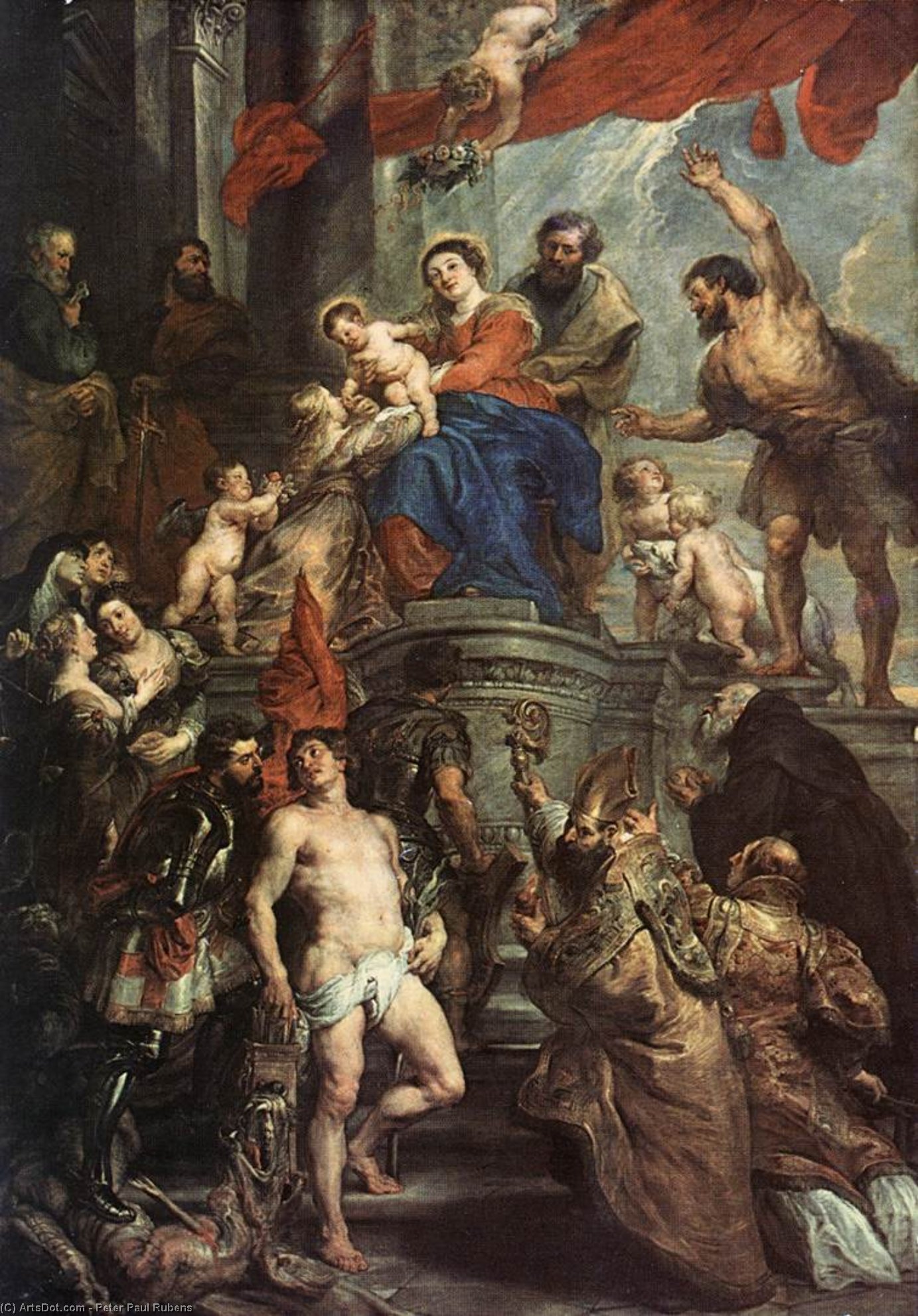
Madonna Enthroned with Child and Saints – A Baroque Triumph
Peter Paul Rubens’s *Madonna Enthroned with Child and Saints*, completed in 1628, stands as an unparalleled achievement of Flemish Baroque art—a monumental testament to faith, grandeur, and artistic innovation. Housed at The Museum Cassa di Risparmi (Prato), Italy, this canvas transcends mere depiction; it embodies the spiritual fervor of its era and continues to captivate viewers centuries later. Rubens’s masterful command of color, composition, and dramatic lighting elevates the scene beyond a simple religious tableau into an immersive experience that speaks directly to the viewer's emotions.
- Composition & Scale: Measuring 564 x 408 cm, the painting dominates its space with an expansive panorama that draws the eye inward toward the central figure of Mary and Jesus. Rubens meticulously crafted a pyramidal structure—a hallmark of Baroque art—to instill stability and convey divine majesty. The positioning of saints around the throne reinforces this sense of hierarchy and underscores the sacredness of the depicted event.
- Technique – Color & Light: Rubens’s signature *tenebrism*, characterized by stark contrasts between light and dark, imbues the artwork with palpable energy and drama. Brilliant hues—particularly reds and golds—are strategically deployed to illuminate Mary's robes and highlight the radiant glow emanating from Jesus’s infant face. This masterful manipulation of color creates a visual illusion that enhances depth and intensifies the emotional impact of the scene.
- Symbolism – Sacred Narrative: The painting recounts the mystical marriage of Saint Catherine—a pivotal moment in Christian theology—where Mary presents Jesus to Saint Catherine, symbolizing divine grace and spiritual purification. Each saint embodies virtues associated with Christianity—faith, humility, compassion—further enriching the artwork’s symbolic tapestry. The lambs adorning Saint Catherine's feet represent innocence and purity, while the saints’ gestures convey reverence and devotion.
- Historical Context – Counter-Reformation Influence: Created during the Counter-Reformation—the Catholic Church’s response to Protestant challenges—Rubens’s *Madonna Enthroned* served as a powerful visual affirmation of papal authority and Catholic dogma. The painting reflects the Baroque aesthetic's preoccupation with grandeur, emotion, and theatrical presentation—elements designed to inspire piety and reaffirm faith amidst turbulent religious upheaval.
- Legacy – Rubensian Style: Rubens’s influence extends far beyond this single masterpiece, shaping the artistic sensibilities of subsequent generations. His dynamic compositions, vibrant color palettes, and expressive brushstrokes established a distinctive Baroque style that continues to resonate with artists today—a legacy cemented by countless reproductions and interpretations across disciplines.
Further Exploration: To delve deeper into Rubens’s oeuvre and the broader context of Baroque art, visit
Peter Paul Rubens on ArtsDot. Explore related artworks by Raphael and other masters of the Renaissance—a journey through artistic innovation and spiritual contemplation.