Saint George and the Dragon – A Baroque Triumph
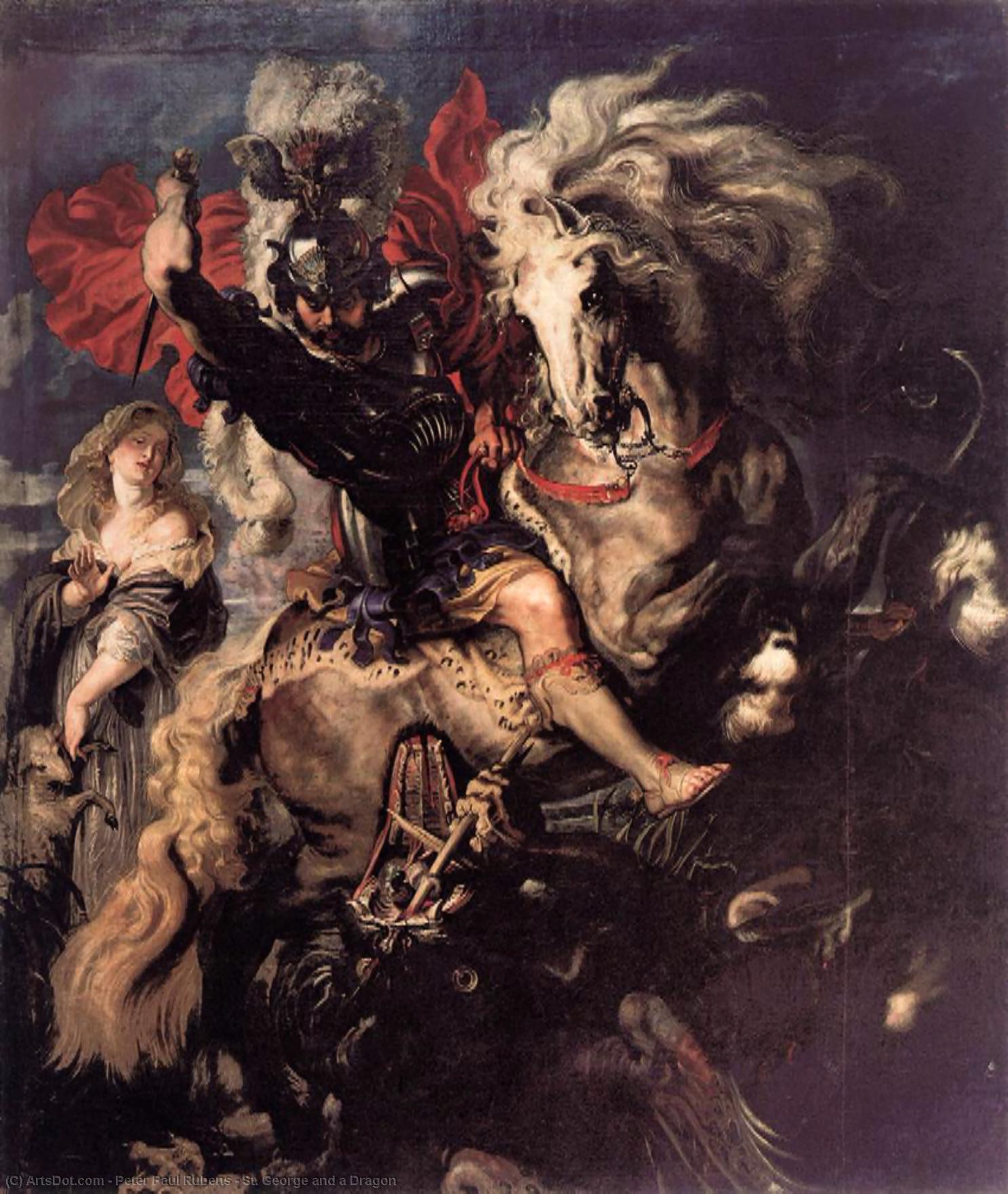
Peter Paul Rubens’ “St. George and the Dragon” stands as an undisputed emblem of Baroque art, embodying its dramatic flair and masterful execution. Created in 1610 during Rubens' prolific period in Antwerp—a city pulsating with artistic energy under Spanish rule—this monumental oil painting on canvas transcends mere depiction; it delivers a visceral experience of heroism and divine triumph.
Composition & Technique
Rubens’ genius lies in his ability to orchestrate movement and emotion within a tightly controlled framework. The scene unfolds with breathtaking dynamism: St. George, mounted atop a noble steed, confronts the fearsome dragon—a creature of myth and terror—with unwavering resolve. Rubens employs *tenebrismo*, a technique pioneered by Caravaggio, skillfully manipulating light and shadow to heighten tension and emphasize the central figures’ importance. The artist meticulously renders textures – from the dragon's scales to St. George’s armor – demonstrating an unparalleled command of detail and realism.
Historical Context & Patronage
Commissioned by a Genoese noble family during Rubens’ time in Antwerp, “St. George and the Dragon” reflects the broader artistic currents of its era. The Baroque period witnessed a fervent revival of classical ideals intertwined with religious fervor—a trend powerfully articulated through narratives like St. George's slaying of the dragon. Rubens’ work served as inspiration for subsequent artists and cemented his reputation as one of the foremost painters of his generation, securing him royal patronage from Philip IV.
Symbolism – Courage & Redemption
Beyond its visual splendor, “St. George and the Dragon” is laden with symbolism. St. George embodies courage, faith, and chivalry—qualities revered throughout Christendom. The dragon represents evil, chaos, and pagan superstition, symbolizing the triumph of good over darkness. The princess symbolizes hope and divine grace, representing salvation from peril. The lance broken at the dragon’s mouth signifies St. George's initial vulnerability but ultimately underscores his ultimate victory through divine intervention.
Legacy & Reproduction
Rubens’ influence extends far beyond its immediate context. His innovative approach to composition and color continues to inspire artists today, demonstrating the enduring power of Baroque aesthetics. To appreciate the grandeur and artistry of “St. George and the Dragon” fully, consider commissioning a high-quality reproduction from ArtsDot.com—allowing you to bring this masterpiece into your home or workspace.