The Contemplative Gaze of Baroque Portraiture
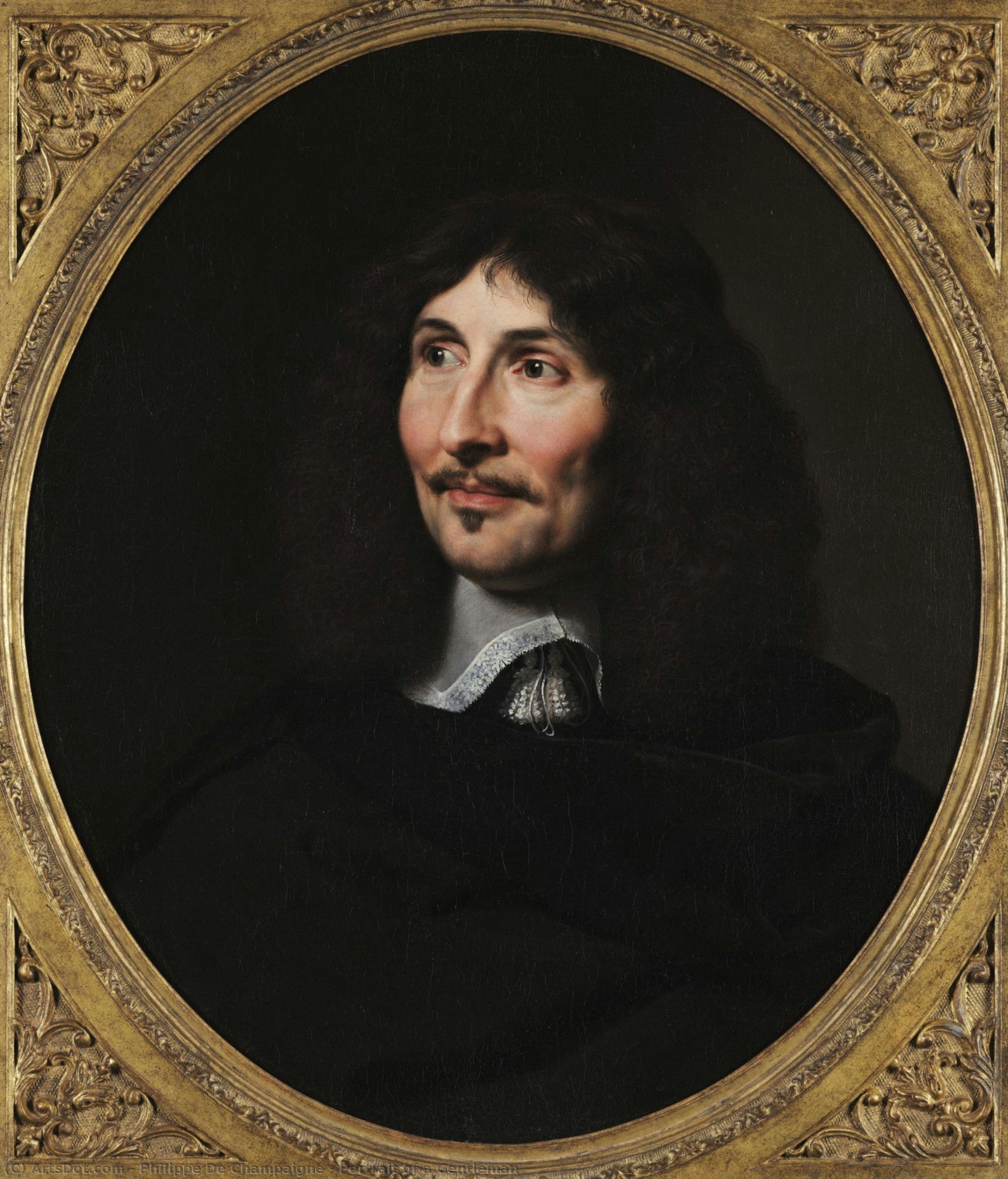
To stand before a portrait such as this is to encounter a moment suspended in time—a quiet communion with the sitter's inner life. This depiction, likely capturing a gentleman of stature, perhaps even a minister serving under the grand shadow of Louis XIV, speaks volumes not through overt gesture, but through the profound stillness of his bearing. The subject, rendered with meticulous detail, possesses a beard and mustache that frame a countenance marked by deep thought. His dark attire, the sober black coat, anchors him within a world of intellectual gravity, suggesting a life dedicated to contemplation or weighty civic duty. It is in this serious, almost pensive expression that the viewer finds their initial connection, drawn into the quiet drama playing behind those steady eyes.
Mastery in Technique and Form
The technique employed here speaks to the high refinement of the Baroque period. While the background hints at an elegant gold frame—a touch of opulence contrasting with the sitter's reserved demeanor—the true artistry lies in the handling of light and shadow upon the man’s face. The artist, channeling the spirit of masters like Philippe de Champaigne, demonstrates a profound understanding of chiaroscuro. Notice how the subtle gradations of tone model the planes of his forehead and cheeks; it is not merely painted likeness, but an architectural study in flesh. This masterful rendering gives the portrait a palpable sense of three-dimensionality, making the figure seem ready to step out from the canvas and into the room.
Historical Echoes: Life Under Royal Patronage
The context suggests a period of immense cultural flourishing and rigid social structure—the age of Louis XIV. In such an environment, portraiture was rarely just about vanity; it was a carefully constructed statement of status, piety, and intellectual alignment. A gentleman depicted in this manner carried the weight of expectation. The formality of his dress and the gravity of his expression suggest he belonged to the educated elite, perhaps navigating the complex currents between religious devotion and courtly ambition. Owning or displaying such a piece connects one directly to the powerful narratives of 17th-century French society.
Symbolism and Emotional Resonance for the Modern Collector
For the contemporary admirer, this portrait offers more than mere decoration; it is an emotional anchor. The symbolism here rests in restraint—the power found not in flamboyant display, but in quiet self-possession. For interior designers, its dark tones and rich texture provide a magnificent counterpoint to lighter furnishings, lending immediate depth and historical gravitas to any space. For the collector, it offers a tangible piece of history, inviting moments of pause. It whispers tales of Enlightenment thought meeting Baroque grandeur, allowing the viewer to project their own contemplation onto the sitter’s enduring gaze.