A Symphony in Pastel Blooms: The Luminous World of Renoir
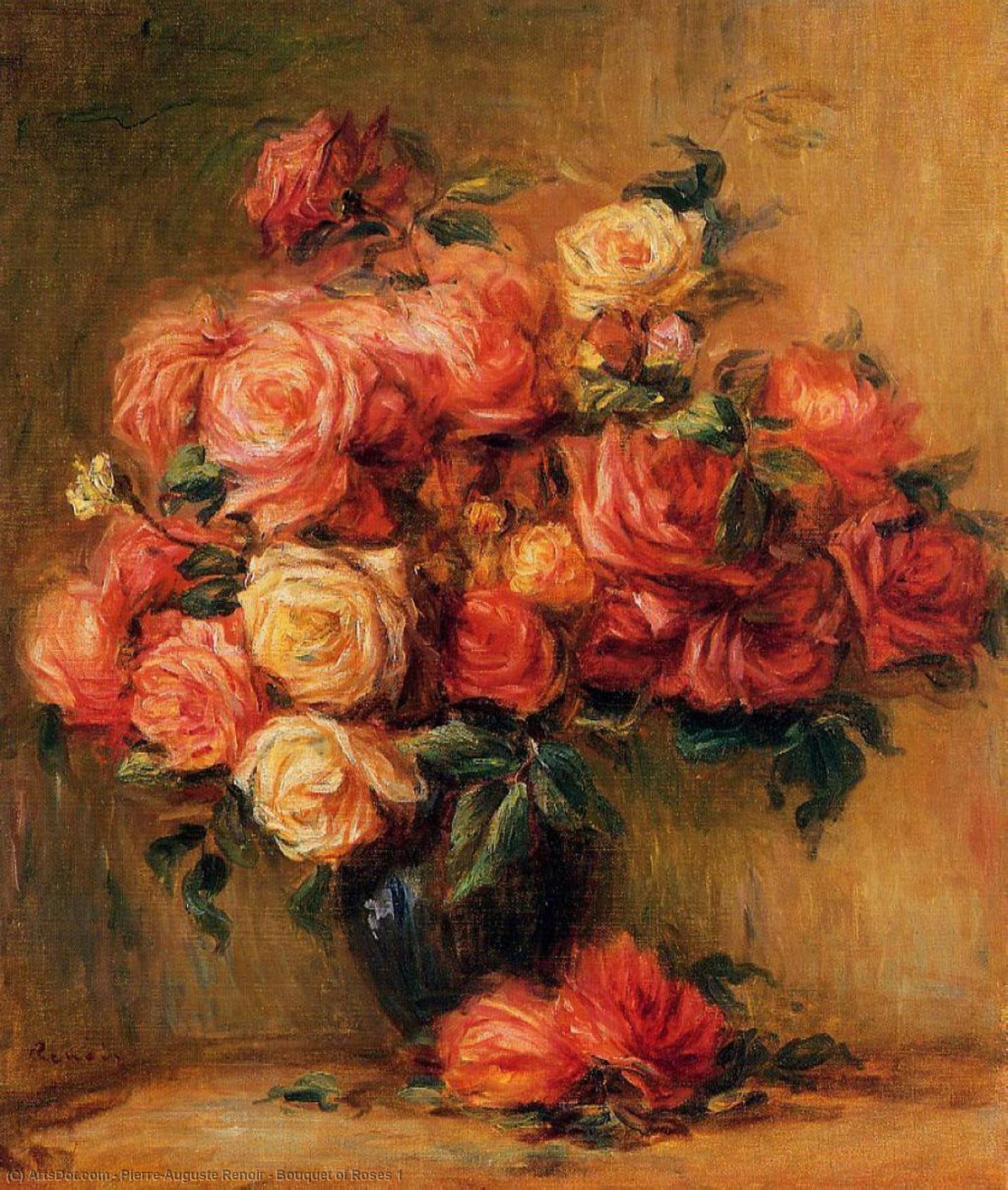
In the soft, dappled light of late nineteenth-century France, Pierre-Auguste Renoir captured more than just botanical specimens; he captured the very essence of joy. His Bouquet of Roses stands as a quintessential embodiment of Impressionist aesthetics—a celebration of fleeting beauty and the transformative power of light. More than just a depiction of flowers in a vase, this masterpiece serves as an invitation to contemplate the delicate interplay between observation and emotion. As one gazes upon the arrangement, there is an immediate sense of tranquility, a feeling that the artist has momentarily paused the ticking clock to honor the ephemeral splendor of nature.
Renoir’s stylistic approach firmly anchors him within the heart of the Impressionist movement. Rejecting the rigid academic conventions of his era, which favored meticulous detail and heavy tonal gradation, Renoir prioritized the immediate sensory experience. In this work, he eschews harsh contrasts, opting instead for subtle gradations that bathe the roses in a soft, diffused glow. The palette is a masterclass in harmony, where predominantly pinks, creams, and delicate whites blend seamlessly to create an atmosphere of warmth. This technique is not merely decorative; it serves to convey a profound feeling of serenity, capturing the way sunlight filters through translucent petals, making the entire bouquet appear as if it were breathing.
Technique and Texture: The Artist's Hand
The true magic of this painting lies in Renoir's meticulous brushwork, which contributes significantly to its textural richness. Using short, broken strokes—a hallmark of the Impressionist style—he builds up layers of pigment onto the canvas. This method allows light to penetrate through the surface, creating an illusion of depth and a shimmering quality that mimics the velvety texture of real rose petals. The blue of the vase provides a cool, stabilizing anchor to the composition, allowing the warmth of the floral arrangement to radiate outward. Every stroke feels intentional, designed to lead the eye through the lush, organic shapes of the bouquet.
For the discerning collector or interior designer, this piece offers an unparalleled opportunity to introduce a sense of timeless elegance into a living space. The painting does not demand attention with aggressive colors; rather, it commands the room through its sophisticated grace and ability to harmonize with diverse decor styles—from classical French aesthetics to modern, airy minimalism. It is a work that breathes life into a room, offering a window into a world where beauty is ever-present and light is eternal.
A Legacy of Beauty and Light
To understand the emotional weight of this bouquet, one must consider Renoir’s own journey. Born in Limoges and trained initially as a porcelain painter, his early exposure to delicate surfaces and fine detail deeply informed his later mastery of light. His life was dedicated to being a "celebrator of beauty," a mission that is palpably felt in every petal of this arrangement. There is a profound intimacy in the work, perhaps a reflection of the domestic bliss Renoir often sought to portray, much like the floral arrangements his wife, Aline Charigot, would lovingly place throughout their homes.
Owning a high-quality reproduction of this work is more than an acquisition of art; it is an acquisition of a mood. It brings into a home the same sense of peace and optimism that Renoir felt while painting on the banks of the Seine. Whether placed in a sunlit breakfast nook or as a focal point in a grand salon, Bouquet of Roses remains a testament to the enduring power of the Impressionist vision—a reminder that even the simplest subject, when viewed through the lens of love and light, can become a masterpiece of the human spirit.