Pierre-Auguste Renoir: A Celebration of Light and Feminine Beauty
Renoir’s oeuvre stands as an enduring testament to Impressionism's core principles—capturing fleeting moments of light and color, prioritizing sensory experience over meticulous detail. Among his most beloved works is
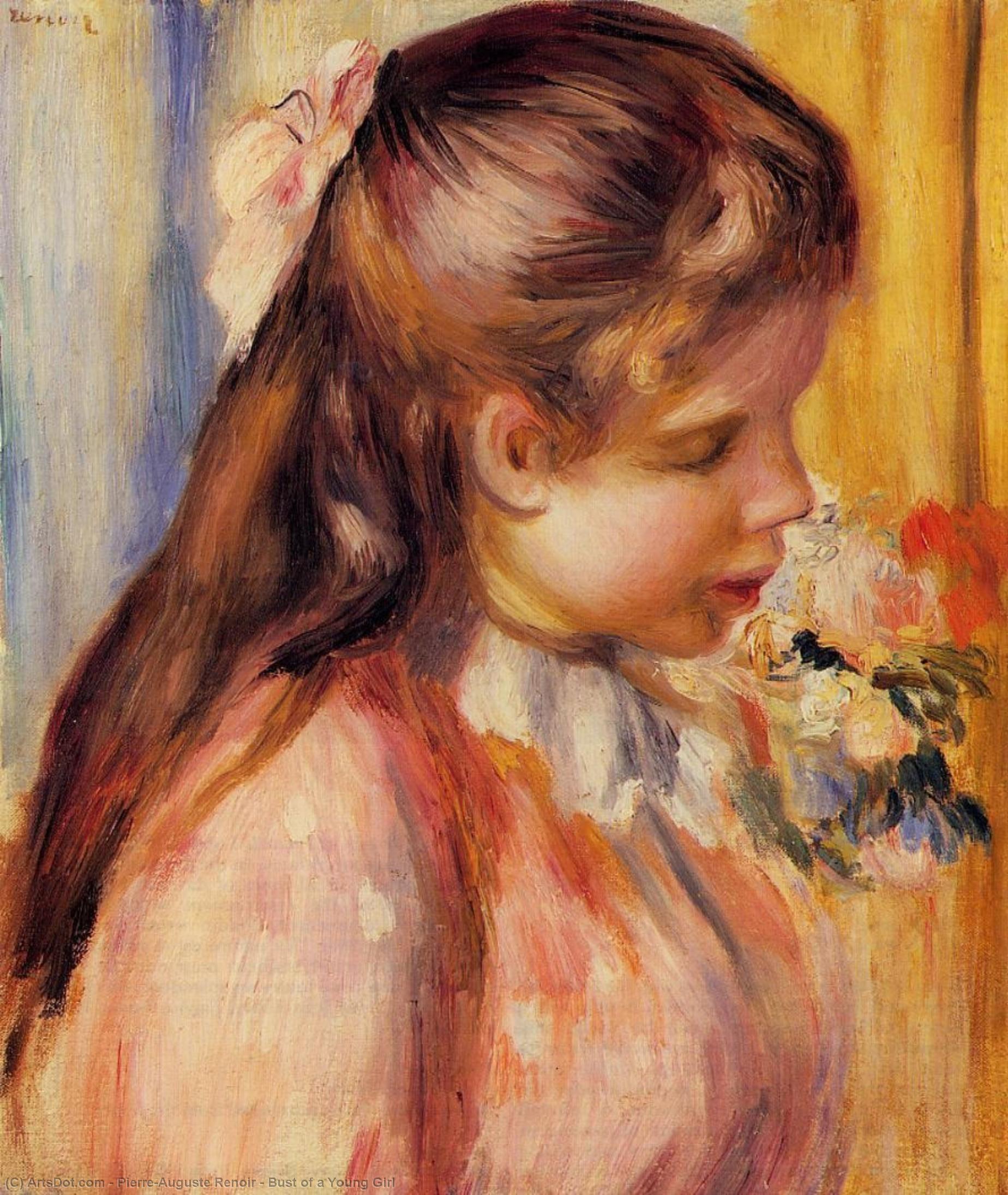
Bust of a Young Girl (c.1895), an exquisite oil painting that embodies the artist’s signature style and continues to fascinate audiences worldwide. This piece transcends mere representation; it's an invitation into Renoir’s artistic vision—a realm where delicate hues dance across canvas, conveying emotion with remarkable subtlety.
Artistic Style and Technique
Renoir’s approach to painting is characterized by loose brushstrokes and a masterful manipulation of color palettes. Unlike academic painters who sought to achieve photorealistic accuracy, Renoir prioritized capturing the ephemeral qualities of light—particularly its diffusion through air—creating an atmosphere imbued with warmth and luminosity.
Bust of a Young Girl exemplifies this technique perfectly. The artist employs soft, blended strokes to build up form and texture, resulting in surfaces that shimmer with reflected light—a hallmark of Impressionist painting. Notice how Renoir skillfully uses complementary colors—such as pink and green—to heighten visual impact and create depth within the composition.
Composition and Elements
The arrangement of elements within
Bust of a Young Girl contributes significantly to its aesthetic appeal. A vase positioned on the right side serves as a decorative focal point, introducing a touch of organic form and color into the scene—contrasting beautifully with the smooth contours of the girl’s figure. Similarly, the potted plant in the background establishes a harmonious connection between interior and exterior spaces, reinforcing Renoir's desire to portray life in its natural state. These seemingly simple details are carefully considered to achieve balance and visual richness.
Art Historical Context
Bust of a Young Girl emerged during the height of Impressionism—a movement that challenged traditional artistic conventions and championed subjective perception. Artists like Monet, Sisley, and Cézanne sought to depict scenes from everyday life with immediacy and spontaneity, rejecting idealized representations in favor of capturing the nuances of light and color as experienced by the human eye. Renoir’s work aligns seamlessly with this broader artistic ethos—reflecting a fascination with beauty and emotion—and cementing its place within the history of art.
Relevance to Modern Art Appreciation
Today, admirers can experience the captivating artistry of Pierre-Auguste Renoir through high-quality reproductions available at
https://ArtsDot.com. These meticulously crafted prints allow collectors and interior designers alike to bring a piece of Impressionist brilliance into their homes—preserving the legacy of a true artistic innovator. Consider also exploring other iconic works by Renoir, such as Jean Renoir in a Chair (also known as Child with a Biscuit) and Treboul – masterpieces that continue to inspire awe and admiration across generations. These reproductions offer an unparalleled opportunity to appreciate Renoir’s genius firsthand.