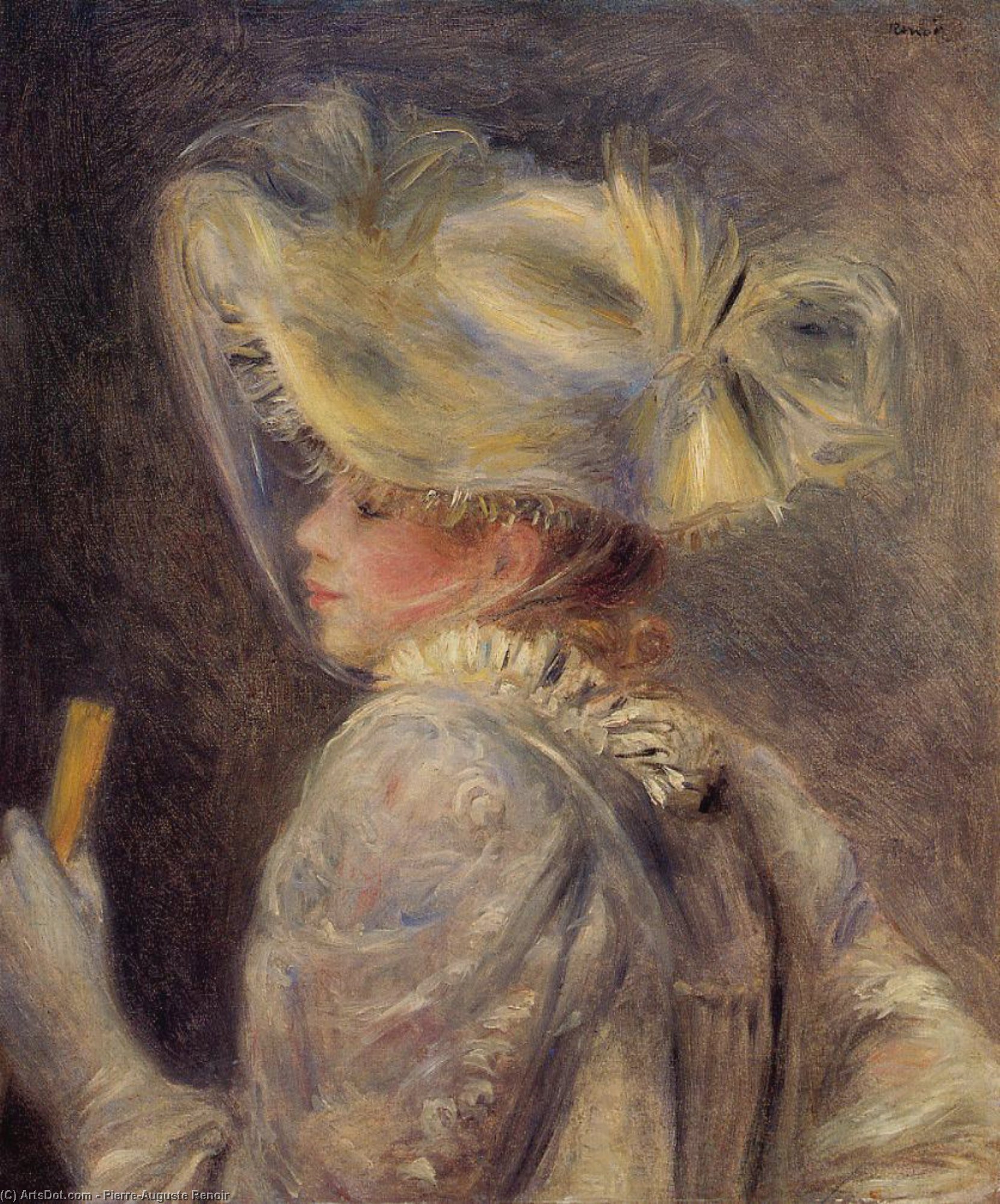
Ein Meisterwerk von Pierre-Auguste Renoir! Diese beeindruckende Ölmalerei zeigt eine Frau im weißen Hut und verkörpert die Schönheit des Impressionismus mit seinem besonderen Lichtspiel.
Erkunden Sie die lebendige Welt von Pierre-Auguste Renoir (1841–1919), einem führenden Impressionistenmaler, der für seine leuchtenden Porträts, Szenen des Pariser Lebens und weibliche Schönheit bekannt ist. Entdecken Sie sein Erbe und die künstlerischen Beiträge seiner Familie.
Pierre-Auguste Renoir: Woman in a White Hat – An Impressionist Portrait of Grace
The painting “Woman in a White Hat” by Pierre-Auguste Renoir stands as a quintessential embodiment of Impressionism, capturing not merely an image but an atmosphere—a fleeting moment of serenity bathed in dappled sunlight. Created in 1890 during the height of Renoir’s artistic maturity, this oil on canvas piece transcends mere representation; it's an invitation to experience beauty itself. It resides within a private collection and is currently unavailable for public viewing.
Impressionism and Renoir’s Vision
Renoir was undeniably one of the foremost figures propelling Impressionism forward—a movement that fundamentally challenged academic conventions by prioritizing sensory perception over meticulous detail. Unlike traditional painters who sought to recreate reality with painstaking accuracy, Renoir aimed to convey the feeling of a scene, prioritizing light and color as primary expressive tools. His canvases frequently depicted everyday life, infused with warmth and intimacy, reflecting a humanist sensibility deeply rooted in his time. “Woman in a White Hat” exemplifies this approach perfectly—a quiet tableau that speaks volumes about human connection and the simple pleasures of existence.
Composition and Technique: Soft Brushstrokes and Radiant Color
Renoir’s masterful technique is immediately apparent upon observation. The painting's composition centers around a woman standing outdoors, her gaze directed slightly off-camera, creating an aura of contemplative repose. Renoir achieved this ethereal effect through his signature use of soft brushstrokes—delicate strokes that blend seamlessly together to create luminous surfaces and subtle gradations of color. The dominant hue is a pale shade of blue, subtly offset by the creamy white of her hat ribbon and dress – colors chosen deliberately to evoke feelings of freshness and tranquility. Renoir skillfully layered pigments to build up texture and depth, capturing the play of light on skin and fabric with remarkable sensitivity.
Historical Context: Parisian Elegance and Societal Shifts
“Woman in a White Hat” is firmly situated within the cultural landscape of late 19th-century Paris—a period marked by significant social transformations and burgeoning artistic experimentation. The Impressionists were reacting against the rigid formalism of the Salon system, advocating for greater freedom of expression and prioritizing subjective experience. Renoir’s depiction reflects the fashionable attire of women during this era – a white hat adorned with yellow ribbon symbolizing status and refinement. It's a glimpse into the lives of bourgeois families enjoying leisure time in the Parisian parks—a scene that captures both visual beauty and social nuance.
Symbolism: Light, Femininity, and Tranquility
Beyond its aesthetic qualities, “Woman in a White Hat” resonates with deeper symbolic meanings. The white hat itself represents purity, innocence, and grace – qualities traditionally associated with femininity. Renoir’s masterful use of light—particularly dappled sunlight filtering through foliage—creates an atmosphere of serenity and tranquility, inviting the viewer to contemplate beauty and stillness. The woman's posture exudes confidence yet vulnerability, suggesting a harmonious balance between strength and tenderness. Ultimately, Renoir’s painting transcends its subject matter, offering a timeless meditation on human emotion and artistic vision.
Relevance Today: An Inspiration for Contemporary Art
“Woman in a White Hat” continues to inspire artists today—a testament to Renoir's enduring legacy as an Impressionist innovator. Its luminous palette, delicate brushwork, and evocative composition serve as a powerful reminder of the transformative potential of art—its ability to capture fleeting moments of beauty and convey profound emotional truths. As a masterpiece of Impressionism, it remains a valuable addition to any discerning collection or museum—a window into a bygone era and an enduring celebration of artistic excellence.