A Symphony of Color and Light: Exploring Renoir’s Gladioli
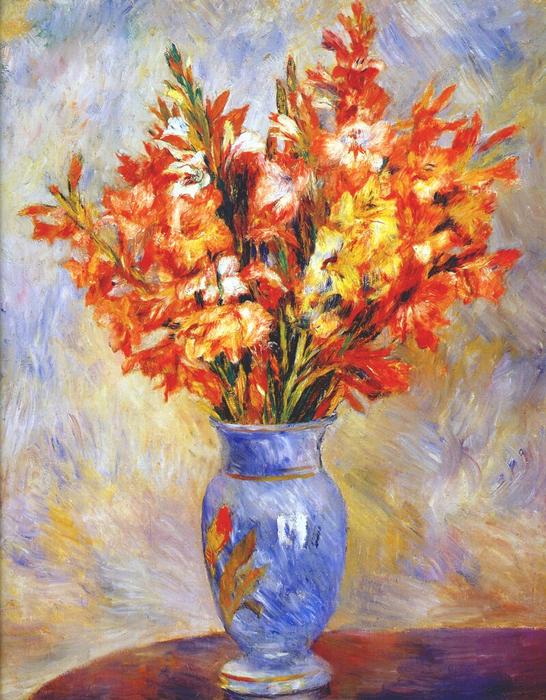
The painting “Gladioli,” executed in 1884 by Pierre-Auguste Renoir, isn't merely a depiction of flowers; it’s an embodiment of Impressionism’s core principles – capturing fleeting moments of beauty and emotion through vibrant color palettes and loose brushstrokes. This serene vase arrangement offers more than just visual pleasure; it invites contemplation on themes of tranquility, femininity, and the ephemeral nature of existence.
- Subject Matter: Renoir’s focus is undeniably floral – specifically gladioli blossoms bursting forth from a simple blue ceramic vase. The artist deliberately eschewed grand narratives or historical grandeur, opting instead for an intimate portrayal of natural beauty.
- Style and Technique: Characteristic of Renoir's Impressionistic style, “Gladioli” employs rapid brushstrokes layered upon each other to create a shimmering surface texture. Unlike academic painting’s meticulous detail, Renoir prioritizes capturing the effects of light and atmosphere—the way sunlight dances across the petals and illuminates the vase itself.
The historical context surrounding this artwork is crucial to understanding its significance. Impressionism emerged in France during the Belle Époque – a period marked by optimism, artistic experimentation, and social change. Artists like Renoir rejected the conventions of Salon art, seeking inspiration from plein air painting—working outdoors directly before their subjects—and experimenting with new pigments and techniques to achieve unprecedented realism in conveying sensory experience. This rejection of tradition was fueled by advancements in scientific understanding of light and color, influencing artists’ approaches to representation.
- Symbolism: Gladioli themselves hold symbolic weight within Impressionist art. Often associated with remembrance and mourning—particularly for deceased loved ones—their presence here speaks to a subtle melancholic undertone despite the vase's overall impression of calm. However, Renoir skillfully balances this solemnity with joyous hues of yellow and orange, suggesting an appreciation for life’s vibrancy.
- Emotional Impact: “Gladioli” succeeds in evoking feelings of serenity and contemplation. The soft blues of the vase juxtaposed against the radiant colors of the flowers create a harmonious visual experience that invites viewers to pause and savor the beauty of the natural world. Renoir’s masterful use of light contributes significantly to this emotional resonance, transporting us back to a sunlit afternoon.
Reproductions: Bringing Renoir's Vision Home
A high-quality reproduction of “Gladioli” allows art enthusiasts and interior designers alike to experience the essence of Impressionism in their own spaces. ArtsDot.com offers meticulously crafted reproductions utilizing archival inks on premium canvas, guaranteeing exceptional color accuracy and longevity—preserving Renoir’s luminous palette for generations to come. Consider framing this stunning artwork alongside complementary shades of blue or cream to further enhance its visual impact.