Pieter de Hooch (1629-1694): Niederländischer Golden Age Maler, berühmt für seine leuchtenden Darstellungen des häuslichen Lebens, Architektur & ruhigen Innenräume. Entdecken Sie seinen realistischen Stil!
Louvre
(Paris, Frankreich)
Paris
Frankreich
Entdecken Sie den Louvre in Paris! Meisterwerke wie die Mona Lisa & Venus von Milo erwarten Sie. Eine Reise durch Kunstgeschichte vom alten Ägypten bis zur Renaissance.
Louvre
Musée du Louvre
Frankreich
Paris
Louvre Museum
Mona Lisa
8.7 Millionen (2024)
380.000+ Objekte
Kunstmuseum
1793
Eine königliche Residenz
3
Wofür wurde der Louvre ursprünglich gebaut?
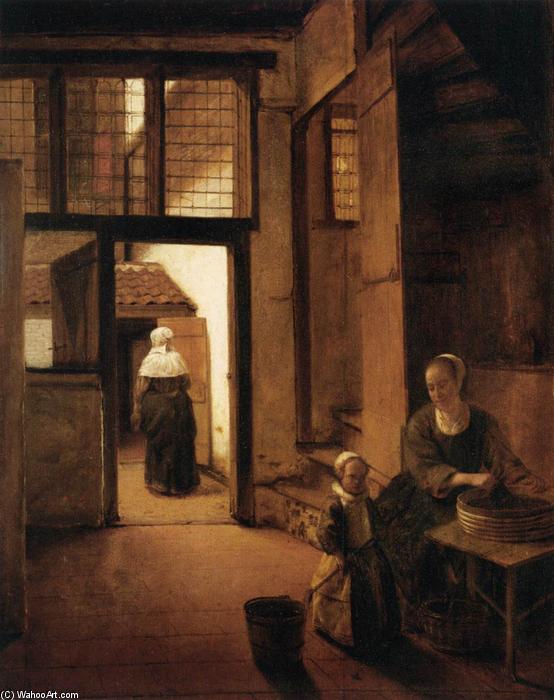
Pieter de Hooch’s Quiet Domestic Narrative: “Woman Peeling Vegetables in the Back Room of a Dutch House”
Pieter de Hooch's "Woman Peeling Vegetables in the Back Room of a Dutch House," painted around 1657, stands as an emblem of Dutch Golden Age artistry—a masterful distillation of observation and emotion within the confines of a seemingly simple domestic scene. More than just a depiction of daily life, this painting delves into themes of family, labor, and the subtle beauty found in ordinary moments, cementing De Hooch’s place among the foremost painters of his era.
- Subject Matter: The artwork portrays a woman diligently peeling vegetables within a dimly lit kitchen interior. Alongside her are two children observing intently, creating an intimate tableau that captures the essence of family life during the mid-17th century.
- Style & Technique: De Hooch’s signature style is characterized by its remarkable realism and luminous chiaroscuro—the dramatic interplay between light and shadow—a technique perfected under the tutelage of Nicolaes Berchem. He employs a muted palette dominated by earthy tones, skillfully rendering textures and capturing atmospheric depth with meticulous detail.
- Historical Context: Painted during the Dutch Golden Age, “Woman Peeling Vegetables” reflects the burgeoning bourgeois culture of Amsterdam and Delft. The painting speaks to the values of industriousness, domestic harmony, and the aspiration for a comfortable existence—values central to the emerging middle class.
- Composition & Symbolism: De Hooch’s compositional choices are deliberate; the open doorway framing the scene invites viewers into this private space, symbolizing openness and connection. The placement of bowls and furniture contributes to the sense of spatial realism, while the woman's focused activity embodies the quiet dignity of labor—a motif frequently explored by artists of the period.
- Emotional Impact: Despite its understated appearance, “Woman Peeling Vegetables” evokes a profound feeling of warmth and tranquility. De Hooch’s masterful use of light creates an atmosphere of intimacy and invites contemplation on themes of motherhood, childhood innocence, and the beauty inherent in everyday life. It's a painting that speaks to the human condition—a reminder that grandeur can be found not only in monumental achievements but also in the quiet rituals of domestic existence.
This artwork exemplifies De Hooch’s ability to elevate commonplace subjects into enduring symbols of artistic excellence and humanist values. Its legacy continues to inspire artists today, demonstrating the power of observation and sensitivity to convey complex emotions within a restrained visual language.