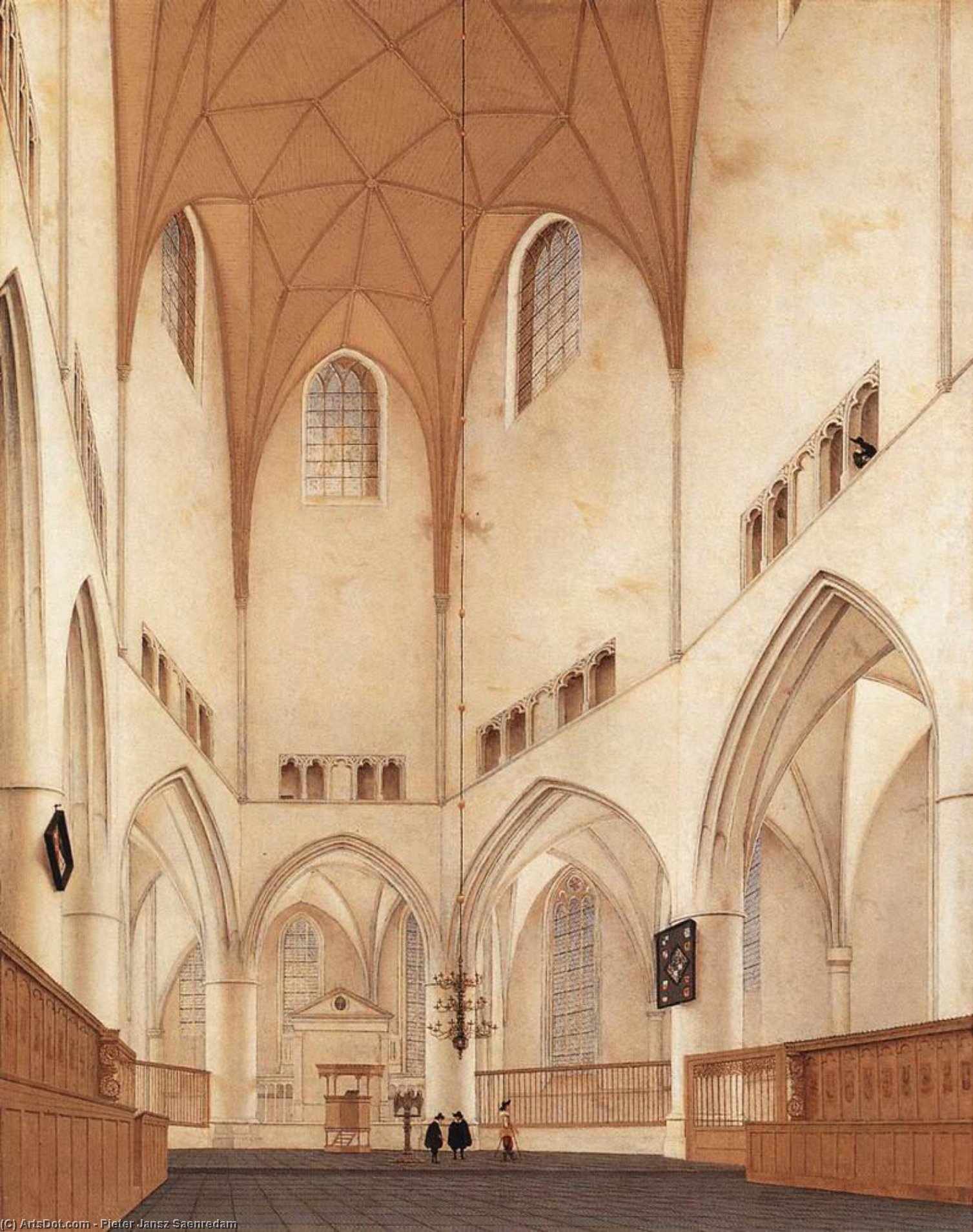
A Singular Vision: Pieter Jansz Saenredam’s Reverie for Sacred Space
Pieter Jansz. Saenredam (1597 – 1665), born in Assendelft, Netherlands, stands as an extraordinary figure within the Dutch Golden Age—a painter who eschewed grand narratives and theatrical displays of emotion to pursue a profoundly contemplative path: documenting the serene beauty of Dutch Protestant churches. Unlike many artists of his era preoccupied with portraiture or historical drama, Saenredam found inspiration in the quiet grandeur of these sacred spaces, establishing himself as a unique voice focused on architectural precision and an almost meditative stillness. This dedication distinguishes him from contemporaries like Rembrandt and Vermeer, cementing his legacy as a master of capturing intangible spiritual essence through meticulous observation.
- Early Training & Apprenticeship: Saenredam’s artistic education began around 1612 with an apprenticeship under Frans Pietersz de Grebber, Haarlem’s leading portraitist. This formative experience honed his draftsmanship skills and instilled foundational techniques—skills that would prove invaluable in his later endeavors to depict architectural interiors.
- The Sint-Bavokerk Project: Saenredam's most celebrated achievement was his ambitious undertaking to paint the interior of Sint-Bavokerk at Haarlem, commissioned by Worcester Theological Seminary. This project consumed him for years and resulted in a series of canvases that exemplify his artistic philosophy.
Style & Technique: Architectural Minimalism Embodied
Saenredam’s style is characterized by architectural minimalism—a deliberate rejection of ornamentation and embellishment in favor of capturing the essential form and atmosphere of the church. He employed a technique known as *trompe l'oeil*, creating illusions of depth and perspective that convincingly mimic the natural light filtering through stained glass windows and illuminating vaulted ceilings. This masterful manipulation of visual perception elevates his paintings beyond mere representations; they invite viewers into a realm of contemplative stillness, mirroring the spiritual experience within the church itself. The artist’s meticulous attention to detail—from the subtle gradations of color to the precise rendering of architectural elements—underscores his unwavering commitment to accuracy and artistic integrity.
Historical Context & Religious Symbolism
Saenredam's work emerged during a period of religious upheaval in Holland, as Protestantism gained prominence following decades of Catholic rule. The church served as a focal point for spiritual life and civic identity, and Saenredam’s paintings reflect this cultural significance. Stained glass windows—often depicting biblical scenes—symbolized divine grace and illuminated the sacred space with vibrant hues. The muted palette employed by Saenredam—primarily cool blues and greens—contributed to the overall atmosphere of tranquility and reverence, reinforcing the church's role as a sanctuary for contemplation and prayer.
Emotional Impact & Legacy
Beyond its technical brilliance, Saenredam’s art possesses an undeniable emotional resonance. His paintings evoke feelings of serenity, humility, and awe—inspiring viewers to contemplate the sublime beauty of God’s creation. By capturing not just the physical appearance of the church but also its spiritual essence, Saenredam achieved a feat of artistic accomplishment that transcends mere visual representation. He remains revered as one of the foremost architectural painters of his time, influencing subsequent generations of artists and continuing to inspire those who appreciate the power of art to elevate the human spirit—a testament to his singular vision for sacred space.