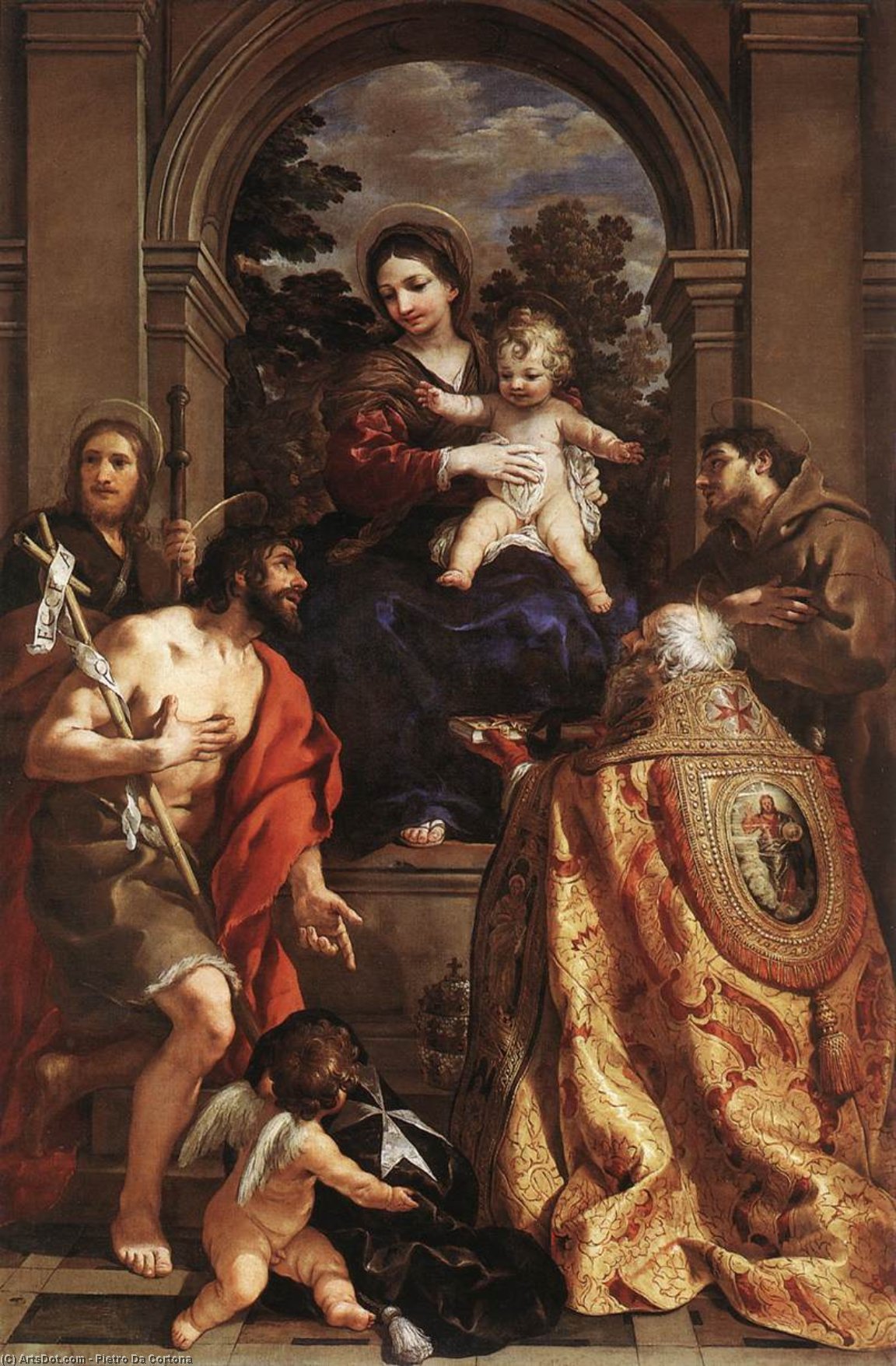
The Divine Embrace: An Exploration of Pietro da Cortona's Madonna and Saints
To stand before a depiction such as Pietro da Cortona’s Madonna and Saints is to be enveloped in the very breath of the Roman Baroque. This monumental work, dating from 1626, is far more than a mere portrait; it is a vibrant theological statement rendered with breathtaking drama. At its heart lies the tender yet majestic grouping of Mary cradling the Christ Child, figures whose divine connection radiates outward to encompass the surrounding saints. The composition immediately draws the eye to the central maternal bond—a moment of profound intimacy set against the grand backdrop of sacred history.
Mastery in Baroque Grandeur and Composition
Cortona, a true Tuscan Sun who flourished in Rome, was a master orchestrator of illusion. His technique here showcases the dramatic flair characteristic of the period. Notice how the figures are arranged within an architectural setting—the visible archway suggesting depth and drawing the viewer into the sacred space. The artist does not simply place figures; he constructs a narrative stage. The drapery seems to ripple with unseen currents, lending movement even to those standing in reverent stillness. This sense of dynamic energy, this palpable drama, is what defines the Baroque spirit, pulling the observer out of passive viewing and into active participation within the scene.
Symbolism Woven into Sacred Garb
Every element within Madonna and Saints whispers a story of devotion and divine lineage. The religious garb worn by all figures serves not only as costume but as symbolic marker, identifying their roles within the Christian narrative. Mary embodies grace and human connection to the divine mystery held in her arms. The surrounding saints act as intermediaries, witnesses whose presence validates the central miracle. To contemplate this piece is to engage with centuries of iconography—a visual catechism rendered with unparalleled beauty. It speaks to themes of intercession, heavenly glory, and the enduring power of faith.
An Echo of Devotion for the Modern Collector
For the contemporary admirer, whether one curates a sacred space or seeks an object imbued with historical gravitas, this work offers profound resonance. The emotional impact is immediate: a feeling of awe mixed with deep, comforting serenity. When considering a reproduction of such a piece, one acquires not just pigment on canvas, but a tangible connection to the artistic fervor of 17th-century Rome. It serves as a magnificent focal point, capable of elevating any interior setting—from a grand hall to a private chapel—with its enduring sense of reverence and masterful artistry.