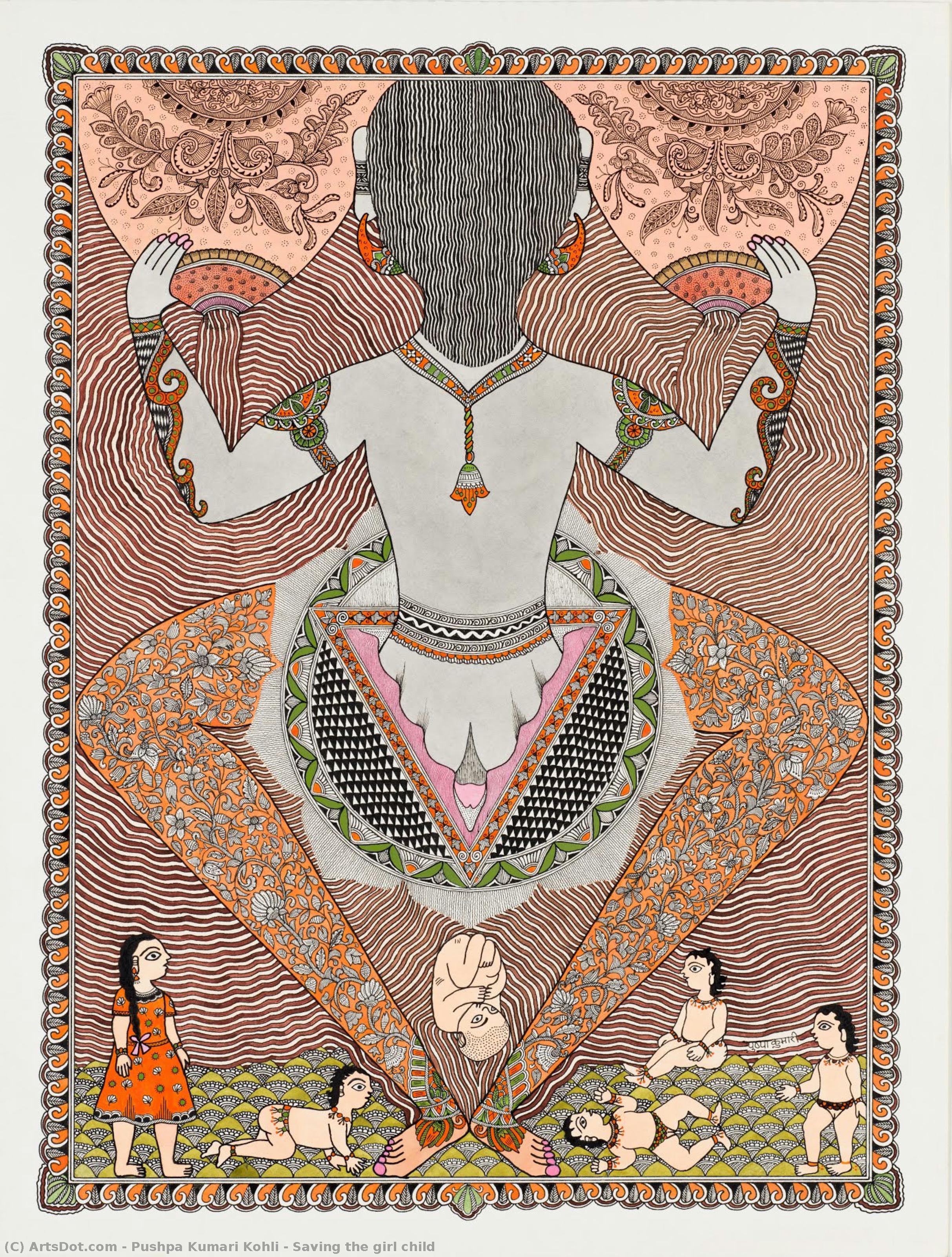
A poignant Mithila painting by Pushpa Kumari Kohli uses intricate patterns and vibrant natural pigments to advocate for women's rights through a tender scene of motherhood, inviting you to explore this social masterpiece.
Erforschen Sie die komplizierte Mithila Kunst von Pushpa Kumari Kohli! Bekannt für lebendige Farben und religiöse Themen, spiegelt ihre Arbeit traditionelle indische Kultur und soziale Kommentare wider.
Erleben Sie Kunstgeschichte und zeitgenössische Innovationen im Herzen von Brisbane! QAGOMA beeindruckt mit einer vielfältigen Sammlung und außergewöhnlichen Ausstellungen.
Saving the girl child employs images of fecundity and Mother Nature — often used in Mithila painting to celebrate marriages and union — to protest against the death of female babies, who are often regarded as a burden to their parents in parts of India, in contrast to sons, whose births are often celebrated. Pushpa Kumari (India b.1969) employs the finely detailed patterning and disciplined composition of Mithila painting to depict various stages in the life of female children, referencing one of the most pressing social issues facing certain communities in India. Dating from at least the 14th Century, Mithila painting and drawing was traditionally practised by women in the Mithila region of Bihar in northern India and Nepal. Mithila works are characterised by intricate line drawing, geometric patterns and elaborate symbolism — fish represent fertility, peacocks are associated with love, and serpents with divinity. For centuries it was used to mark rituals and ceremonies, particularly weddings, and created mostly on the walls of people’s homes. Kumari retains the distinctive styles and conventions of Mithila painting while addressing new subjects such as women’s rights in India.Exhibited in