A Divine Gaze: Exploring Quinten Matsijs' Christ
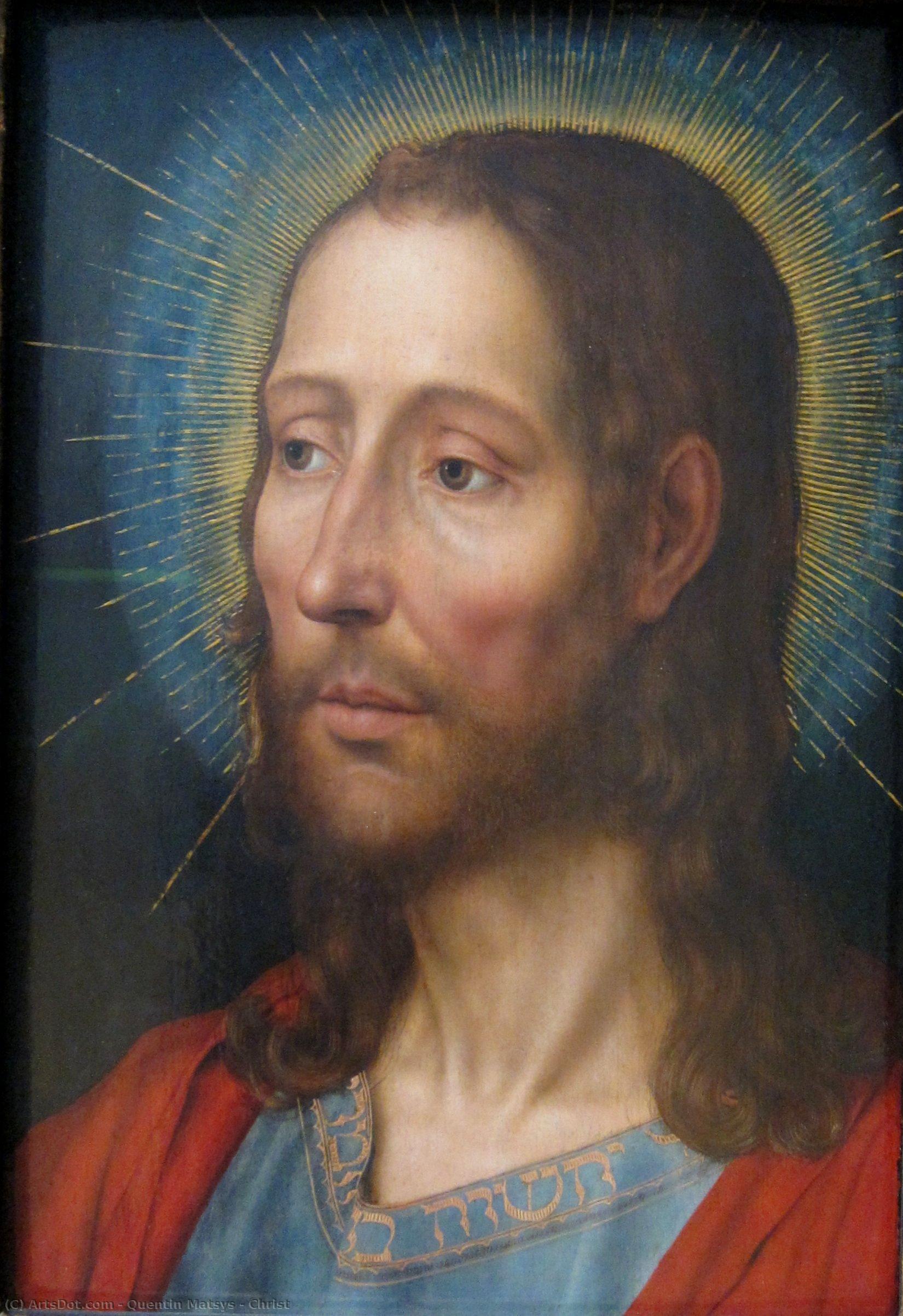
To stand before this devotional portrait of Christ is to encounter a moment suspended in time—a profound intersection of divine majesty and human intimacy. Painted around 1529 by the master Quinten Matsijs, this bust-length depiction transcends mere representation; it offers a direct, soulful communion with the sacred. The overall impression is one of quiet dignity, a somber yet radiant presence that seems to gaze directly out from the panel into the modern viewer's soul. Matsijs, a key figure in the early Netherlandish tradition, imbued this work with the characteristic blend of meticulous realism and deep spiritual resonance that defined the Antwerp School.
Technique and Material Mastery
The technical brilliance evident here is breathtaking. The artist employed oil paint on panel, allowing for subtle gradations of tone and an almost palpable sense of texture. Observe how the light seems to emanate not just from the halo, but from within the very subject himself. Matsijs masterfully handles the interplay between light and shadow; the illumination, seemingly cast from above and slightly to the left, sculpts the contours of Christ’s face, lending a three-dimensional volume that belies the flatness of the panel. The background, rendered in deep, velvety blues, serves not merely as negative space but as an abyss against which the luminous figure seems to emerge, enhancing the dramatic impact.
Symbolism Woven into Form
Every element within this composition carries symbolic weight. The radiant golden halo is more than ornamentation; it is a visual declaration of divinity, composed of radiating lines that suggest an unending source of holiness. The color palette itself speaks volumes: the rich, deep blue undergarment contrasts beautifully with the authoritative sweep of the red cloak, colors traditionally associated with royalty and sacrifice within Christian iconography. Furthermore, Christ’s direct gaze engages us in a silent dialogue, inviting contemplation on themes of piety, redemption, and eternal truth.
Historical Context and Emotional Resonance
Rooted in the early 16th century Antwerp art scene, this piece reflects the period's deep commitment to religious devotion. While Matsijs was known for blending sacred narratives with subtle moral undertones, here he focuses intensely on the devotional portraiture that characterized the era. For the contemporary collector or designer, owning a reproduction of this work is acquiring more than just artwork; it is acquiring a focal point of contemplation. It possesses an inherent gravitas, capable of transforming any space—be it a private chapel, a study, or a grand hall—into a sanctuary of quiet reflection.