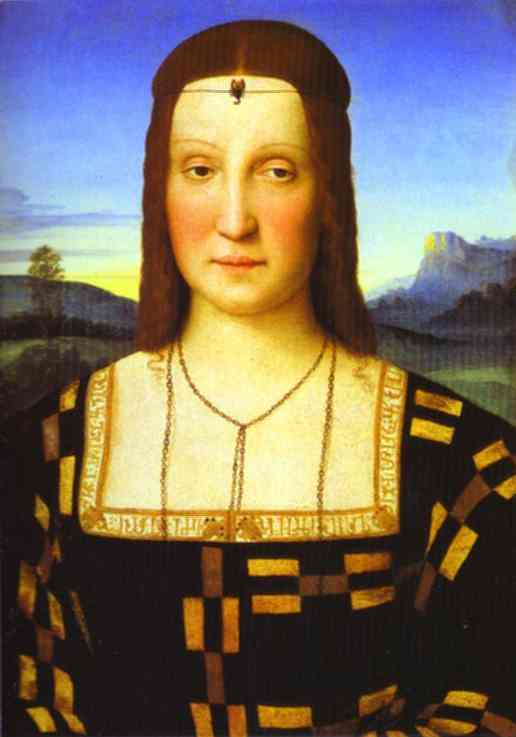
Raphael’s Elisabetta Gonzaga: A Portrait of Renaissance Grace
The portrait of Elisabetta Gonzaga, Duchess of Urbino, stands as a luminous testament to the artistic brilliance of Raphael – a master who distilled the essence of High Renaissance ideals into a single, captivating image. Completed around 1504, this oil painting housed within the Uffizi Gallery in Florence isn’t merely a likeness; it's an embodiment of aristocratic poise, intellectual refinement, and the subtle power dynamics inherent in the Italian court of the early 16th century. The painting immediately draws the eye with its masterful use of light and shadow, creating a sense of depth and intimacy that invites prolonged contemplation. Elisabetta herself is depicted in a pose of quiet dignity, her gaze direct yet subtly reserved, suggesting both intelligence and an inner strength.
Raphael’s genius lies not just in his technical skill – the delicate brushstrokes, the precise rendering of fabric and jewelry, the subtle modeling of flesh – but also in his ability to imbue a portrait with personality. He captures Elisabetta's youthfulness while simultaneously conveying her status as a formidable ruler and a woman deeply engaged with the intellectual currents of her time. The choice of attire—a black gown adorned with gold embroidery, reminiscent of heraldic symbols—underscores her noble lineage and her role as a key figure within the Gonzaga family’s political landscape. The scorpion adorning her forehead, a detail often interpreted as a symbol of both vigilance and fertility, adds an intriguing layer of symbolic complexity to the composition.
A Window into the Renaissance Court
To fully appreciate Raphael's Elisabetta Gonzaga, it is crucial to understand the context in which it was created. The early 16th century marked a golden age for Florence and Italy as a whole – an era of unprecedented artistic innovation, humanist scholarship, and political intrigue. Raphael himself was deeply immersed in this vibrant cultural milieu, influenced by the revolutionary works of Leonardo da Vinci and Michelangelo. His portrait reflects these influences, showcasing a refined elegance that is both classical and distinctly Renaissance. The painting’s creation coincided with a period of intense courtly activity, where diplomacy, patronage, and artistic expression were inextricably linked.
The Duke of Urbino, Guidobaldo I da Montefeltro, was a renowned patron of the arts and a skilled military leader. Elisabetta's role as his Duchess meant she was not just a wife but also a political player – a woman expected to uphold the Gonzaga family’s prestige and influence. The portrait serves as a visual representation of this multifaceted identity, capturing her beauty, intelligence, and regal bearing.
Technique and Artistic Innovation
Raphael's mastery of oil painting is evident in every detail of Elisabetta Gonzaga. He employed a technique known as *sfumato*, characterized by subtle gradations of tone and color that create an atmospheric effect—a soft, almost hazy quality that lends the portrait its ethereal beauty. The use of light is particularly striking, illuminating Elisabetta’s face while casting delicate shadows across her gown. This careful manipulation of light and shadow not only enhances the painting's visual appeal but also contributes to its sense of realism and depth.
Furthermore, Raphael demonstrates a remarkable understanding of human anatomy—the graceful curve of Elisabetta’s neck, the delicate structure of her hands, the subtle expression in her eyes. His attention to detail is meticulous, reflecting his commitment to capturing not just a likeness but also the essence of his subject.
Symbolism and Emotional Resonance
Beyond its technical brilliance, Elisabetta Gonzaga’s portrait resonates with profound symbolic meaning. The choice of colors—the deep black of her gown contrasted with the shimmering gold of her jewelry—evokes notions of power, wealth, and nobility. The scorpion on her forehead, as mentioned earlier, is a potent symbol of vigilance and protection – suggesting that Elisabetta was not merely a beautiful woman but also a shrewd and resourceful ruler.
Ultimately, the portrait transcends its status as a mere likeness; it offers a glimpse into the soul of a remarkable woman—a Duchess who navigated the complexities of Renaissance courtly life with grace, intelligence, and unwavering determination. It’s a timeless masterpiece that continues to captivate viewers centuries after its creation.
Bringing Elisabetta Gonzaga Home
At ArtsDot.com, we are proud to offer meticulously crafted hand-painted oil painting reproductions of Raphael's Portrait of Elisabetta Gonzaga. Our skilled artists painstakingly recreate every nuance of the original—from the delicate brushstrokes and subtle color palette to the intricate details of the gown and jewelry. We use only the finest materials – archival linen, museum-grade pigments, and a protective varnish – ensuring that your reproduction will endure for generations to come.
Whether you’re an art collector, an interior designer seeking to add a touch of Renaissance elegance to your home, or simply someone who appreciates the beauty of timeless art, a ArtsDot.com reproduction of Elisabetta Gonzaga is a stunning addition to any collection. Contact us today to discuss custom sizing options and bring this iconic masterpiece into your world.