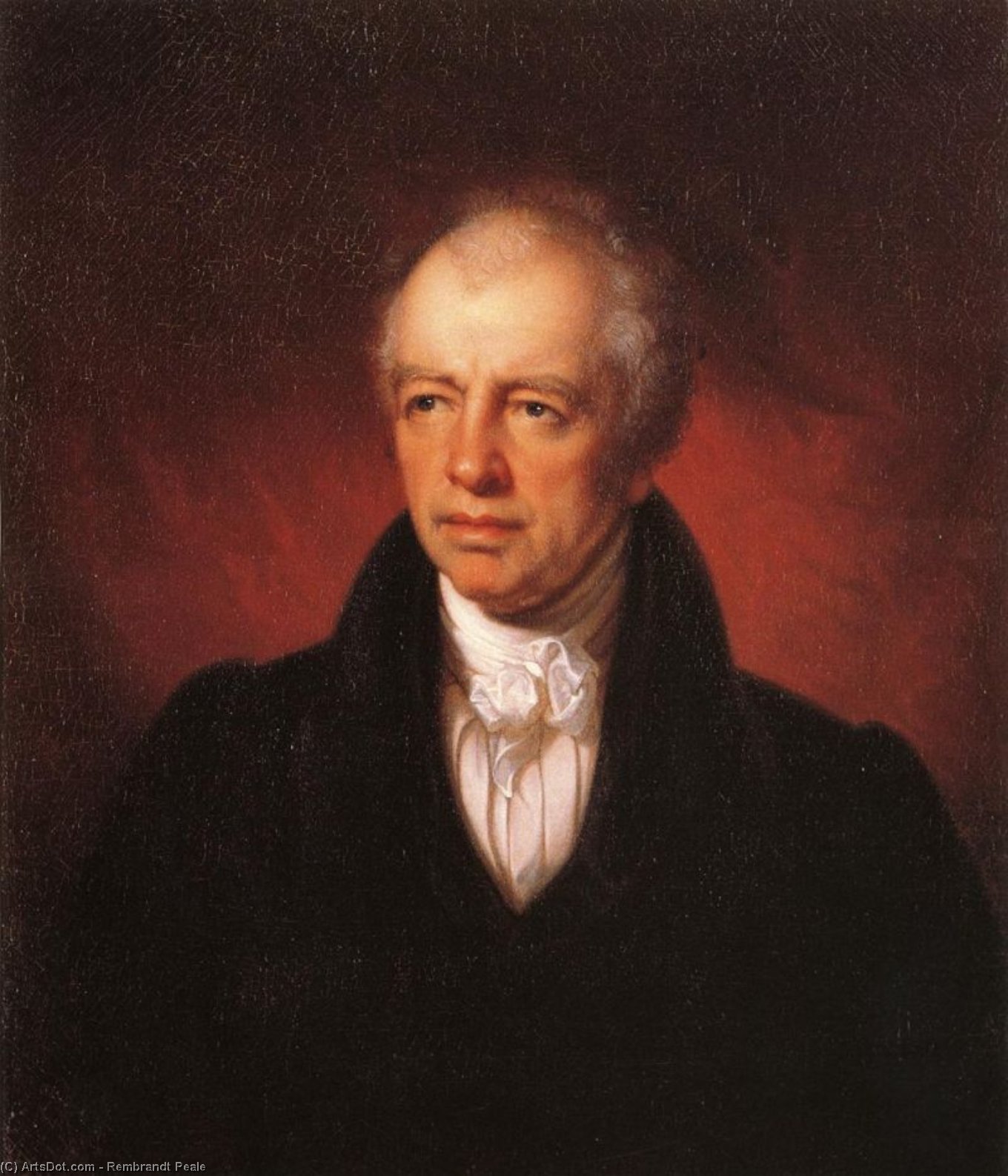
Chancellor James Kent - Rembrandt Peale
Rembrandt Peale’s “Chancellor James Kent” stands as a cornerstone of American portraiture, embodying the ideals of Enlightenment rationality and civic virtue. Painted in 1834 during a period of burgeoning national identity—a time when artists like Peale sought to elevate the visual arts as instruments for shaping public opinion—this oil on canvas masterpiece transcends mere likeness; it’s an astute psychological study rendered with meticulous detail.
- Subject Matter: The portrait depicts Chancellor James Kent, a prominent jurist and advocate for constitutional rights during Andrew Jackson's presidency. Kent’s dignified posture and gaze convey seriousness and intellectual contemplation—qualities deemed essential to leadership in the burgeoning republic.
- Style & Technique: Peale adhered to Neoclassical principles, mirroring the artistic currents of Europe at the time. He employed a pyramidal composition, placing Kent centrally within a carefully constructed frame that directs the viewer’s eye upward, emphasizing his stature and conveying an aura of authority. The artist skillfully utilized chiaroscuro—the dramatic interplay between light and shadow—to sculpt Kent's form and imbue the painting with depth and realism.
- Historical Context: Created during Jacksonian Democracy, “Chancellor James Kent” reflects the era’s preoccupation with moral virtue and republican ideals. Peale’s decision to depict Kent in a formal black suit underscores the importance of social decorum and professionalism within the legal profession—values considered crucial for upholding constitutional principles.
- Symbolism: The rich red walls behind Kent serve as more than mere backdrop; they symbolize warmth, grandeur, and the stability of the nation’s institutions. Peale's deliberate choice of color contributes to the painting's overall emotional impact, conveying a sense of solemn dignity and intellectual seriousness.
- Emotional Impact: Viewing “Chancellor James Kent” evokes contemplation—a reflection on Kent’s unwavering commitment to justice and his role in shaping American legal history. Peale’s masterful rendering captures not only Kent’s physical appearance but also the inner life of a man dedicated to upholding constitutional values, cementing its place as an enduring symbol of republican virtue.
Further exploration into Rembrandt Peale's oeuvre can be found at ArtsDot.com where you can acquire high-quality reproductions of his celebrated works, including “George Washington (Porthole type).” Consider also examining Gilbert Stuart’s “George Washington (The Athenaeum Portrait)” and Hans Schwarz's portraits housed in the National Portrait Gallery for a broader understanding of American artistic heritage.