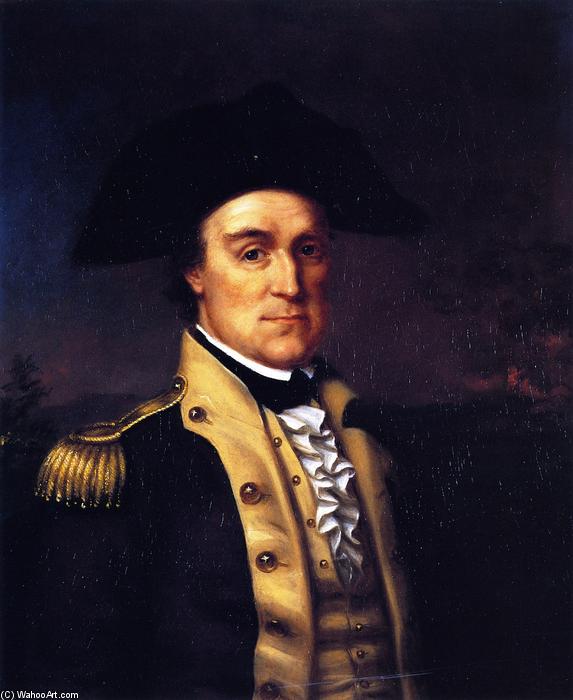
Entdecken Sie Rembrandt Peale (1778-1860), US-amerikanischer Neoklassizist, bekannt für Porträts von Washington & Jefferson! Sein Museums-Erbe & detailreiche Repliken.
High Museum of Art
(Atlanta, Vereinigte Staaten von Amerika)
Erkunden Sie das High Museum of Art in Atlanta, GA – das führende Kunstmuseum im Süden der Vereinigten Staaten! Entdecken Sie amerikanische Kunst des 19. und 20. Jahrhunderts sowie zeitgenössische Kunst, Volkskunst, Fotografie und Sonderausstellungen. Genießen Sie Festivals, Veranstaltungen und Familienprogramme.
A Glimpse into American Valor: The Portrait of General Elijah Clarke
To stand before this portrait is to step directly into the charged atmosphere of early American history. Rembrandt Peale’s depiction of General Elijah Clarke is far more than a mere likeness; it is a carefully constructed monument to leadership, duty, and the burgeoning spirit of a nation finding its voice. The composition immediately commands attention through its central figure, George Washington—though the painting honors General Elijah Clarke, the presence of Washington anchors the piece within the grand narrative of the Revolutionary era. Observe the commanding gaze directed straight out from the canvas; it is an unflinching look that speaks volumes of conviction and unwavering resolve. Peale masterfully captures not just a man in uniform, but the very embodiment of martial authority.
Mastery of Neoclassical Portraiture
Rembrandt Peale, steeped in the tradition established by his father, Charles Willson Peale, approached this work with the meticulous skill characteristic of American academic painting. The style leans into neoclassical portraiture, a genre that sought to imbue contemporary subjects with the timeless dignity of classical antiquity. Notice the rendering of the uniform—the crisp lines, the weight of the fabric, and the symbolic feather adorning the hat. These details are executed with an almost photographic precision, yet they remain imbued with painterly grace. The technique showcases Peale’s ability to balance historical accuracy with artistic idealization, ensuring that while the viewer feels connected to a specific moment in 1820, the portrait transcends its date.
Symbolism and Supporting Figures
What elevates this piece beyond a simple military record are the surrounding elements. The inclusion of other figures—one standing sentinel behind the general, another positioned subtly on the far right—suggests a narrative depth that invites contemplation. These secondary portraits or figures act as silent witnesses to the central drama, hinting at the council, the support structure, and the collective effort required for national survival. Symbolically, they ground General Clarke within a community of purpose. The entire arrangement speaks to the concept of shared destiny; no single leader stands alone against the tide of history.
Emotional Resonance for the Modern Collector
For the collector or designer seeking art with profound narrative weight, this reproduction offers an unparalleled connection to American heritage. Owning this piece is not merely decorating a wall; it is curating a conversation about foundational ideals—courage, governance, and enduring patriotism. The emotional impact is one of solemn pride. Whether placed in a formal study, a library, or a grand hall, the portrait exudes an air of established gravitas. It serves as a powerful focal point, suggesting that within its walls resides a history worthy of deep respect and admiration.