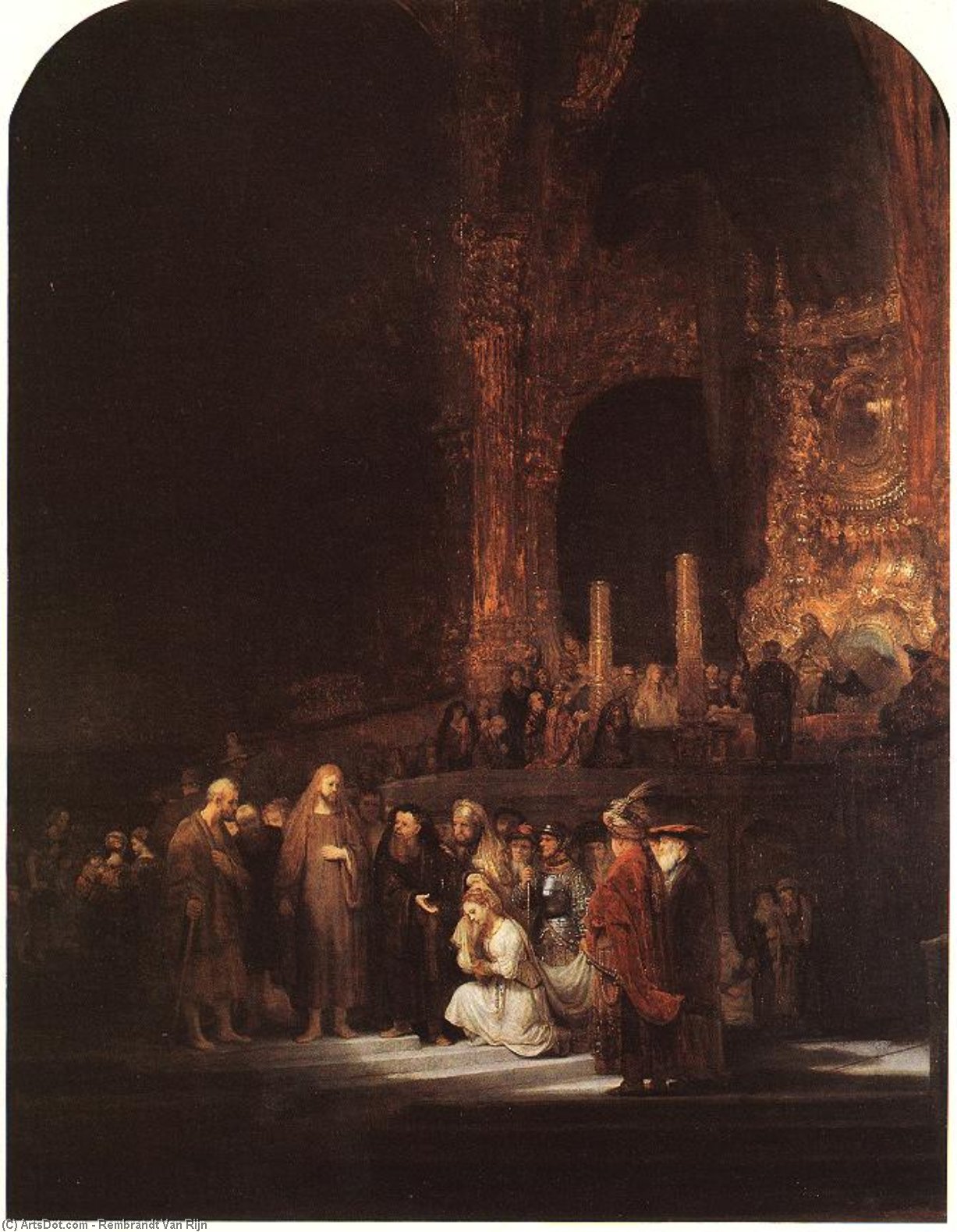
Christ and the Adulteress ng London
Rembrandt van Rijn’s
Christ and the adulteress ng London, created in 1644, is a captivating oil painting that exemplifies the Dutch Golden Age style. This artwork is a testament to Rembrandt’s skill in capturing emotional depth and religious themes—a masterpiece that continues to resonate with viewers centuries later.
The painting depicts Jesus Christ standing in front of a group of people, with an adulteress present, showcasing his ability to tell a story through visual means. It's not merely a depiction of biblical narrative; it’s an exploration of morality and judgment, rendered with unparalleled sensitivity.
The Composition and Symbolism
The composition of the painting is characterized by a sense of intimacy and drama, with the figures arranged in a way that draws the viewer’s attention to the central scene—the confrontation between Jesus and the woman caught in adultery. Rembrandt skillfully utilizes perspective to create depth, placing the figures within a darkened temple interior, emphasizing the solemnity of the occasion. The positioning of Christ dominates the frame, conveying authority and compassion simultaneously.
Symbolically, the adulteress represents sin – a transgression against God’s law—while Jesus embodies redemption and forgiveness. Rembrandt subtly contrasts these opposing forces through lighting and shading, highlighting the moral dilemma faced by those present. This juxtaposition is central to understanding the painting's profound message about divine justice and human compassion.
The Technique: Chiaroscuro and Its Impact
A notable feature of this painting is Rembrandt’s masterful use of
chiaroscuro—the dramatic interplay between light and shadow—a technique he perfected during his prolific artistic career. Rembrandt achieves an astonishing level of realism by meticulously rendering the textures of clothing, skin, and drapery, creating a palpable sense of atmosphere. The strong contrasts illuminate key figures, drawing attention to their expressions and gestures, intensifying the emotional impact of the scene.
Consider how Rembrandt uses light to sculpt the faces of Christ and the adulteress, conveying inner turmoil and vulnerability. This technique isn’t just aesthetically pleasing; it serves as a powerful tool for communicating emotion—a cornerstone of Rembrandt's artistic vision.
Historical Context: The Dutch Golden Age
Painted during the height of the Dutch Golden Age (approximately 1640-1675), Rembrandt Van Rijn’s Christ and the adulteress ng London reflects the intellectual and artistic fervor of the era—a period marked by unprecedented prosperity and cultural innovation.
The painting engages with pressing moral questions prevalent in Dutch society at the time, mirroring broader debates about religious piety and social responsibility. It stands alongside other monumental biblical paintings produced during this period, demonstrating the ambition and sophistication of Dutch artists.
Where to See This Artwork
The Mauritshuis museum in the Netherlands houses an impressive collection of Dutch Golden Age paintings, including works by
Rembrandt Van Rijn and other notable artists. For those interested in learning more about this period and its artists,
La Galleria Reale di Pittura Mauritshuis offers a range of resources and information, including articles on
Rembrandt Van Rijn and his contemporaries.
To see more paintings by
Rembrandt Van Rijn, including
Le Christ Et La Femme Adultere, londres Ng, visit
Rembrandt Van Rijn - Le Christ Et La Femme Adultere, londres Ng.
For information on the Mauritshuis museum and its collection, see
La Galleria Reale di Pittura Mauritshuis.