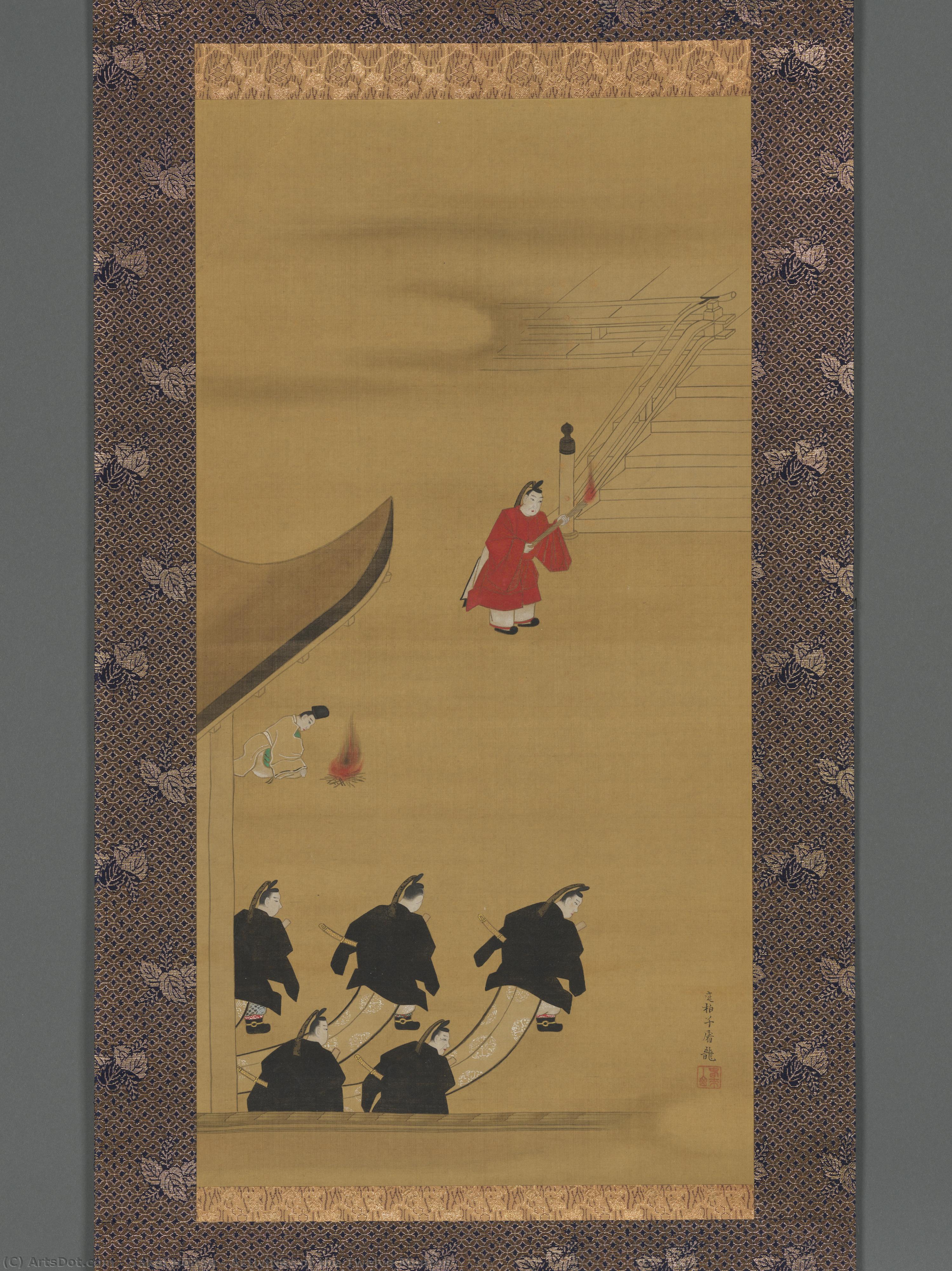
A Seasonal Symphony in Ink and Color
In the delicate dance of the Activities of the Twelve Months, the legendary Rinpa master Sakai Hōitsu invites us into a world where time is measured not by the ticking of a clock, but by the subtle shifts in nature and the rhythmic pulse of Japanese tradition. This exquisite series of scrolls serves as a visual calendar, capturing the ephemeral beauty of the seasons through a lens of profound cultural significance. Each composition acts as a window into the Edo period, offering a glimpse into both the grand imperial rituals and the intimate, quiet moments of daily life. Whether it is the solemnity of the Shihōhai ritual in the First Month or the joyful celebration of Shichi-go-san in the Eleventh Month, Hōitsu weaves a tapestry of human experience that feels both timeless and deeply rooted in the soil of Japan.
The artistry within these scrolls is a masterclass in the Rinpa school aesthetic, a style characterized by its bold use of negative space and its ability to evoke deep emotion through minimalist elegance. Hōitsu, a scholar-painter of immense refinement, utilizes the sophisticated technique of tarashikomi—the method of dropping wet pigment into still-wet ink—to create mottled, organic textures that mimic the natural world. This technique breathes life into the foliage of the Eighth Month, where bellflowers and knotweed appear to sway under a luminous full moon, and lends a dreamlike quality to the scenes referencing the classical literature of The Tale of Genji. The result is a visual language that is both structurally disciplined and fluidly poetic.
Symbolism and the Poetry of Nature
Beyond their decorative splendor, these works are layered with profound symbolism and literary allusions that reward the contemplative viewer. Hōitsu does not merely paint objects; he paints meanings. The presence of a mulberry leaf or an ornamental kusudama ball is never accidental; each element serves as a seasonal marker that connects the viewer to the broader cycles of life and the cosmos. For the collector, these pieces offer more than just aesthetic pleasure—they provide a meditative connection to the concept of mono no aware, the pathos of things, or the bittersweet realization of the impermanence of all beauty. The interplay between the moon, the flowers, and the human figures creates a narrative arc that speaks to the harmony between humanity and the natural order.
For interior designers and connoisseurs of fine art, a high-quality reproduction of Hōitsu’s work brings an unparalleled sense of tranquility and historical depth to any space. The soft palettes and rhythmic compositions are ideal for creating focal points that inspire calm and intellectual curiosity. To possess such a piece is to hold a fragment of the Edo period's golden age, allowing the sophisticated elegance of the Rinpa tradition to grace modern surroundings with a legacy of grace, seasonal wisdom, and unparalleled Japanese craftsmanship.