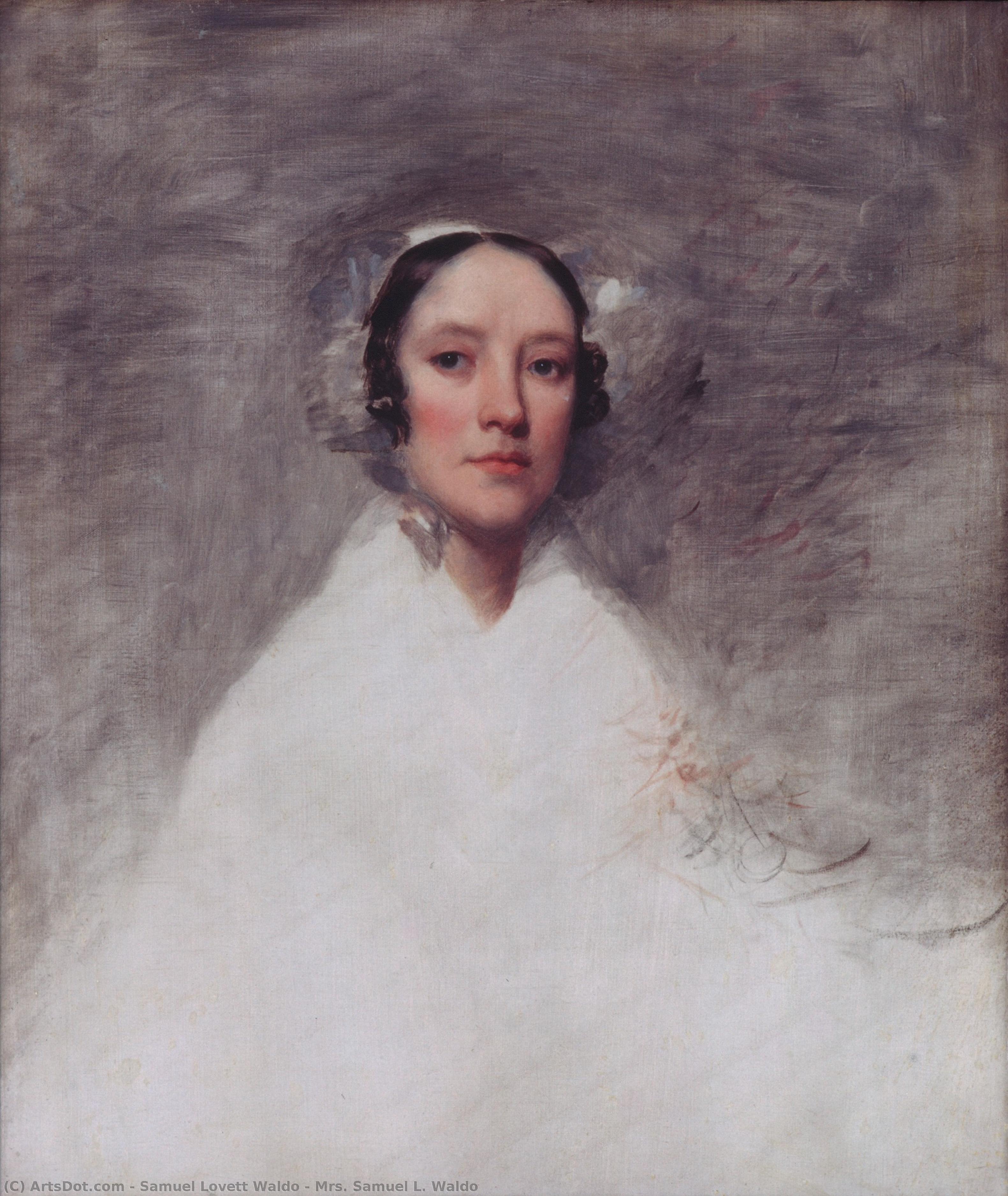
A Portrait of Quiet Dignity: Samuel Lovett Waldo’s “Mrs. Samuel L. Waldo”
Samuel Lovett Waldo's "Mrs. Samuel L. Waldo," painted in 1826, is more than a simple likeness; it’s a carefully constructed tableau of domestic serenity and understated elegance, capturing the essence of early American gentility. The portrait depicts Mrs. Samuel L. Waldo, likely a woman of considerable social standing within her community, seated with an air of quiet contemplation. Her posture is relaxed yet dignified, her gaze direct and engaging – she seems to hold the viewer’s attention with a subtle, almost knowing expression. Waldo masterfully employs a restrained palette of soft blues, creams, and muted greens, creating a harmonious atmosphere that reflects the refined sensibilities of the era. The painting isn't merely a representation of a woman; it’s an embodiment of the ideals of domesticity and social grace so prized in 19th-century America.
Waldo’s technique is deeply rooted in the neoclassical tradition, a style that was flourishing in the United States during this period. This influence is evident in the painting's balanced composition, symmetrical arrangement, and meticulous attention to detail. He skillfully renders textures – from the delicate folds of her elaborate dress, likely crafted from fine silk or wool, to the sheen of her pearl necklace and the subtle texture of her hair. Note the masterful use of light and shadow, a technique known as chiaroscuro, which creates a sense of volume and depth, drawing the viewer’s eye to Mrs. Waldo's face and highlighting her features with an almost ethereal quality. The brushstrokes are smooth and controlled, contributing to the painting’s polished appearance and conveying a sense of quiet confidence.
A Window into a Changing America
To fully appreciate “Mrs. Samuel L. Waldo,” it’s crucial to understand the historical context in which it was created. The early 1820s marked a period of significant transformation in the United States – a burgeoning republic grappling with questions of identity, expansion, and social change. Portraiture during this time served not only as a means of commemorating individuals but also as a reflection of societal values and aspirations. Wealthy families commissioned portraits to solidify their status and leave a lasting legacy, and artists like Wald were tasked with capturing the very essence of their family’s position within society. The painting speaks volumes about the growing emphasis on social standing, familial piety, and the importance of presenting an image of respectability – all hallmarks of early American culture.
Furthermore, Waldo's work reflects a shift away from the more overtly dramatic styles prevalent in earlier portraiture. The restraint in color and composition suggests a move towards a more understated elegance, mirroring the growing emphasis on domesticity and refinement within the home. The painting can be seen as a visual embodiment of the ideals of republican virtue – quiet dignity, self-control, and a commitment to family values – qualities that were considered essential for the success of the new nation.
Symbolism and Intimacy
Beyond its technical brilliance, “Mrs. Samuel L. Waldo” is rich in symbolic meaning. The seated pose itself conveys an air of authority and composure, suggesting a woman who commands respect within her social circle. Her direct gaze invites engagement, creating a sense of intimacy between the viewer and the subject. The pearl necklace, a symbol of wealth and status, subtly underscores Mrs. Waldo’s privileged position. Even the carefully chosen background – likely a glimpse of a refined parlor or drawing room – contributes to the overall impression of domestic tranquility and social grace.
The painting isn't simply about depicting a woman; it’s about constructing an image—a carefully curated representation of her identity, her role within her family, and her place in society. It is a testament to the power of portraiture to shape perceptions and convey complex social messages.
A Legacy Preserved
Today, “Mrs. Samuel L. Waldo” stands as a remarkable example of early American art, offering a fascinating glimpse into the lives and values of a bygone era. Its quiet dignity, refined elegance, and masterful technique continue to captivate viewers, reminding us of the enduring power of portraiture to capture not just likenesses but also the very spirit of its subject. Reproductions of this exquisite painting offer an opportunity to bring a touch of 19th-century grace into any setting, serving as both a beautiful work of art and a poignant reminder of America’s rich cultural heritage.