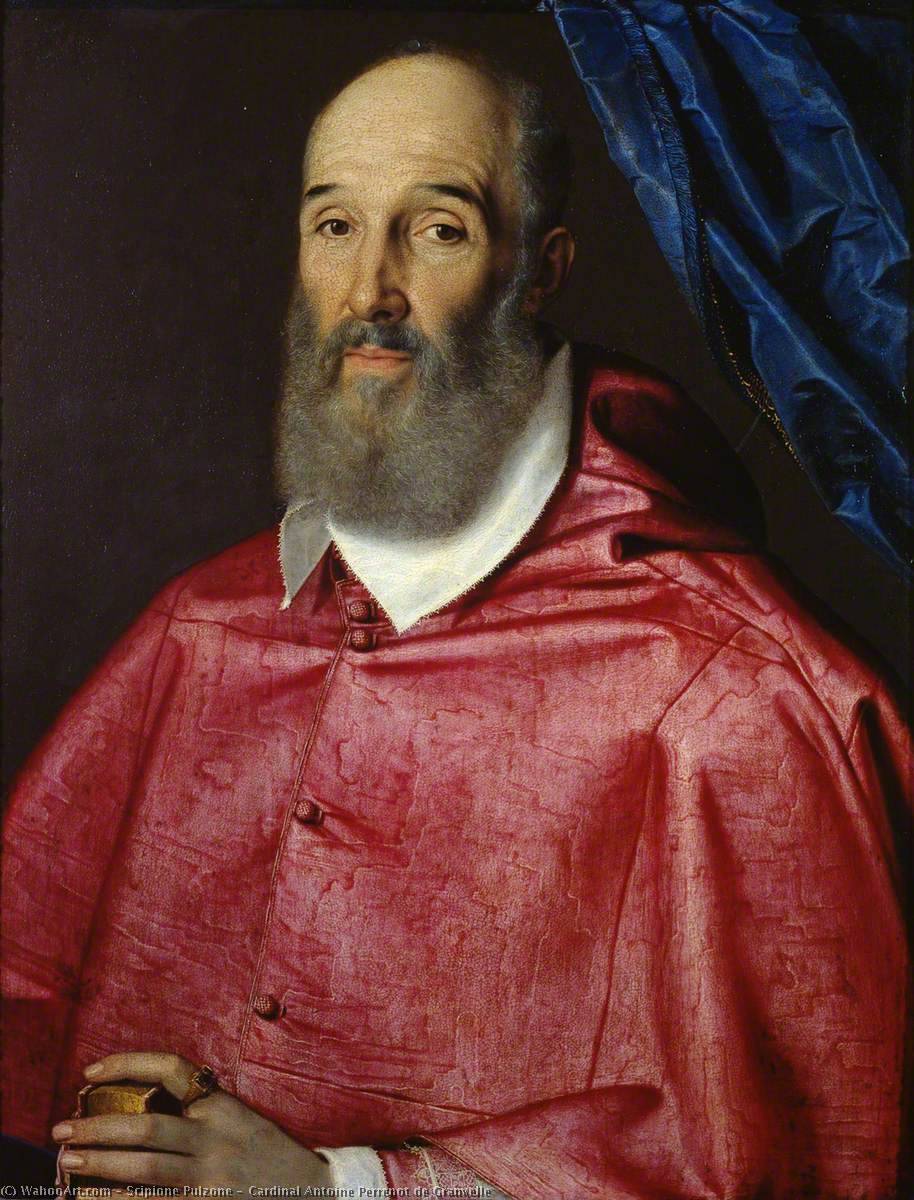
This striking portrait by Scipione Pulzone depicts Cardinal Antoine Perrenot de Granvelle, a prominent diplomat serving Philip II of Spain. Executed on copper, it exemplifies Pulzone's signature style—characterized by precise rendering and naturalism—reflecting the artistic sensibilities of the Counter-Reformation era.
Cardinal Antoine Perrenot de Granvelle: A Portrait of Power and Faith
Scipione Pulzone’s “Portrait of Cardinal Antoine Perrenot de Granvelle,” completed in 1576, stands as a testament to the artistic fervor of the High Renaissance and the turbulent political landscape of Philip II’s Spain. More than just a likeness of a prominent statesman, this painting embodies the grandeur of papal authority intertwined with deeply rooted religious conviction – a visual articulation of the era's dominant concerns.
- Subject Matter: The portrait depicts Cardinal Granvelle in meticulous detail, capturing his commanding gaze and dignified posture. He is dressed in opulent crimson robes adorned with a white collar, symbolizing ecclesiastical prestige and highlighting his position as one of Philip II’s most trusted advisors.
- Style & Technique: Pulzone distinguishes himself from the prevailing Mannerist style through his masterful use of naturalism—a deliberate departure from stylized forms favored by many artists of the time. The artist employs oil paint on copper, a technique that maximizes color vibrancy and ensures exceptional durability. Precise rendering and subtle shading contribute to an atmosphere of solemn contemplation.
- Historical Context: Granvelle’s influence extended far beyond diplomatic negotiations; he spearheaded the Inquisition, enforcing papal decrees against heresy with unwavering resolve. This portrait reflects the anxieties surrounding religious reform and underscores Granvelle's role as a defender of Catholic orthodoxy during a period marked by intense ideological conflict.
- Symbolism: The crimson robe is laden with symbolic significance—representing royal power and spiritual devotion. Granvelle’s gaze directs outwards, suggesting an awareness of his responsibilities to God and the Church, mirroring the broader humanist preoccupation with moral virtue and divine grace.
- Emotional Impact: Viewing “Portrait of Cardinal Granvelle” evokes a sense of gravitas and contemplation. Pulzone skillfully conveys Granvelle's inner strength and unwavering conviction—a portrait that transcends mere representation to capture the essence of leadership and faith during a pivotal moment in European history.
The painting’s enduring appeal lies not only in its technical brilliance but also in its ability to communicate profound ideas about power, piety, and the human condition. It remains an invaluable window into the artistic sensibilities and intellectual currents of the Spanish Renaissance.