A Glimpse Into Baroque Grandeur
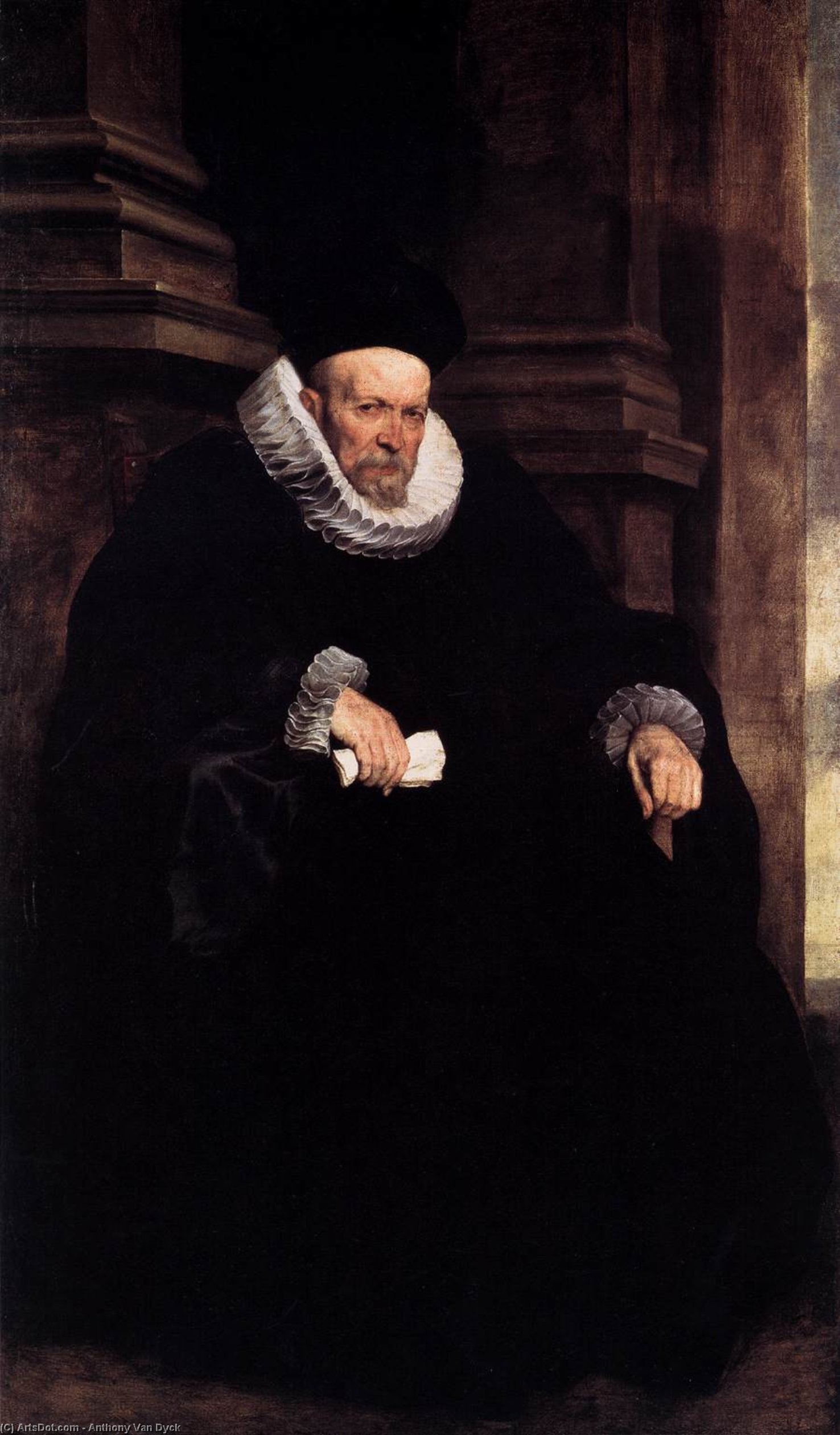
In the quiet halls of the Staatliche Museen Berlin, there exists a window into a vanished era of opulence and poise. Sir Anthony van Dyck’s 1622 masterpiece, "An Aristocratic Genoese," is far more than a mere portrait; it is a profound encounter with the soul of the seventeenth-century nobility. At first glance, the viewer is struck by the commanding presence of the sitter, whose dignified posture and somber, dark attire command immediate respect. The painting captures a moment of stillness that vibrates with the latent energy of the Baroque period, inviting us to contemplate the weight of lineage and the quiet confidence of the Genoese elite.
The subject, draped in the heavy, dark fabrics characteristic of high-ranking aristocracy, serves as a canvas for Van Dyck’s unparalleled ability to render texture and light. The stark contrast between the deep blacks of his clothing and the luminous, intricate white lace of his collar creates a visual rhythm that draws the eye toward the face. This interplay of light and shadow—the masterful chiaroscuro—does not merely illuminate the figure; it sculpts him, lending a three-dimensional vitality to the canvas that makes the sitter feel as though he might step from the frame into the modern room.
The Mastery of Flemish Refinement
To understand the technical brilliance of this work, one must look to Van Dyck’s formative years in the studio of Peter Paul Rubens. While he inherited Rubens' penchant for dramatic composition and rich color, Van Dyck infused his work with a unique, delicate refinement that would eventually define the English courtly style. In "An Aristified Genoese," we see this evolution clearly. His brushwork is a marvel of controlled elegance; it is fluid enough to suggest the softness of skin and the crispness of linen, yet precise enough to capture the subtle psychological depth of the man’s expression.
The artist employs a sophisticated palette that avoids unnecessary flamboyance in favor of tonal complexity. By focusing on the interplay between the dark silhouette of the sitter and the architectural suggestion of the doorway behind him, Van Dyck creates an illusionistic depth. This technique provides a sense of atmosphere, as if the air within the painting holds its own history. For the discerning collector or interior designer, this piece offers a profound sense of "presence," making it an ideal centerpiece for spaces that demand a touch of historical gravity and sophisticated grace.
Symbolism and the Legacy of Elegance
Every element within this portrait serves a symbolic purpose, reinforcing the sitter's social standing. The wig, the meticulously crafted lace, and the heavy fabrics are not merely fashion statements; they are signifiers of wealth, stability, and political influence in a period marked by intense European intrigue. The doorway behind the subject acts as a threshold between the private world of the aristocracy and the public stage of history, suggesting a man who is both a guardian of tradition and a participant in the burgeoning cosmopolitanism of the era.
For those seeking to bring the timeless allure of the Baroque into a contemporary setting, a high-quality reproduction of this work offers an unparalleled opportunity. It provides more than just decoration; it introduces a narrative of resilience, beauty, and intellectual depth. Whether placed in a formal study, a grand dining room, or a curated gallery wall, "An Aristocratic Genoese" serves as a constant reminder of the enduring power of classical portraiture to captivate the human spirit across the centuries.