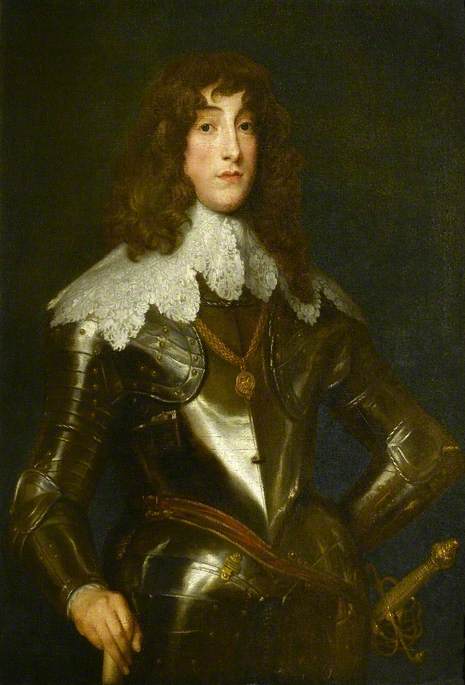
Admire Anthony van Dyck’s 'Prince Rupert,' a stunning Baroque portrait of nobility. Explore the dramatic lighting & intricate details of this 17th-century masterpiece.
Sir Anthony van Dyck (1599-1641): Ein Meister des Barock, bekannt für elegante Porträts europäischer Aristokraten & Charles I. Seine Kunst prägte die englische Malerei nachhaltig.
Chequers Court
(Aylesbury, Vereinigtes Königreich)
Erkunden Sie Chequers Court: Das historische Rückzugsort des britischen Premierministers! Entdecken Sie Kunst, Architektur & die Geschichte der königlichen Familie.
Prince Rupert (1619–1682) – A Portrait of Nobility Embodied
Sir Anthony van Dyck’s “Prince Rupert,” completed in 1636-37, stands as a quintessential example of Baroque portraiture—a genre defined by dramatic lighting, meticulous detail, and an unwavering focus on conveying status and dignity. Commissioned by Rupert himself, son of Elizabeth Stuart, daughter of James I of England, this painting captures the youthful visage of a noble heir poised at the cusp of significant political influence during turbulent times. The artwork resides within the Charles Street Gallery of the Walters Art Museum in Baltimore, Maryland.
### Artistic Style and Technique: Baroque Precision
The painting exemplifies the Baroque style’s hallmark characteristics. Van Dyck skillfully employs oil paint on canvas—a technique favored for its ability to achieve rich colors and subtle gradations—resulting in a surface texture that is remarkably smooth, particularly evident in the armor and clothing of Prince Rupert. Lines are used with exacting precision to delineate the contours of the figure and his attire, reflecting the Baroque’s obsession with geometric forms and idealized representations. The artist’s masterful use of chiaroscuro – dramatic contrasts between light and shadow – dramatically illuminates Rupert's face and upper body from the left, casting deep shadows that sculpt the musculature and emphasize the intricate folds of fabric. This theatrical lighting wasn’t merely aesthetic; it served to elevate the subject’s importance and convey a sense of grandeur.
### Historical Context: Stuart Succession Crisis
“Prince Rupert” was created during a period of intense political instability in England—the Stuart Succession Crisis following Charles I's death in 1649. Rupert, as heir apparent, represented the hopes for restoring the monarchy after years of civil war. The painting’s formal pose and opulent attire underscore this ambition to assert royal authority and prestige amidst considerable upheaval. Furthermore, Van Dyck’s patronage by Henry Stuart, Duke of Gloucester—Charles I's son—highlights the artistic circles active during this era, where artists sought to glorify noble families and solidify their positions within the court hierarchy.
### Symbolism: Armor and Medallion – Signifiers of Power
The armor worn by Prince Rupert is laden with symbolic significance. It represents not only physical protection but also unwavering loyalty and adherence to duty—qualities considered paramount for a ruler tasked with safeguarding the realm. The medallion adorning Rupert’s chest serves as another potent emblem, likely signifying rank or allegiance to the Stuart dynasty. Its gilded surface reflects the wealth and influence associated with royal lineage, reinforcing the portrait's overarching message of nobility and prestige.
### Emotional Impact: Dignified Portraiture Reflecting Inner Strength
Despite its static composition, “Prince Rupert” exudes an undeniable sense of confidence and composure. The artist’s careful depiction of Rupert’s facial expression—a gaze direct and unwavering—suggests inner strength and resolve. Combined with the dramatic lighting and meticulous detailing, the painting transcends mere representation; it aspires to capture the essence of Rupert's character and convey a feeling of dignified nobility—a testament to Van Dyck’s ability to imbue his subjects with psychological depth within the confines of formal portraiture.