A Moment of Grace: Sir John Everett Millais’s *The Return of the Dove to the Ark*
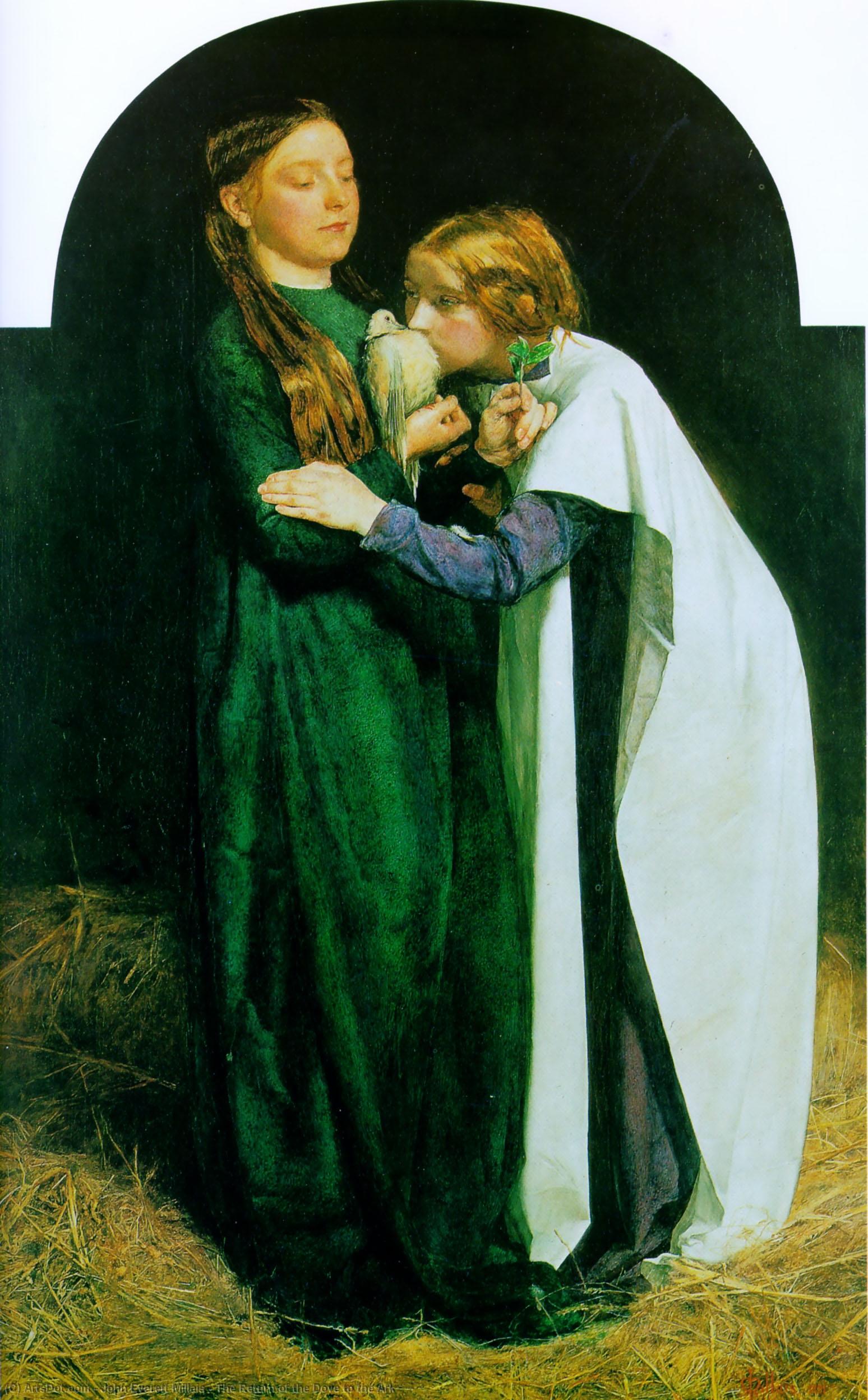
Sir John Everett Millais's 1851 painting, *The Return of the Dove to the Ark*, is a quintessential example of Romanticism elevated to an almost photographic level of detail and emotional resonance. Measuring 54 x 87 cm, this oil-on-canvas work immediately draws the viewer into a scene of serene contemplation – two women, bathed in soft light, gently cradling a dove, a symbol of peace and hope returning after the flood. The painting’s power lies not just in its technical brilliance but also in its ability to evoke a profound sense of connection between humanity and nature, a core tenet of the Pre-Raphaelite Brotherhood to which Millais belonged.
Pre-Raphaelite Detail and Symbolism
As a leading figure within the Pre-Raphaelite movement, Millais rejected the idealized forms and artificiality prevalent in much of contemporary art. Instead, he championed a return to the clarity, detail, and emotional honesty of early Italian masters – hence the name. *The Return of the Dove to the Ark* exemplifies this approach. The meticulous rendering of the women’s clothing—a rich, verdant green—and the delicate plumage of the dove itself speaks volumes about the Pre-Raphaelite dedication to realism. Beyond its surface beauty, the painting is laden with symbolism. The ark, a cornerstone of biblical narrative, represents salvation and renewal. The dove, traditionally associated with the Holy Spirit, signifies divine grace and the promise of a fresh start. The women’s posture – calm, attentive, and almost reverent – reinforces this message of peace and reconciliation.
Technique and Composition
Millais's mastery of technique is immediately apparent in the painting’s luminous quality. He employed a layering method, building up thin glazes of paint to achieve an unparalleled level of detail and depth. The light, diffused and soft, creates a dreamlike atmosphere, enhancing the sense of tranquility. The composition itself is carefully balanced, with the two women occupying the foreground and the dove positioned centrally, drawing the viewer’s eye directly to this emblem of hope. Note the subtle variations in tone and texture – from the smooth skin of the women to the ruffled feathers of the bird – that contribute to the painting's remarkable realism.
Historical Context and Artistic Influence
*The Return of the Dove to the Ark* was created during a period of significant artistic and intellectual ferment in Britain. The Pre-Raphaelite Brotherhood, founded in 1848, challenged the established norms of the Royal Academy and sought to revive the spirit of medieval art. Millais’s work, along with those of his contemporaries – Dante Gabriel Rossetti, William Holman Hunt, and others – profoundly influenced the course of British art. The painting's subject matter, rooted in biblical narrative, was a common theme within Pre-Raphaelite works, reflecting their interest in religious symbolism and moral themes. It’s worth noting Millais’s connection to the Musée Girodet in Montargis, France, a key influence on his meticulous approach to detail and composition.
- Artist: Sir John Everett Millais
- Date: 1851
- Size: 54 x 87 cm
- Medium: Oil on Canvas
This exquisite reproduction captures the essence of Millais’s masterpiece, offering a timeless reminder of beauty, peace, and the enduring power of hope.