Explore Gillies' artistic journey and his contribution to British Impressionism.
Erkunden Sie W.G. Gillies' schottische Landschaften und Stillleben. Entdecken Sie seine kubistischen Einflüsse, die Verbindungen zur 1922er Gruppe, das Erbe der Edinburgh College of Art und seinen tiefgreifenden Einfluss auf die Kunst des 20. Jahrhunderts.
Entdecken Sie das künstlerische Erbe Schottlands im Royal Scottish Academy in Edinburgh! Erkunden Sie historische und zeitgenössische Kunst, Architektur und Ausstellungen, die herausragende schottische Künstler wie Joan Eardley & James Guthrie zeigen. Gegründet 1826.
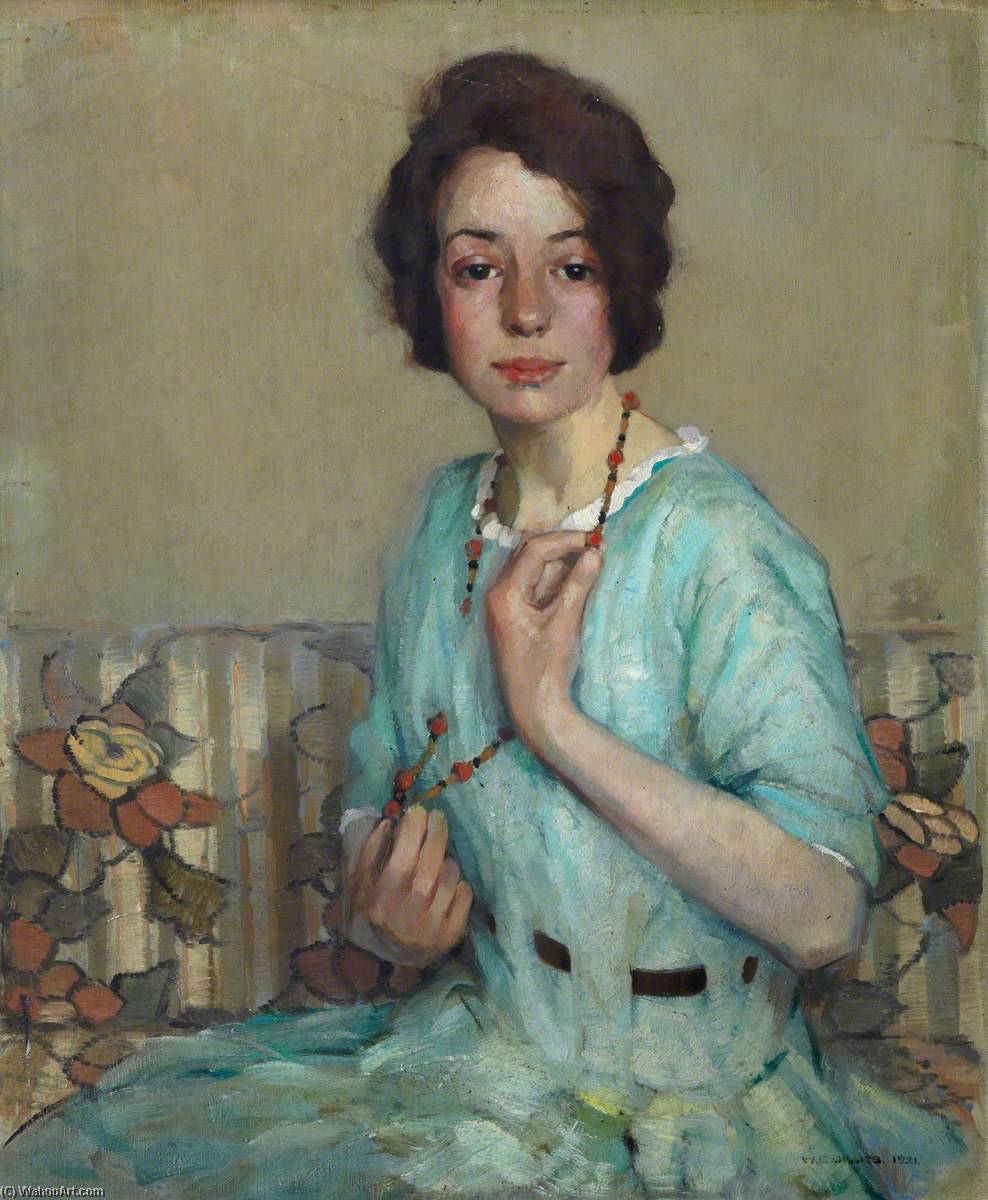
A Portrait Steeped in Impressionism: Exploring William George Gillies’ “Emma with a White Necklace”
“Emma with a White Necklace,” painted in 1921 by Sir William George Gillies, stands as a testament to the enduring influence of Impressionist aesthetics and the artist's fascination with capturing fleeting moments of beauty. Located within Edinburgh’s Royal Scottish Academy, this captivating portrait transcends mere representation; it embodies a profound exploration of femininity and domestic tranquility against the backdrop of Edwardian Britain.
The Artist’s Journey: From Cubism to Impressionistic Resonance
Gillies began his artistic development amidst the burgeoning excitement of Cubism, absorbing the revolutionary techniques pioneered by Picasso and Braque. However, a transformative encounter with Paul Klee in 1934 irrevocably altered his stylistic trajectory. Klee's emphasis on childlike spontaneity and vibrant color palettes instilled in Gillies a desire to infuse his own canvases with imagination and emotional depth—a characteristic that would define much of his subsequent oeuvre. This shift away from geometric abstraction towards a more lyrical approach is palpable throughout “Emma,” where subtle hues blend seamlessly to evoke a sense of warmth and serenity.
A Cézanne-Inspired Composition: Formal Elements and Artistic Vision
The painting’s composition owes considerable debt to the pioneering work of Cézanne, whose exploration of form and spatial relationships served as an inspiration for Gillies. Like Cézanne's landscapes, “Emma” utilizes a flattened perspective—a deliberate departure from traditional realism—to prioritize tonal harmony and visual resonance. The careful arrangement of objects – Emma herself seated on a floral couch – contributes to the overall sense of stillness and contemplation. Notice particularly the understated palette; Gillies employs muted shades of blues and greens, punctuated by delicate highlights that illuminate Emma’s face and necklace, creating an atmosphere of quiet intimacy.
Symbolism Within Domestic Tranquility: The Necklace as Emblematic Gesture
Beyond its formal considerations, “Emma with a White Necklace” resonates with symbolic significance. The white necklace—a prominent feature of the portrait—represents purity and innocence, mirroring Emma Smith Gillies’ youthful beauty and embodying the idealized vision of domestic life prevalent during the Edwardian era. Gillies skillfully captures this essence through meticulous observation and nuanced brushwork, conveying not just a likeness but also an emotional impression – a glimpse into the inner world of a woman poised amidst the comforts of home.
Emotional Impact: Capturing Essence Through Light and Color
Ultimately, “Emma with a White Necklace” succeeds in evoking a powerful emotional response from the viewer. Gillies’ masterful manipulation of light and color imbues the scene with an ethereal quality, transporting us back to a bygone era while simultaneously conveying a sense of timeless beauty. The painting's quiet dignity speaks volumes about Gillies’ ability to distill complex emotions into simple visual forms—a hallmark of Impressionist art that continues to captivate audiences today. Its enduring appeal lies in its capacity to resonate with viewers on a deeply personal level, reminding us of the importance of capturing fleeting moments of grace and tenderness.