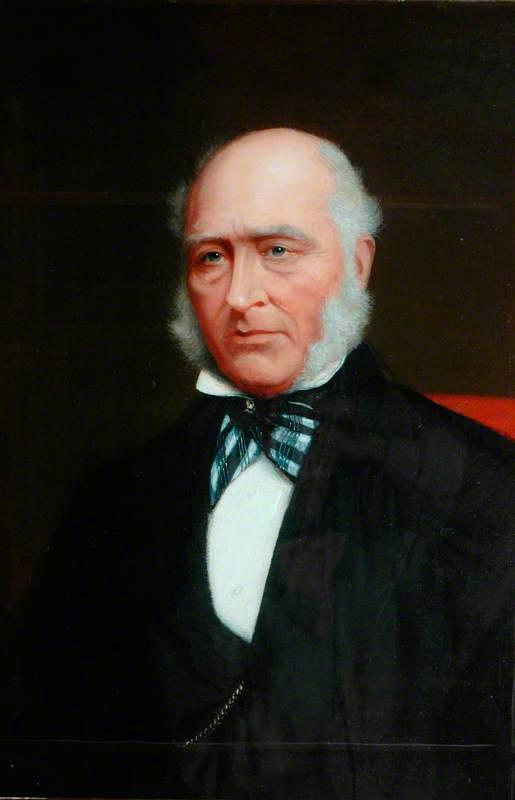
Admire 'John Phillips' by Sir William Orpen – a stunning 19th-century portrait showcasing masterful draughtsmanship & dramatic lighting. Explore this elegant oil painting today!
Sir William Orpen (1878-1931): Irischer Porträtkünstler & Kriegskünstler des Ersten Weltkriegs. Meister der Darstellung, bekannt für Edwardianische Portraits und eindringliche Kriegsszenen. Entdecken Sie sein Werk auf ArtsDot!
Entdecken Sie die York Art Gallery: Gemälde, Keramik und zeitgenössische Kunst aus dem 14. bis zum 20. Jahrhundert. Zu den Highlights gehören das Centre of Ceramic Art (CoCA) und wechselnde Ausstellungen wie Harland Miller: XXX.
A Portrait Steeped in Dignity: Examining Sir William Orpen’s John Phillips
The painting “John Phillips” by Sir William Newenham Montague Orpen stands as a testament to the Victorian era's fascination with formal portraiture and its ability to convey profound psychological insight. Executed around 1908, this oil on canvas captures the likeness of John Phillips, a prominent Welsh solicitor known for his philanthropic endeavors and involvement in various civic organizations. More than just a depiction of an individual’s appearance, Orpen's masterpiece delves into the complexities of human character—a characteristic hallmark of his artistic vision.
Style and Technique: Realism Elevated
Orpen’s approach to portraiture distinguishes itself from prevailing trends of the time through its uncompromising realism blended with expressive brushwork. Rejecting idealized representations favored by many artists, Orpen meticulously observed Phillips' anatomy and facial expressions, striving for an accuracy that transcends mere visual likeness. The artist skillfully employed a technique known as “impasto,” applying thick layers of paint onto the canvas to create palpable textural surfaces—particularly evident in Phillips’ skin tones and clothing folds. This deliberate manipulation of materiality wasn’t merely decorative; it served to heighten emotional impact, conveying a sense of solidity and presence that captures the sitter's inner life.
Historical Context: Edwardian Refinement Amidst Uncertainty
“John Phillips” emerged during the Edwardian period—a time marked by social stability on the surface but simmering beneath currents of anxiety regarding imperial decline and burgeoning anxieties about societal change. Portraiture functioned as a crucial mechanism for asserting status and reinforcing social hierarchies, yet Orpen’s work transcends these conventions. Unlike many portraits commissioned to commemorate prominent figures, “John Phillips” eschews ostentation, focusing instead on capturing the quiet dignity and contemplative gaze of its subject—a deliberate choice reflecting the artist's humanist sensibilities. The painting speaks to a broader cultural preoccupation with portraying inner states alongside outward appearances, anticipating developments in psychological portraiture that would gain prominence in subsequent decades.
Symbolism Within Form: Light and Shadow as Emotional Guides
The masterful use of chiaroscuro – dramatic interplay between light and shadow – is central to Orpen’s artistic strategy. The stark illumination highlighting Phillips' forehead and chin directs the viewer’s gaze upward, emphasizing his intellect and conveying a sense of solemn contemplation. Simultaneously, deep shadows envelop the clothing and background, creating an atmosphere of introspection and subtly hinting at hidden emotions—a technique frequently employed by Victorian artists to convey psychological depth. These carefully considered compositional elements underscore Orpen's belief that art should not merely represent reality but illuminate its emotional core.
Emotional Resonance: A Window into Human Experience
Ultimately, “John Phillips” succeeds in capturing the essence of human experience—a feat achieved through meticulous observation and expressive technique. The painting’s quiet dignity resonates with a profound empathy for its subject, inviting viewers to contemplate themes of resilience, contemplation, and inner fortitude. Orpen's legacy extends beyond his technical prowess; he remains an artist who championed realism as a vehicle for conveying psychological truth—a distinction that secures “John Phillips” as a cornerstone of Edwardian portraiture and a timeless exemplar of artistic sensitivity.