The Unsettling Grid: Identity and Performance in Yokoo's Vision
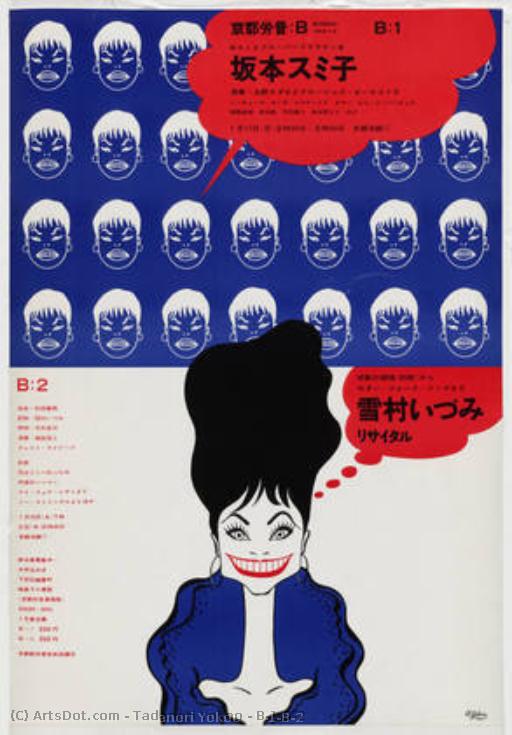
To stand before Tadanori Yokoo’s 1964 poster, B:1/B:2, is to step into a meticulously constructed fever dream—a visual echo chamber of modern anxieties. This piece does not merely hang on a wall; it confronts the viewer with a barrage of stylized gazes, forcing an immediate reckoning with themes of conformity and the manufactured self. Yokoo masterfully employs a dense, almost suffocating grid composed of identical, mask-like faces. These repetitions are more than mere decoration; they function as a potent visual metaphor for the loss of individuality within the overwhelming machinery of mass culture or societal expectation. The initial impact is one of vibrant, yet deeply unsettling, order.
A Symphony of Pop and Surrealism
Stylistically, Yokoo operates at the electrifying intersection of Pop Art's graphic immediacy and Surrealism's dream logic. The palette itself—dominated by deep indigo and cerulean blues, sharply contrasted with stark white—lends the entire composition an artificial, stage-lit quality. The bold, graphic lines defining every feature suggest a technique rooted in screen printing, giving the work a flat yet intensely layered depth. This flatness is crucial; it denies any sense of naturalistic space, trapping the viewer within Yokoo’s constructed reality. While the subject matter references the theatrical—the flamboyant central figure, perhaps a showgirl or actress—the overall effect remains profoundly detached, suggesting that even performance itself can become a rigid, repetitive costume.
Decoding the Central Figure and Symbolism
At the heart of this visual cacophony resides the singular, larger face, an exaggerated caricature embodying both allure and artifice. This figure acts as the focal point against the backdrop of anonymity. The accompanying text, repeating the phrase translating to “Thunder God's shout,” imbues the piece with a sense of overwhelming, almost divine pressure. It suggests that beneath the veneer of conformity—the endless rows of blank stares—there is an underlying force, a sudden, loud pronouncement demanding attention. For the collector or designer, this tension between the controlled grid and the explosive central declaration offers rich symbolic depth for any curated space.
Echoes of Japanese Avant-Garde Culture
Understanding Yokoo requires acknowledging his deep immersion in the avant-garde spirit of post-war Tokyo. His background as a stage designer informs this work’s inherent theatricality; everything feels like set dressing, every face like an actor playing a role. This piece is not just about faces; it is a commentary on the performance required to exist within modern urban life. Reproducing Yokoo allows one to bring into a contemporary interior a piece steeped in intellectual provocation—a vibrant conversation starter that speaks volumes about identity, media saturation, and the beautiful, terrifying nature of being seen.