A Glimpse into the Soul of Brazilian Modernism
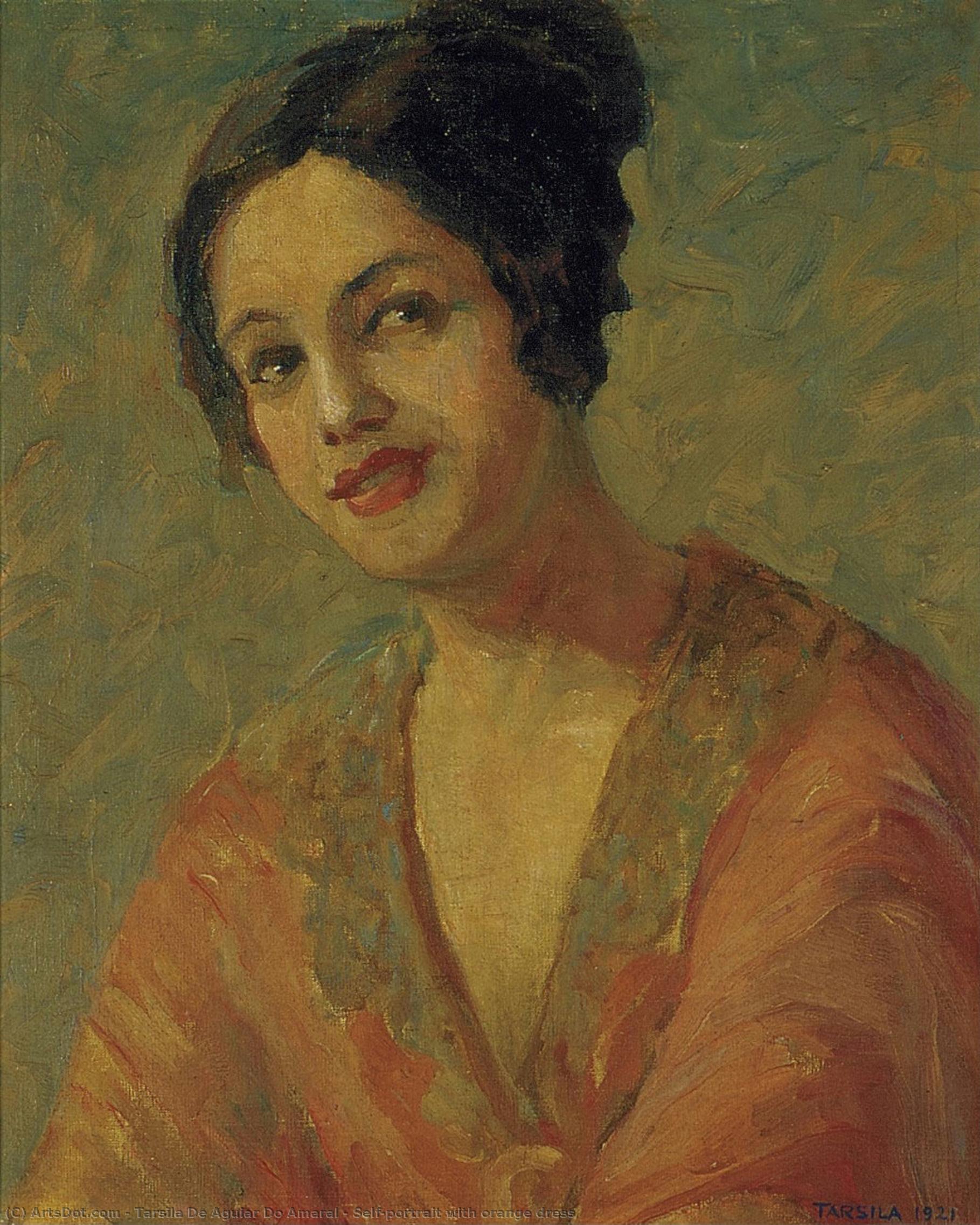
In the intimate realm of Tarsila do Amaral’s Self-portrait with orange dress, we are invited to witness a profound moment of self-reflection captured in 1921. This evocative piece serves as more than just a likeness; it is a window into the burgeoning identity of a woman and a nation. The subject, rendered with a captivating presence, gazes directly at the viewer with a subtle, knowing smile that bridges the gap between the painted world and our own. Clad in a vibrant orange dress that commands the eye, she sits in a relaxed, almost contemplative pose, her dark hair framing a face that radiates both strength and vulnerability. The composition is masterfully layered, with secondary figures appearing like whispers in the background, adding a sense of depth and social context to this deeply personal encounter.
The technique employed here reflects the transformative period of Tarsila’s life, where her encounters with the European avant-garde began to merge with her Brazilian roots. One can detect the structural echoes of Cubism and the bold, simplified forms characteristic of Modernism. The brushwork, while maintaining a certain softness that preserves the warmth of the skin tones, utilizes a palette that is both daring and harmonious. The interplay of light and shadow across the folds of her orange attire creates a tactile quality, making the fabric feel almost tangible to the viewer. This mastery of form and color allows the painting to transcend mere representation, turning the canvas into a rhythmic arrangement of shapes and hues.
For the discerning collector or interior designer, this artwork offers an unparalleled opportunity to introduce a piece of art history into a contemporary space. The emotional impact of the work lies in its balance of intimacy and boldness; it possesses the quiet dignity required for a serene study while maintaining a chromatic energy that can serve as a focal point in a sophisticated room. As a reproduction, this painting brings the spirit of the Antropofagia movement into the home, offering a conversation starter that celebrates the fusion of international technique and South American soul. It is an investment in beauty, history, and the enduring power of the human gaze.