A Melodic Encounter in Earth and Shadow
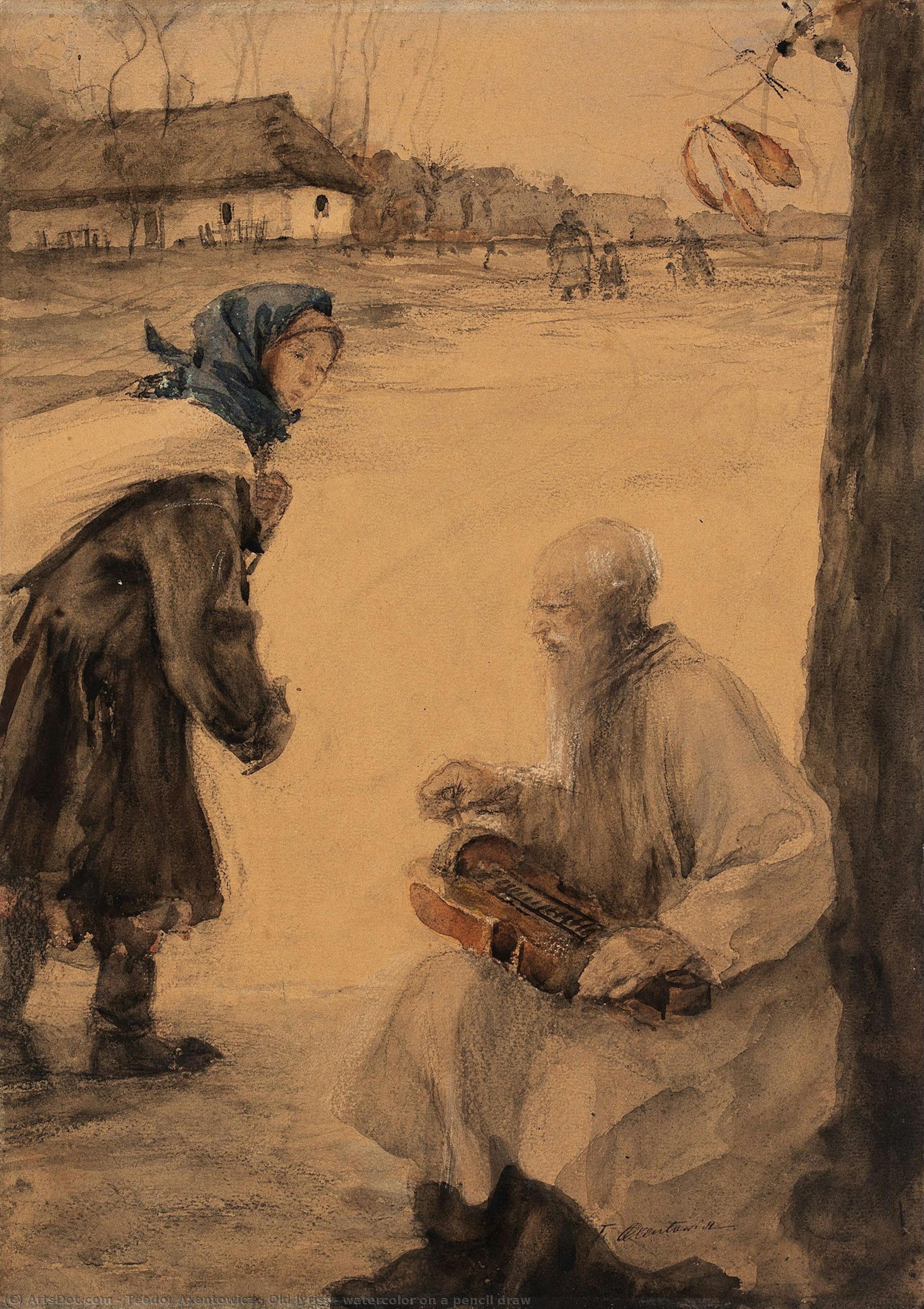
In the delicate interplay of watercolor and pencil, Teodor Axentowicz captures a moment of profound stillness within a rustic landscape. Old Lyrist is not merely a depiction of two figures; it is a window into a vanishing way of life, rendered with an impressionistic touch that breathes life into every stroke. The composition presents a poignant encounter between generations: an elderly man, weathered by time and seated upon the earth, lost in the rhythmic creation of music, and a young woman passing through his orbit, her presence adding a layer of movement to the otherwise contemplative scene. The artist utilizes a muted palette of browns, grays, and deep earth tones, creating an atmosphere that feels as though it were pulled directly from the misty, autumnal air of the Carpathian foothills.
The technique employed here is nothing short of masterful, showcasing Axentowicz’s ability to blend the precision of a draftsman with the fluidity of a watercolorist. The underlying pencil work provides a structural skeleton, defining the heavy folds of the woman's dark gray caftan and the intricate, mechanical details of the hurdy-gurdy. Over this, the watercolor washes are applied with visible, textured brushstrokes that lend the piece an organic, almost sketch-like quality. This layering technique creates a sense of depth and atmosphere, where the boundaries between the figures and their village surroundings—the pitched roofs of distant houses and the skeletal branches of trees—seem to soften and merge, much like a fading memory.
Symbolism and the Soul of Folk Tradition
Beyond its aesthetic charm, the artwork serves as a soulful tribute to the Hutsul culture and the enduring spirit of folk tradition. The lyre or hurdy-gurdy acts as a powerful symbol of cultural continuity; it is an instrument that carries the songs of ancestors into the present moment. The elderly man, with his long beard and focused expression, embodies the wisdom and the weight of history, while the young woman, carrying her bundle, represents the transient nature of life and the ongoing journey of the community. There is a quiet dignity in their interaction—or lack thereof—suggesting that music is a constant, silent companion to the daily labors of rural existence.
For the discerning collector or interior designer, this piece offers more than just visual beauty; it provides an emotional anchor for a room. The nostalgic, autumnal mood makes it an ideal centerpiece for spaces designed to evoke warmth, heritage, and introspection. Whether placed in a study filled with books or a grand living area seeking a touch of classical European elegance, Old Lyrist invites the viewer to pause and listen to the silent music within the frame. It is a timeless acquisition that celebrates the beauty found in simplicity and the profound resonance of human connection through art.