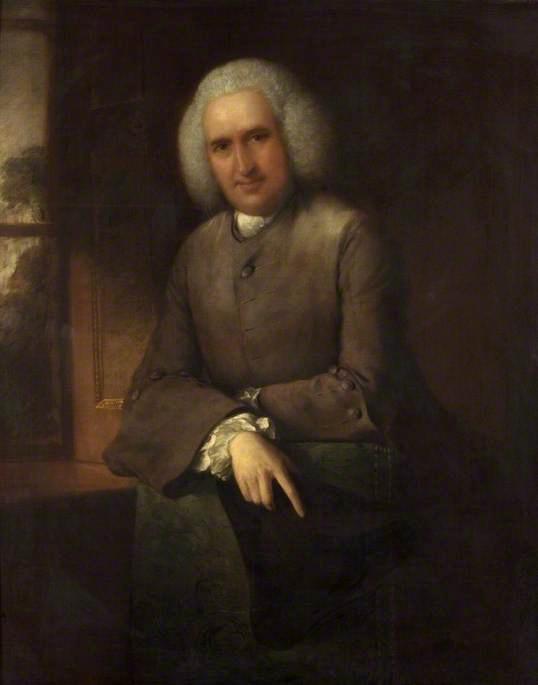
Dr Abel Moysey: A Portrait of Quiet Dignity
Thomas Gainsborough’s “Dr Abel Moysey” isn't merely a likeness; it’s a carefully constructed tableau of age, wisdom, and the subtle burdens of a respected figure. Painted in 1765, this oil-on-canvas portrait resides within the Holburne Museum in Bath, England, a testament to Gainsborough’s ability to capture not just appearance but also the very essence of his subjects. The painting immediately draws the eye with its muted palette – browns, greys, and ochres dominate, creating an atmosphere of contemplative solemnity. This isn't a vibrant celebration of life; rather, it’s a poignant meditation on experience and the passage of time.
Gainsborough masterfully employs chiaroscuro, the dramatic contrast between light and shadow, to sculpt Moysey’s form. The strong directional lighting highlights his face, emphasizing the deep lines etched by years of study and perhaps quiet contemplation. Notice how the light catches the silver in his hair, suggesting both wisdom and a touch of melancholy. The dark background – a simple, almost monastic room – serves to isolate Moysey, drawing our attention entirely to him and amplifying the sense of introspection. The window glimpsed behind him offers a subtle suggestion of the outside world, a reminder of life continuing beyond the confines of his study.
A Man of Letters and Learning
Abel Moysey (1715–1780) was a prominent figure in 18th-century intellectual circles. A physician, he was also a respected scholar, a Fellow of the Royal Society, and a dedicated collector of books and manuscripts. His portrait reflects his status as a learned man – a gentleman of leisure devoted to the pursuit of knowledge. The inclusion of a book resting on a table in the background subtly reinforces this aspect of his identity, hinting at the intellectual life he led.
The painting’s historical context is crucial to understanding its significance. The mid-18th century was a period of burgeoning scientific inquiry and philosophical debate. Physicians like Moysey were increasingly involved in medical research and the dissemination of knowledge. Gainsborough, as an artist deeply engaged with his time, skillfully captured this intellectual climate within the confines of a portrait.
Symbolism and Emotional Resonance
Beyond its straightforward depiction, “Dr Abel Moysey” is rich in symbolic detail. The doctor’s posture – slightly stooped, hands clasped gently – conveys humility and a quiet dignity. His gaze, directed slightly off-camera, suggests a thoughtful reflection on the past or perhaps a concern for the future. The simple, unadorned setting speaks to a life dedicated to reason and scholarship rather than material wealth.
Gainsborough’s choice of brown tones contributes significantly to the painting's emotional impact. These colors evoke feelings of seriousness, gravity, and perhaps even sadness – qualities that align with the subject’s age and profession. The overall effect is one of quiet contemplation, inviting the viewer to share in Moysey’s sense of inner peace and wisdom.
A Timeless Masterpiece
“Dr Abel Moysey” stands as a remarkable example of Gainsborough's skill in portraying human character with subtlety and grace. It’s not a flamboyant or overtly dramatic portrait; instead, it offers a profound glimpse into the life of a man who dedicated himself to learning and service. Reproductions of this painting capture its nuanced beauty and emotional depth, making it an ideal addition to any collection or interior space seeking a touch of intellectual elegance and timeless appeal.