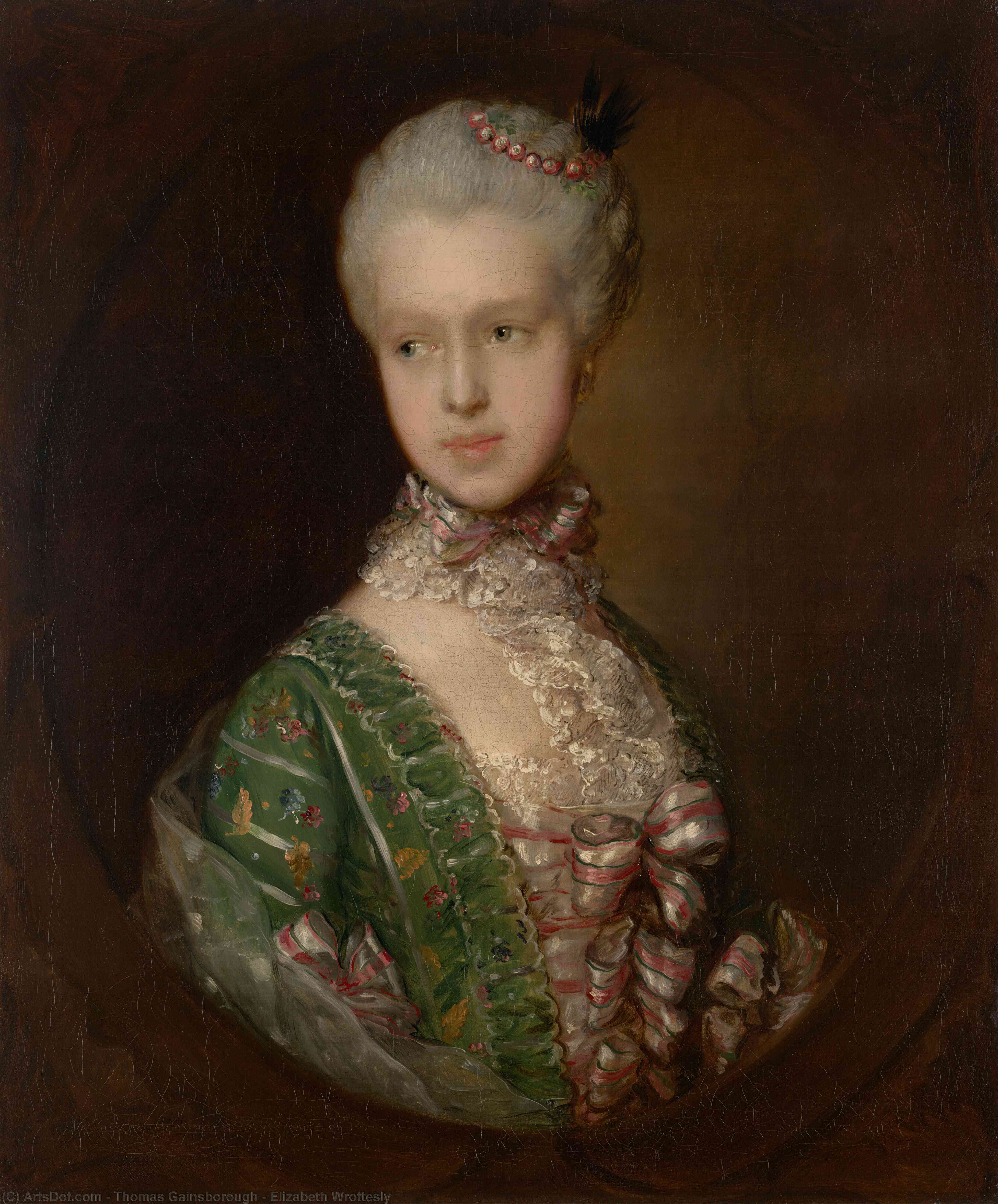
Thomas Gainsborough’s "Elizabeth Wrottesly" captures a serene 18th-century portrait of a woman in a green dress with delicate lace and birds, showcasing the artist's signature style from 1765. Discover this beautiful hand-painted reproduction and add a timeless piece to your collection.
A Portrait of Gentle Grace: Elizabeth Wrottesly by Thomas Gainsborough
Thomas Gainsborough’s “Elizabeth Wrottesly,” painted in 1765, is more than just a likeness; it's a carefully constructed tableau of Georgian elegance and quiet contemplation. The subject, Elizabeth Wrottesly, appears before us with an almost unnerving directness, her gaze meeting the viewer’s across the canvas. This isn’t a staged performance but rather a moment captured – a fleeting expression of youth and refinement that speaks volumes about the social conventions of the era.
- Subject & Composition: The painting centers on Elizabeth Wrottesly, a young woman embodying the ideals of beauty and status within Georgian society. Her pose, slightly turned towards the viewer, invites intimacy while maintaining an air of reserve. The inclusion of two birds – one delicately placed on the left and another soaring in the upper right corner – introduces a subtle layer of symbolism, often associated with liberty, grace, and perhaps even divine favor.
- Technique & Style: Gainsborough’s masterful use of light and shadow is immediately apparent. He employs a loose, almost impressionistic brushstroke, particularly noticeable in the rendering of her dress and hair, creating a sense of movement and texture. This technique, characteristic of his later work, departs from the more rigid formality favored by some of his contemporaries, reflecting a growing interest in naturalism within British art.
Historical Context: The Georgian Portraiture Tradition
“Elizabeth Wrottesly” belongs to a pivotal moment in British portraiture – the mid-18th century. Following the influence of artists like Nicholas Cochin and Jean-Baptiste Oudry, Gainsborough was part of a generation that sought to elevate portraiture beyond mere representation. He aimed to capture not just physical appearance but also the character and social standing of his subjects. The painting reflects the importance placed on lineage and wealth within Georgian society, with Elizabeth’s attire – a green silk dress adorned with lace – signaling her family's status and connections.
- Social Significance: Portraits were not simply decorative objects; they served as vital documents of identity and social position. They were commissioned by wealthy families to commemorate their lineage, display their wealth, and secure their place within the social hierarchy.
- Gainsborough’s Innovation: Gainsborough's approach was revolutionary for his time, moving away from the stiff formality of earlier portraits towards a more naturalistic and engaging style.
Symbolism & Emotional Impact
Beyond the immediate visual appeal, “Elizabeth Wrottesly” is rich in symbolic meaning. The birds, frequently associated with freedom and aspiration, suggest Elizabeth’s potential and future prospects. Her direct gaze invites a connection between the viewer and the subject, fostering a sense of empathy and understanding. The overall effect is one of quiet dignity and restrained beauty – qualities highly valued within Georgian society and enduringly appealing to viewers today.
- Color Palette: The predominantly cool tones—greens, creams, and subtle blues—evoke a sense of serenity and refinement, reflecting the prevailing aesthetic sensibilities of the period.
- Emotional Resonance: Despite its historical context, the painting continues to resonate with viewers due to its portrayal of youthful innocence and quiet grace.
A Reproduction for Your Collection
ArtsDot offers a meticulously crafted hand-painted reproduction of “Elizabeth Wrottesly,” capturing every nuance of Gainsborough’s artistry. Each reproduction is created using the highest quality materials and techniques, ensuring that you receive a faithful representation of this iconic work of art. Whether for your home, office, or collection, this reproduction offers an accessible way to experience the beauty and historical significance of one of Thomas Gainsborough's most celebrated portraits.