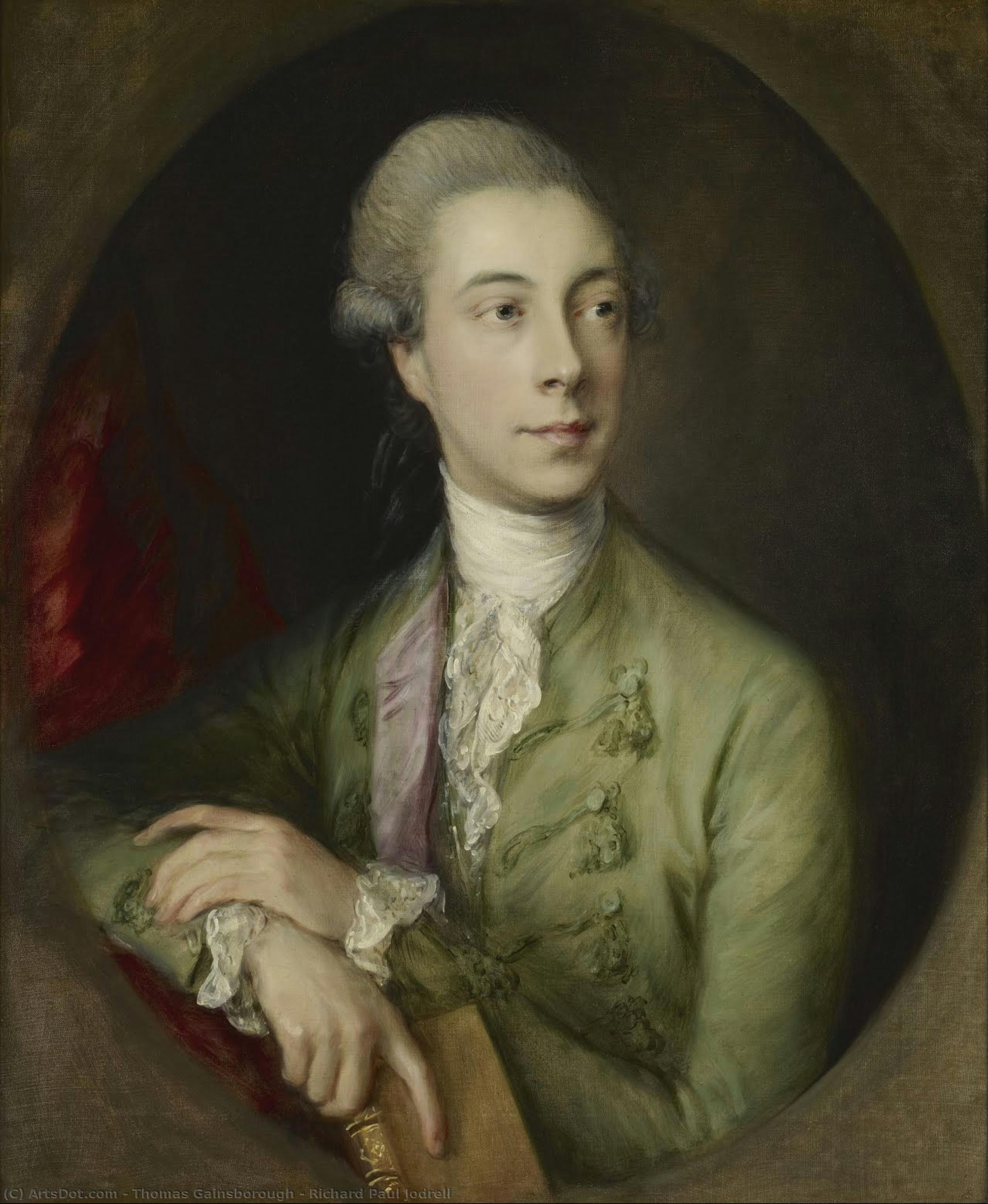
Richard Paul Jodrell

Explore Thomas Gainsborough's masterpiece, 'Richard Paul Jodrell,' a captivating portrait capturing the essence of intellect and elegance amidst a richly textured backdrop. Discover its history at The Frick Collection.


Thomas Gainsborough (1727 - 1788)

Thomas Gainsborough (1727-1788): Britischer Maler des Rokoko, bekannt für seine Porträts & Landschaftsbilder. Gründungsmitglied der Royal Academy – entdecken Sie sein Werk!

The Frick Collection (New York City, Vereinigte Staaten von Amerika)

Entdecken Sie Kunst & Architektur im Frick Collection – ein prachtvolles Anwesen aus der Gründerzeit mit Meisterwerken von Vermeer, Rembrandt & mehr. Einzigartige Kunst in NYC!

A Portrait Steeped in Tradition: Exploring Gainsborough’s Richard Paul Jodrell

  • Subject Matter: The painting depicts Richard Paul Jodrell, a gentleman of considerable standing, captured in a formal portrait pose. His attire—a meticulously crafted suit adorned with a wig and goatee—reflects the conventions of aristocratic representation during Gainsborough’s era.
  • Style: Gainsborough's style is characterized by its serene elegance and masterful observation of naturalism. Unlike many artists of his time who prioritized idealized forms, Gainsborough sought to portray his subjects with a palpable sense of reality, capturing subtle nuances of expression and gesture.

Technique and Materials: Oil on Canvas – A Window into Eighteenth Century Artistry

  • Medium: Thomas Gainsborough employed oil paint on canvas—a technique prevalent throughout Europe during the Enlightenment. This medium allowed for rich colors, luminous textures, and a remarkable degree of detail, enabling Gainsborough to achieve an unparalleled level of realism.
  • Brushwork: Gainsborough’s brushstrokes are deliberate and controlled, conveying both precision and fluidity. He utilized impasto—thickly applied paint—to build up sculptural surfaces, particularly in the wig and facial features, enhancing their three-dimensionality and capturing the play of light on skin.

Historical Context: The Age of Enlightenment and Portraiture’s Role in Society

  • Social Significance: Portraits served as crucial instruments for establishing social status and demonstrating wealth during Gainsborough's lifetime. Commissioned by prominent figures like Jodrell—a wealthy landowner and philanthropist—the painting exemplifies the aristocratic patronage that fueled artistic innovation.
  • Philosophical Influences: The Enlightenment championed reason and observation, influencing artists to move away from Mannerist conventions toward a more naturalistic approach. Gainsborough’s meticulous depiction of Jodrell aligns perfectly with this intellectual movement’s emphasis on empirical evidence and psychological insight.

Symbolism and Emotional Resonance: Beyond Appearance – Capturing the Essence of Character

  • The Wig and Goatee: These facial adornments were symbols of masculinity and social prestige, signifying intellectual pursuits and aristocratic lineage. Gainsborough skillfully rendered them to convey Jodrell’s confidence and sophistication.
  • The Book: Held in Jodrell's hand, the book represents knowledge, learning, and virtue—values highly esteemed during the eighteenth century. It subtly underscores Jodrell’s moral character and intellectual engagement.

Legacy and Display: The Frick Collection – A Testament to Gainsborough’s Artistic Genius
  • Current Location: Currently housed at the Frick Collection in New York City, “Richard Paul Jodrell” continues to captivate viewers with its timeless beauty and masterful execution. Its presence within a renowned institution underscores Gainsborough's enduring influence on Western art history.