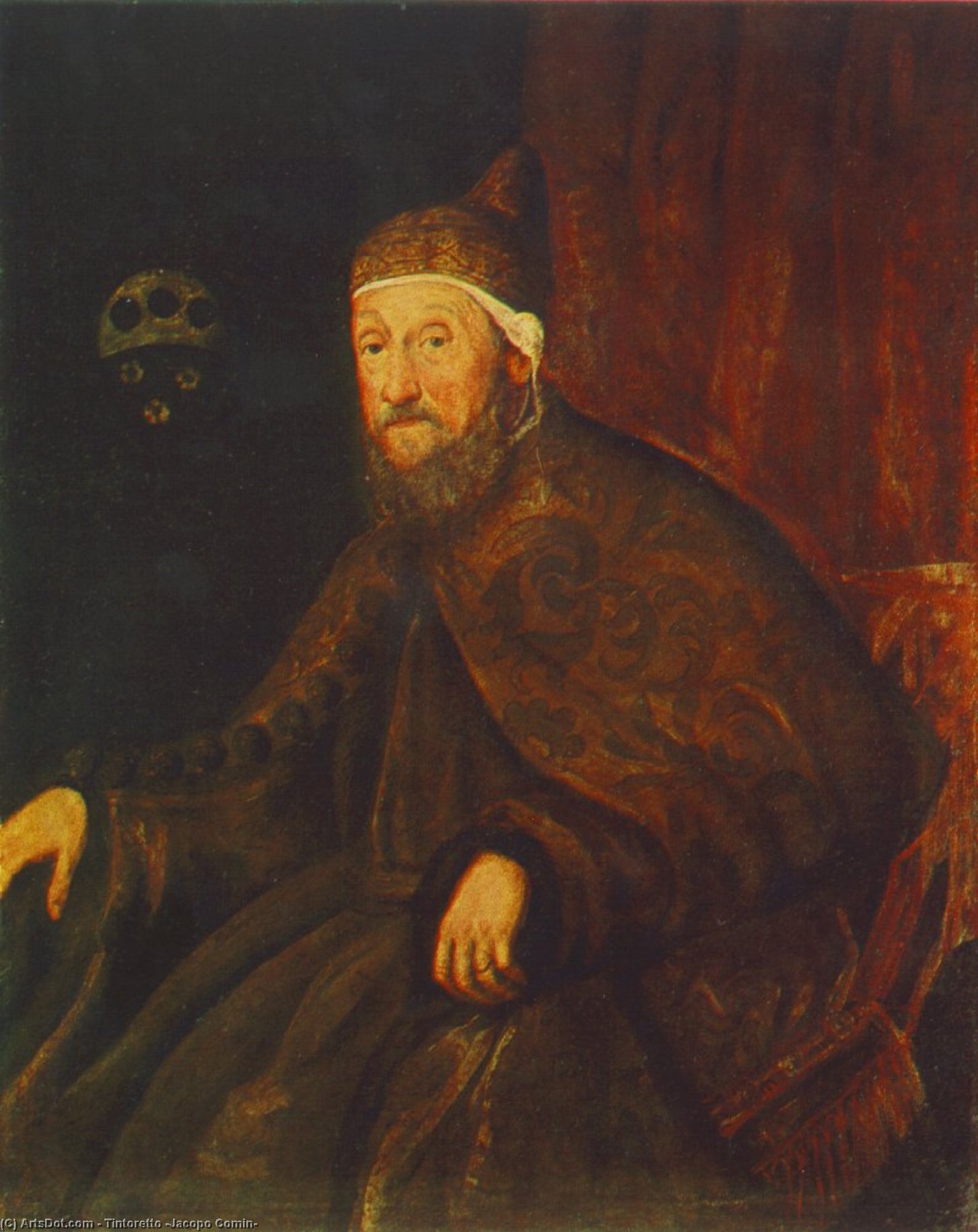
Portrait of Doge Pietro Loredano: A Venetian Masterpiece Revisited
The
Portrait of Doge Pietro Loredano by Jacopo Tintoretto (1518-1594), painted in 1570, stands as a testament to the artistic fervor of the Venetian Renaissance. Currently housed at the Szépmûvészeti Múzeum in Budapest, Hungary, this oil on canvas artwork transcends mere representation; it embodies the spirit of its time and continues to captivate viewers with its dramatic lighting and profound psychological depth.
- Artist: Jacopo Tintoretto (Jacopo Robusti)
- Painting Title: Portrait of Doge Pietro Loredano
- Museum: Szépmûvészeti Múzeum, Budapest, Hungary
- Medium: Oil on Canvas
- Date: 1570
- Size: 127 x 100 cm
Tintoretto’s distinctive style—characterized by theatrical chiaroscuro and dynamic compositions—immediately distinguishes this portrait from its contemporaries. He eschewed the idealized forms favored by many artists of his era, opting instead for a portrayal that captures Pietro Loredano's aged dignity with remarkable sensitivity. The artist skillfully employed rapid brushwork to convey movement and emotion, creating an immersive experience for the viewer. His technique—often dubbed “Il Furioso”—was revolutionary for its time, prioritizing expressive intensity over meticulous detail.
The painting’s symbolism is equally compelling. Two skulls positioned on either side of Doge Loredano serve as potent reminders of mortality, subtly underscoring the ephemeral nature of earthly power and highlighting the artist's awareness of humanist philosophical concerns. This juxtaposition adds a layer of intellectual depth to the visual narrative, prompting contemplation about life’s brevity and legacy. The drapery—particularly the fur trim—is rendered with meticulous attention to texture and color, enhancing the portrait’s opulent aesthetic.
A Window into Venetian Society
The Szépmûvészeti Múzeum's acquisition of this masterpiece underscores Budapest’s commitment to preserving and showcasing European art heritage. The painting offers invaluable insight into the cultural milieu of 16th-century Venice—a city renowned for its artistic patronage, humanist scholarship, and vibrant mercantile activity. It reflects the anxieties and aspirations of a society grappling with religious upheaval and political instability, yet simultaneously celebrating intellectual brilliance and artistic achievement.
Tintoretto’s Innovative Technique
Tintoretto's mastery of chiaroscuro—the dramatic interplay between light and shadow—is arguably his most celebrated accomplishment. He achieved this effect through a process of layering glazes and impasto, creating an illusionistic depth that defies conventional perspective. The artist’s use of color is equally masterful, employing rich hues to convey mood and emotion while simultaneously adhering to the stylistic conventions of Venetian painting. Careful observation reveals subtle nuances in tonal gradation and pigment blending—demonstrating Tintoretto's unwavering dedication to artistic excellence.
Emotional Resonance
Ultimately, *Portrait of Doge Pietro Loredano* transcends its formal attributes to evoke a profound emotional response. The Doge’s gaze—direct and melancholic—commands attention, conveying wisdom gained through experience and hinting at the burdens of leadership. The artist's ability to capture this psychological complexity elevates the portrait beyond mere likeness, transforming it into an enduring symbol of human dignity and resilience. It remains a captivating artwork for anyone interested in exploring the artistic achievements of the Venetian Renaissance.
For high-quality reproductions of Tintoretto’s masterpiece, explore ArtsDot.com.