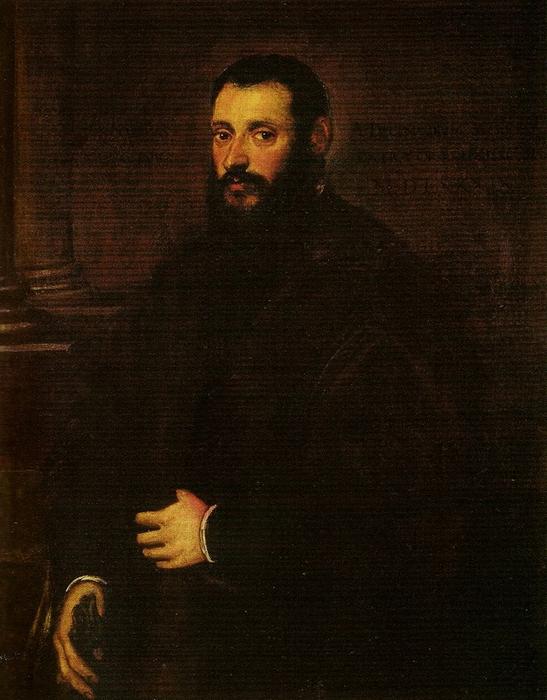
Bewundern Sie Tintoretto's 'Porträt von Nicolaus Padavinus', ein beeindruckendes Ölgemälde aus dem Jahr 1589, das meisterhafte Chiaroscuro & Renaissance-Details zeigt. Erkunden Sie die venezianische Kunstgeschichte!
Entdecken Sie Tintoretto (Jacopo Comin), einen Meister der venezianischen Renaissance, der für seine dramatischen Kompositionen, kräftige Pinselstriche ('Il Furioso') und innovative Verwendung von Licht und Perspektive bekannt ist. Erkunden Sie ikonische Werke und sein Erbe in der italienischen Kunst.
Portrait of Nicolaus Padavinus: A Masterpiece of Venetian Mannerism
Jacopo Tintoretto’s *Portrait of Nicolaus Padavinus*, completed in 1589, stands as a testament to the artistic fervor of Venice during its golden age – a period marked by burgeoning wealth and intellectual curiosity. Housed within the Museo Civico Vicenza, this oil on canvas painting transcends mere likeness; it embodies Tintoretto’s signature style and invites contemplation about Renaissance humanism itself. The artwork's enduring appeal lies not only in its visual beauty but also in the profound psychological insight conveyed through masterful technique and dramatic composition.
Subject Matter: Dignity Embodied
The portrait depicts Nicolaus Padavinus, a prominent Venetian humanist scholar and diplomat, presented with an unwavering gaze that speaks volumes about his character. Tintoretto skillfully captures Padavinus’s solemn demeanor – a deliberate choice reflecting the intellectual seriousness of the era – conveying a sense of dignity and contemplative introspection. Historical records offer scant biographical detail about Padavinus himself; however, Tintoretto elevates him beyond simple representation, transforming him into an emblem of Renaissance ideals: reason, erudition, and moral fortitude. The artist’s meticulous attention to anatomical accuracy underscores the humanist preoccupation with understanding the human form as a reflection of inner virtue.
Style & Technique: The Fury Unleashed – Chiaroscuro's Dramatic Dance
Tintoretto earned the moniker “Il Furioso” (“The Furious”) for his revolutionary approach to painting technique, characterized by energetic brushstrokes and an uncompromising commitment to expressive dynamism. This is palpably evident in *Portrait of Nicolaus Padavinus*, where loose, swirling lines contrast sharply with areas of intense chiaroscuro – the dramatic interplay of light and shadow – creating a palpable sense of movement and depth. Unlike his contemporaries who favored smoother surfaces and idealized forms, Tintoretto embraced a style that prioritized emotional impact over photographic realism. The artist’s masterful manipulation of light illuminates Padavinus's face and hands, highlighting key features while simultaneously enveloping the figure in darkness, thereby intensifying the psychological drama inherent in the portrait. This technique wasn’t merely decorative; it served as a conduit for conveying inner emotion and reinforcing the sitter’s solemn presence.
Historical Context: Venice at Its Zenith – Artistic Innovation Amidst Uncertainty
The Venetian Republic flourished during Tintoretto's lifetime, achieving unparalleled maritime dominance and attracting artists from across Europe. Yet, this prosperity was tempered by anxieties surrounding religious reform and rivalries with burgeoning powers like Spain and England. These tensions permeated Venetian culture, influencing artistic sensibilities—a preoccupation with grandeur, theatricality, and conveying complex psychological states. Tintoretto’s oeuvre reflects these concerns, often depicting biblical narratives and historical scenes imbued with dramatic tension and emotional intensity. The portrait itself stands as a symbol of Venice's intellectual vitality during this transformative period, capturing the spirit of humanist inquiry amidst shifting political landscapes.
Symbolism: Beyond Appearance – A Reflection of Renaissance Values
The dark background against Padavinus’s luminous face serves as a powerful visual metaphor for contemplation and inner reflection—values central to Renaissance humanism. Tintoretto's deliberate use of color contributes to this symbolic resonance, favoring muted reds and browns that convey seriousness and dignity. Furthermore, the artist’s meticulous rendering of Padavinus’s clothing – dark robes signifying wealth and status – underscores the importance of social hierarchy within Venetian society during Tintoretto’s time. Ultimately, *Portrait of Nicolaus Padavinus* transcends its formal depiction to communicate a deeper message about human intellect, moral virtue, and the enduring legacy of Renaissance artistic ideals.