Die Trauer der Magdalena: Ein dramatisches Meisterwerk von Jacopo Tintoretto
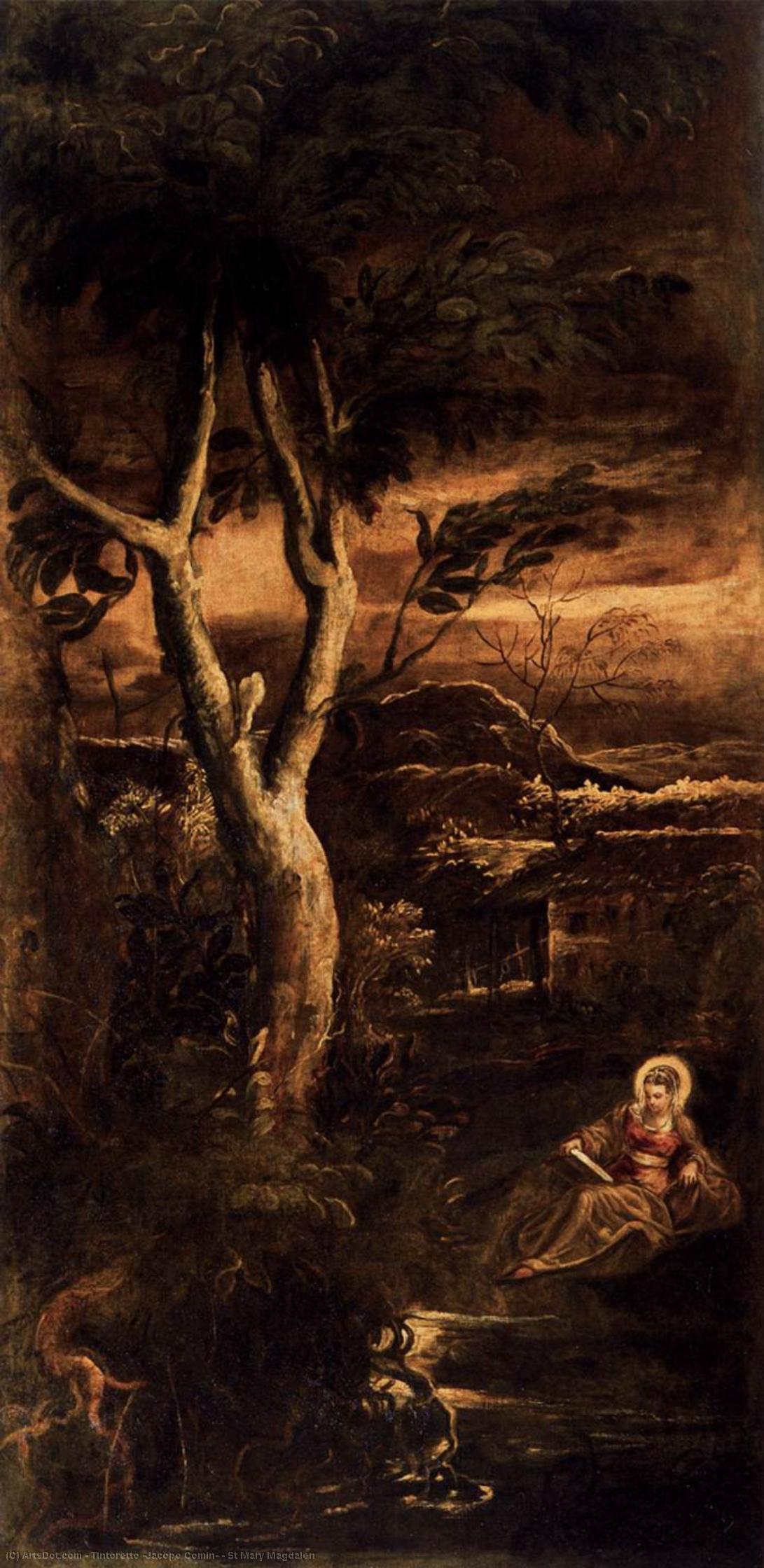
Jacopo Tintoretto’s “St Mary Magdalene,” painted in Venice around 1582, is not merely a depiction of a biblical scene; it's a profound exploration of grief, contemplation, and the enduring power of faith. This monumental canvas, measuring an impressive 425 x 209 cm, immediately captivates with its dramatic use of light and shadow – hallmarks of Tintoretto’s signature style. The painting transports us to a secluded forest clearing, bathed in a twilight glow that seems both melancholic and intensely spiritual.
At the heart of the composition sits Mary Magdalene, rendered with an almost agonizing realism. Her head is bowed, her hands clasped together as if shielding herself from an unbearable sorrow. The artist masterfully conveys her emotional state through subtle shifts in posture and expression – a slight tremor in her shoulders, a downward gaze that speaks volumes. The folds of her garments are not simply decorative; they contribute to the overall sense of movement and turbulence, mirroring the turmoil within her soul. Notice how Tintoretto uses chiaroscuro—the dramatic contrast between light and dark—to sculpt Magdalene’s form, drawing our attention directly to her face and emphasizing the vulnerability of her posture.
Die Technik und der Einfluss des Venetian Masters
Tintoretto was a revolutionary painter, pushing the boundaries of traditional Venetian art. Unlike his contemporaries who favored smooth, polished surfaces, Tintoretto embraced a more impasto technique – applying paint thickly to create texture and depth. This is particularly evident in the depiction of the trees surrounding Magdalene, which appear almost violently rendered, conveying a sense of wildness and untamed emotion. His use of color is equally striking; deep greens and browns dominate the landscape, punctuated by flashes of red—perhaps symbolizing blood, sacrifice, or the passionate nature of repentance. The artist’s rapid brushstrokes, characteristic of his working method, create an immediate sense of energy and movement, a hallmark of his dynamic style.
- Color Palette: Dominated by deep greens, browns, and reds – evoking both the natural world and themes of sorrow and redemption.
- Technique: Impasto application of paint creates texture and depth, reflecting Tintoretto’s dynamic style.
- Composition: The dramatic use of light and shadow (chiaroscuro) directs the viewer's attention to Magdalene’s emotional state.
Symbolism und Kontext im Kontext der Renaissance
The scene depicted is deeply rooted in Christian iconography, drawing upon the biblical accounts of Mary Magdalene’s repentance and devotion. However, Tintoretto elevates this narrative beyond a simple retelling of scripture. The presence of the dogs – often associated with loyalty and fidelity – suggests a connection between Magdalene's sorrow and her unwavering faith. The bird, soaring above, could symbolize hope or divine guidance. Furthermore, the figure in the background, partially obscured, hints at an observer, perhaps representing humanity’s role in witnessing and understanding this profound moment of spiritual reflection. This adds another layer of complexity to the painting, inviting viewers to contemplate their own relationship with faith and suffering.
Painted during a period of significant religious and social upheaval – the Counter-Reformation – “St Mary Magdalene” reflects the anxieties and aspirations of the era. The Church sought to reaffirm its authority and inspire piety through art, and Tintoretto’s dramatic style undoubtedly served this purpose. His work resonated powerfully with audiences, offering both solace and a compelling visual narrative.
Ein Meisterwerk für Sammler und Innenräume
A reproduction of “St Mary Magdalene” by Jacopo Tintoretto is more than just a beautiful image; it’s an investment in a piece of art history. ArtsDot offers meticulously crafted, hand-painted reproductions that faithfully capture the artist's genius and the painting’s emotional intensity. Whether you are a seasoned collector or seeking to add a touch of dramatic elegance to your interior design, this artwork will undoubtedly become a focal point – a testament to Tintoretto’s unparalleled skill and his profound understanding of the human condition. The scale of this piece makes it particularly suitable for grand spaces, while smaller reproductions can bring its evocative power into more intimate settings.