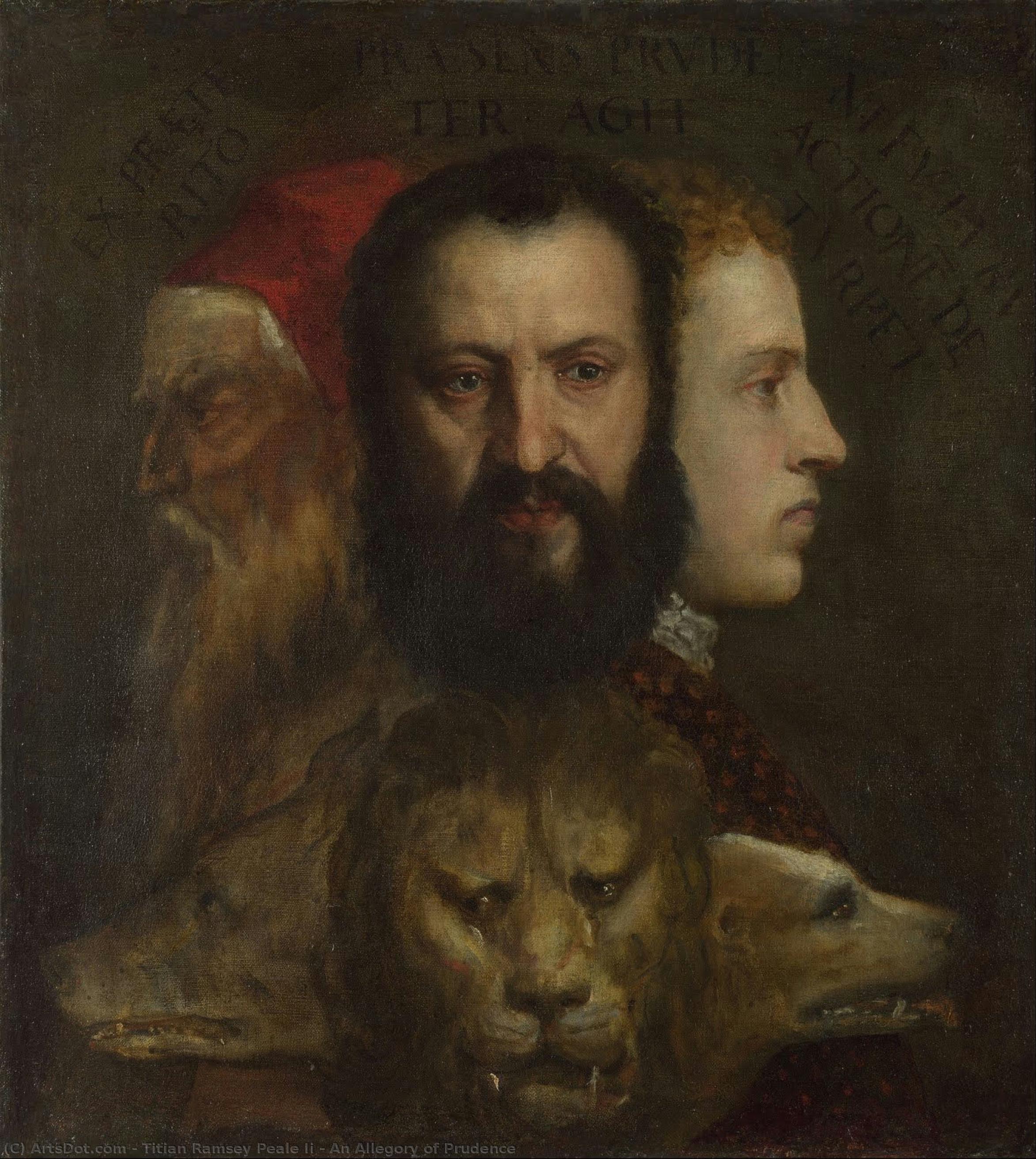
Titian Ramsey Peale IIs Meisterwerk "Allegorie der Vorsicht" beeindruckt durch Symbolik und Realismus im Nationalgalerie London. Entdecken Sie die Bedeutung dieser Renaissance-Gemälde und die außergewöhnliche Kunstfertigkeit des Künstlers.
Entdecken Sie Titian Ramsay Peale II (1799-1885), einen amerikanischen Maler und Naturforscher, der für seine Hochrenaissance-Stilgemälde, detaillierte Tierdarstellungen und seine Beiträge zu frühen wissenschaftlichen Expeditionen bekannt ist. Erkunden Sie seine wiederentdeckten Meisterwerke auf.
Entdecken Sie europäische Kunst vom Mittelalter bis zum frühen 20. Jhdt. in Londons National Gallery! Meisterwerke von Van Gogh, Rembrandt & mehr – freier Eintritt!
An Allegory of Prudence
Titian Ramsey Peale II’s “An Allegory of Prudence,” housed in the esteemed National Gallery in London, United Kingdom, transcends mere visual representation; it embodies the very essence of Renaissance humanism and offers a profound meditation on virtue. This masterpiece isn't simply painted—it’s conceived as a carefully orchestrated dialogue between intellect and emotion, inviting contemplation on the complexities of navigating life’s journey with wisdom and fortitude. Let us delve into the intricacies of this painting and explore its enduring significance.
The Three Ages of Man: A Symbolic Tableau
At the core of “An Allegory of Prudence” lies a striking depiction of human existence divided into three distinct phases – youth, maturity, and old age. The artist’s masterful use of chiaroscuro—the dramatic interplay between light and shadow—highlights the vulnerability inherent in each stage while simultaneously conveying resilience and experience. The left head portrays Titian Ramsey Peale II himself in his later years, reflecting a contemplative gaze that speaks to the accumulated wisdom gained through life's trials. Adjacent to him is Orazio, his son, embodying the promise of future generations inheriting the virtues of prudence. Finally, on the right side resides Marco Vecellio, Titian’s cousin and heir—a youthful face symbolizing potential and aspiration. The positioning of these figures isn’t accidental; it underscores the cyclical nature of human life and the importance of embracing each stage with grace and discernment.
The Triple-Headed Beast: A Visual Emblem
Dominating the composition is a monumental triple-headed beast – a wolf, lion, and dog—a symbol deeply rooted in Renaissance allegory. This creature isn’t merely decorative; it serves as a powerful visual metaphor for prudence itself. The wolf represents courage—the willingness to confront danger head-on—while the lion embodies strength—the unwavering conviction to defend what is right. And the dog symbolizes loyalty—the steadfast devotion to duty and integrity. These animals are meticulously rendered with painstaking detail, reflecting Peale’s commitment to realism alongside his symbolic intentions. The inscription beneath each head reinforces this thematic unity, emphasizing the multifaceted nature of prudence as a virtue requiring both bravery and unwavering faithfulness.
Artistic Significance: Renaissance Innovation
“An Allegory of Prudence” stands apart from its contemporaries due to its innovative approach to artistic expression—a hallmark of the Renaissance spirit. Peale’s technique—primarily oil on canvas—allowed for unparalleled tonal richness and textural depth, capturing the subtle nuances of human emotion and conveying a sense of solemn grandeur. The painting's palette is dominated by muted earth tones—ochre, umber, and Sienna—creating an atmosphere of contemplative seriousness. Furthermore, Peale’s masterful use of perspective contributes to the illusionistic quality of the artwork, immersing the viewer in a richly imagined space. This meticulous attention to detail aligns perfectly with the humanist ideals prevalent during the Renaissance, where artists sought to elevate human experience through beauty and intellectual contemplation.
Beyond the Canvas: Related Works & Inspiration
Exploring Titian Ramsey Peale II’s artistic legacy reveals a broader panorama of Renaissance art. Consider his “The Flaying of Marsyas,” another dramatic allegory exploring themes of justice and retribution—a testament to Peale's ability to convey complex moral narratives through visual storytelling. Similarly, "Entombment of Christ" showcases his skill in portraying religious iconography with profound emotional resonance. For those seeking inspiration or desiring a high-quality reproduction of “An Allegory of Prudence,” visit ArtsDot.com – where you can discover exceptional prints and frames crafted by skilled artisans dedicated to preserving the beauty and intellectual depth of Renaissance masterpieces.