Die stille Botschaft des Wiedersehens
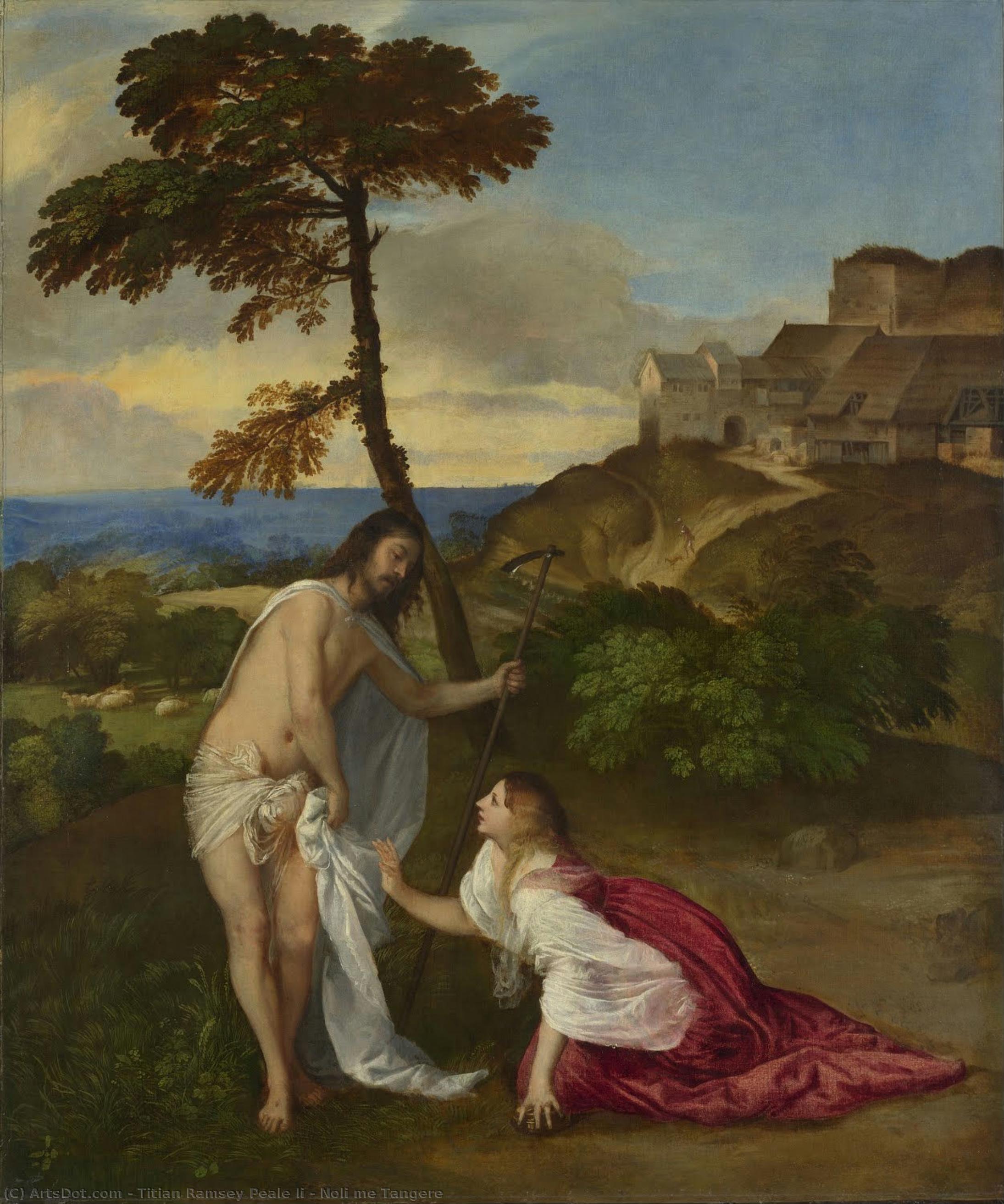
Titian Ramsay Peale II’s “Noli Me Tangere” (1514) is more than just a religious painting; it's a poignant meditation on grief, forgiveness, and the enduring power of human connection. This intimate scene, rendered with Titian’s signature luminous palette and meticulous detail, captures a pivotal moment in the biblical narrative – Jesus’s appearance to Mary Magdalene after his resurrection. The composition immediately draws the viewer into a space of profound tenderness, a sanctuary built around the figures of Christ and Mary.
The painting's strength lies not only in its technical mastery—notice the subtle gradations of light and shadow, the delicate rendering of fabric and skin – but also in its ability to evoke a deeply felt emotional response. Peale skillfully uses color to create an atmosphere of both sorrow and hope. The muted tones of Mary Magdalene’s clothing contrast with the radiant glow surrounding Christ, symbolizing her transition from darkness into the light of faith. The background landscape, dominated by a castle and a grazing horse, provides a grounding element, anchoring the scene in a recognizable reality while simultaneously hinting at an otherworldly realm.
Der Einfluss der Renaissance und die Handschrift des Künstlers
Titian Ramsay Peale II’s artistic lineage is deeply rooted in the Italian Renaissance. As the son of Charles Willson Peale, a prominent American naturalist and portraitist, he inherited a profound appreciation for classical ideals – particularly those emanating from Venice. However, unlike a mere imitation, Peale infused his work with a distinctly American sensibility. His meticulous attention to detail, reminiscent of Flemish masters, combined with a vibrant color palette that was both bold and refined, set him apart. The painting’s composition, echoing Renaissance depictions of the Pietà, demonstrates this conscious engagement with established artistic traditions.
It's important to note that Peale wasn't simply replicating styles; he was channeling a profound artistic sensibility. The subtle gesture of Christ reaching out, the vulnerable expression on Mary Magdalene’s face – these are not merely technical details but carefully considered choices designed to convey a specific emotional truth. The use of oil paint allows for incredible depth and luminosity, capturing the texture of fabric and the nuances of light with remarkable precision.
Symbolik und die Bedeutung des Titels
The title “Noli Me Tangere,” Latin for "Do not touch me," is central to understanding the painting’s meaning. It represents Christ's warning to Mary Magdalene, a reminder of her past sins and a symbol of divine grace. The act of touching, in this context, signifies an attempt to grasp or possess something beyond human comprehension – faith, redemption, and eternal life. The scene itself embodies this concept: Mary Magdalene is not physically touching Christ, but rather receiving his blessing through the mere presence of his gaze.
Furthermore, the initial confusion in Mary Magdalene’s expression—mistaking Christ for a gardener—highlights the transformative nature of the encounter. It's a moment of profound recognition, a shift from earthly concerns to spiritual awakening. The horse grazing peacefully in the background can be interpreted as a symbol of stability and continuity amidst this dramatic change.
Ein Fenster in die Seele – Reproduktionen für Ihr Zuhause
ArtsDot offers exquisite hand-painted reproductions of Titian Ramsay Peale II’s “Noli Me Tangere,” allowing you to bring this timeless masterpiece into your own space. Each reproduction is created by skilled artisans using the same techniques and materials as the original, ensuring a faithful representation of Titian's artistry. Whether displayed in a formal study or a serene living room, this painting will serve as a constant reminder of the enduring power of faith, forgiveness, and the beauty of human connection. Consider it not just a decoration, but an invitation to contemplate profound spiritual themes.