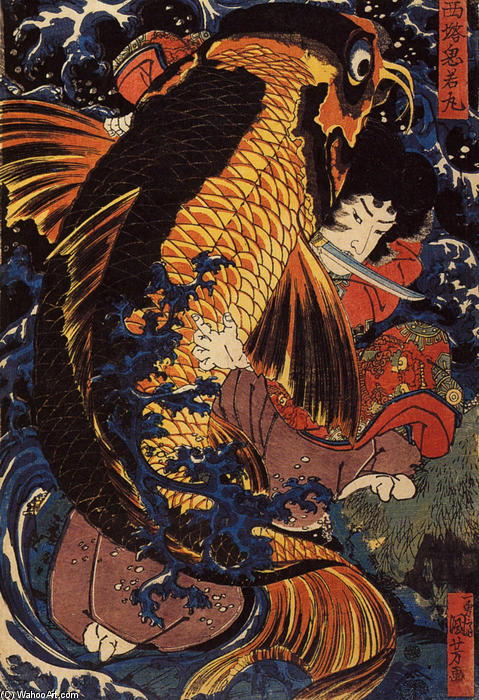
This striking ukiyo-e print by Kuniyoshi depicts Saito Oniwakamaru facing off against a colossal carp, showcasing masterful storytelling and vibrant color palettes characteristic of the Edo period.
Entdecken Sie Utagawa Kuniyoshi (1798-1861), Meister des japanischen Ukiyo-e! Seine Kriegerbilder, fantastischen Landschaften & innovative Kunst verbinden Tradition mit westlichen Einflüssen.
A Symphony of Color and Courage: Decoding Utagawa Kuniyoshi’s “Saito Oniwakamaru”
The image before you is more than just a woodblock print; it's a portal into the turbulent spirit of Edo Japan, meticulously crafted by the prodigious talent of Utagawa Kuniyoshi. Born Yoshisaburō in 1798 amidst the bustling silk-dyeing trade of Tokyo, Kuniyoshi’s artistic journey began with an instinctive fascination for the dramatic narratives that captivated audiences during his formative years – specifically, heroic depictions of samurai warriors battling formidable foes. This early passion would propel him into the studio of Toyokuni I, where he honed his skills and embraced the established conventions of the Utagawa lineage, ultimately forging a legacy as one of the most innovative and influential artists of his era.
“Saito Oniwakamaru,” completed around 1853, exemplifies Kuniyoshi’s masterful command of *ukiyo-e* technique and storytelling prowess. At its core lies a breathtaking confrontation between Saito Tsunetomi Oniwakamaru – a rebellious samurai determined to avenge the assassination of his father – and a colossal carp, symbolizing imperial authority and resilience. The print isn't merely aesthetically pleasing; it’s laden with symbolic significance reflecting anxieties surrounding social upheaval and the preservation of tradition amidst encroaching modernity.
The artist employs a dynamic composition characterized by bold lines and vibrant hues—a hallmark of Kuniyoshi’s distinctive style. Thick, black ink outlines the figures and the carp, creating an immediate sense of urgency and emphasizing the perilous stakes involved in this duel. Layers of color – predominantly orange for the carp's scales and crimson for Oniwakamaru’s attire – heighten the visual drama and convey emotions of determination and righteous indignation. Kuniyoshi skillfully utilizes *tsukimi-yori*—a technique involving multiple blocks to achieve gradations of color—to render the turbulent sea with remarkable realism, mirroring the internal turmoil of its protagonists.
Historically, “Saito Oniwakamaru” emerged during a period marked by significant social and political instability. The Tokugawa shogunate’s grip on power was weakening as Western influence steadily increased, fueling debates about Japan's role in the global arena. Kuniyoshi’s depiction captures this zeitgeist—the clash between established order and disruptive change—through its portrayal of a samurai warrior confronting an insurmountable obstacle. Yet, despite the daunting challenge presented by the carp, Oniwakamaru remains steadfastly focused on his mission, embodying courage and unwavering loyalty to his father's memory.
Ultimately, “Saito Oniwakamaru” transcends mere visual representation; it evokes profound emotional resonance. The print speaks to themes of honor, sacrifice, and perseverance—values deeply ingrained in Japanese culture. Its striking imagery continues to inspire artists and designers alike, serving as a testament to Kuniyoshi’s enduring artistic vision. Reproductions of this masterpiece offer an opportunity to immerse oneself in the captivating beauty and intellectual depth of Edo Japan – a timeless celebration of heroism and artistic brilliance.