A Vision of Divine Serenity: The Madonna Group
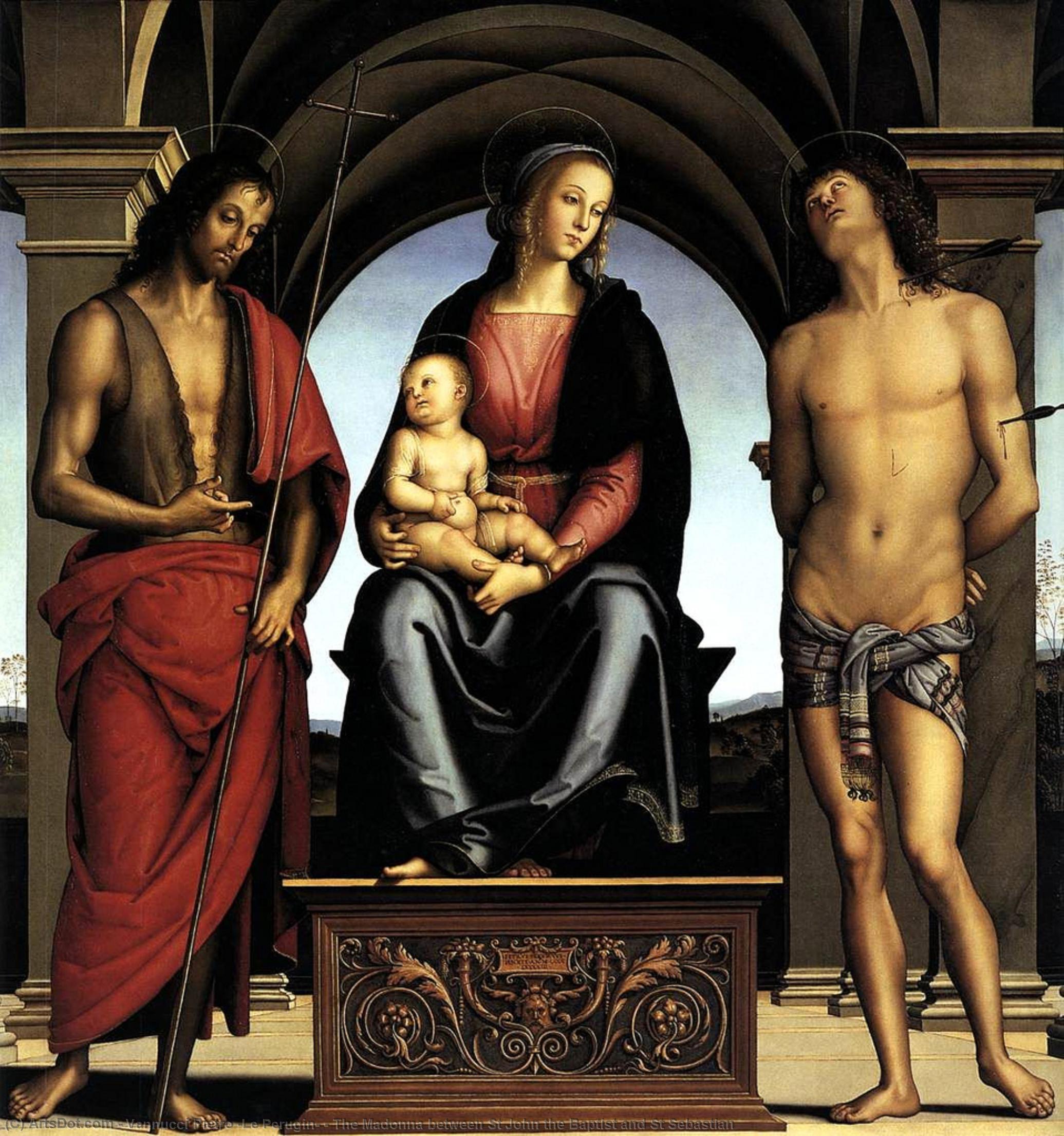
To stand before this magnificent depiction of The Madonna between St John the Baptist and St Sebastian is to step directly into the luminous heart of the Italian Renaissance. It is a composition that transcends mere portraiture; it is a profound meditation on divinity, human connection, and spiritual guardianship. Pietro Vannucci, known to history as Le Perugino, masterfully captures a moment of sublime grace. At its core lies Mary, cradling the infant Jesus—a tableau radiating tender, almost palpable love. This central grouping immediately draws the eye, inviting the viewer into an intimate sphere where earthly beauty meets heavenly promise.
The Supporting Pillars of Piety
Flanking this sacred nucleus are two figures whose presence anchors the narrative and deepens its symbolic resonance. To Mary’s left stands St. John the Baptist, often depicted as a precursor to Christ, his gaze and posture suggesting both prophecy and gentle witness. On the right, St. Sebastian offers a contrasting yet complementary energy; his inclusion speaks to themes of endurance and sacrifice. These flanking saints are not mere decorative elements; they are narrative pillars, framing the central mystery of the Holy Family while simultaneously guiding the viewer’s emotional focus back to the Madonna and Child. The entire arrangement suggests a sacred procession or an eternal moment captured within the grandeur of a cathedral setting.
Mastery in Color and Composition
Technically, this work showcases Le Perugino's signature brilliance. His palette is renowned for its luminous quality—colors that seem to emanate from within the canvas itself, giving the figures an ethereal glow. The composition is balanced with remarkable poise; even the visible architectural elements, such as the benches placed thoughtfully on either side, contribute to a sense of ordered depth and classical harmony. Le Perugino’s training in perspective, absorbing the lessons of masters like Piero della Francesca, ensures that while the subject matter is deeply spiritual, the execution remains grounded in idealized, believable realism. This balance between the divine and the tangible is what makes the piece so enduringly beautiful.
Symbolism and Emotional Resonance for the Modern Collector
For the contemporary admirer or collector, this artwork offers more than just aesthetic pleasure; it provides a conduit to historical devotion. The symbolism inherent in the grouping—the purity of Mary, the promise of Christ, the ascetic witness of John, and the steadfast virtue of Sebastian—creates a rich tapestry of Christian virtues. Owning a reproduction of this piece allows one to incorporate a focal point of profound contemplation into any space. Whether adorning a grand hall or a private chapel, its serene majesty imparts an immediate sense of elevated calm, transforming a room into a sanctuary echoing Renaissance piety.