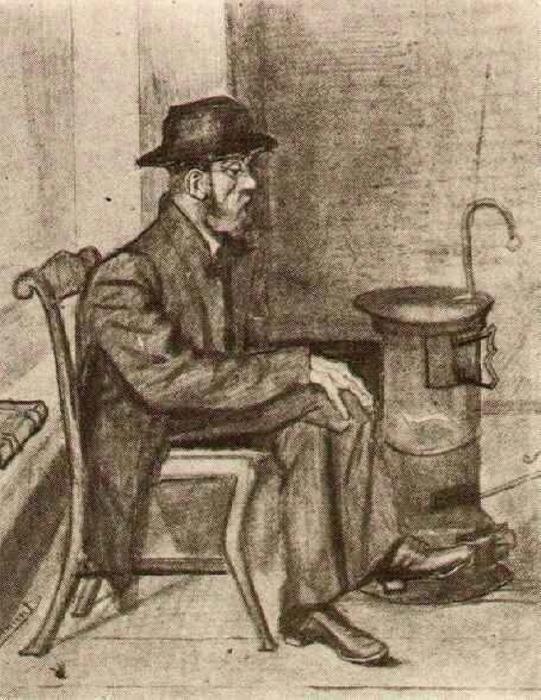
Old Man Warming Himself: A Study in Light and Loneliness
Vincent van Gogh’s “Old Man Warming Himself,” painted in 1882, stands as a poignant testament to the artist's early stylistic explorations and his profound sensitivity to human emotion. More than just a depiction of an elderly man seated before a hearth—a commonplace scene rendered with extraordinary artistry—the painting embodies a deeper resonance concerning solitude, resilience, and the enduring comfort found in simple rituals.
Background and Artistic Context
Created during Van Gogh’s formative years in Paris and Arles, “Old Man Warming Himself” exemplifies his burgeoning Impressionistic tendencies while simultaneously foreshadowing the expressive power of his later Post-Impressionist style. Influenced by artists like Jean Millet and Jules Bastien Lepage, who captured rural life with meticulous realism—particularly Millet's depiction of peasant poverty—Van Gogh sought to convey not merely what he saw but how he *felt*. The painting’s muted palette—dominated by earthy browns and ochres—contrasts sharply with the warm glow emanating from the fireplace, creating a visual dialogue between darkness and illumination.
Technique: Impasto and Emotional Depth
Van Gogh's masterful use of impasto—thickly applied paint—is central to conveying the painting’s emotional core. Each brushstroke is palpable, layering texture onto the canvas and capturing the physicality of the scene. The artist meticulously rendered the wrinkles on the old man’s face and hands, emphasizing his age and vulnerability. Yet, simultaneously, the radiant warmth of the fire suggests a defiant spirit—a refusal to succumb to despair—and speaks to the universal human desire for solace during moments of hardship.
Symbolism: Light as Hope Amidst Darkness
The fireplace itself serves as a potent symbol within “Old Man Warming Himself.” Traditionally associated with domesticity, warmth, and familial connection, it represents a refuge from the coldness of winter—both literal and metaphorical. The flickering flames illuminate the old man’s face, casting shadows that underscore his isolation but also hinting at inner resilience. Van Gogh's deliberate choice of color—particularly the yellows and oranges—amplifies this symbolic significance, conveying optimism and spiritual warmth against a backdrop of melancholy.
Legacy and Reproduction
“Old Man Warming Himself” continues to captivate viewers with its understated beauty and profound emotional depth. Its enduring appeal lies in Van Gogh’s ability to distill complex human experience into a single, unforgettable image. ArtsDot offers meticulously hand-painted reproductions of this masterpiece, allowing you to bring the spirit of Impressionism—and the artist's unwavering commitment to capturing authentic emotion—into your home.