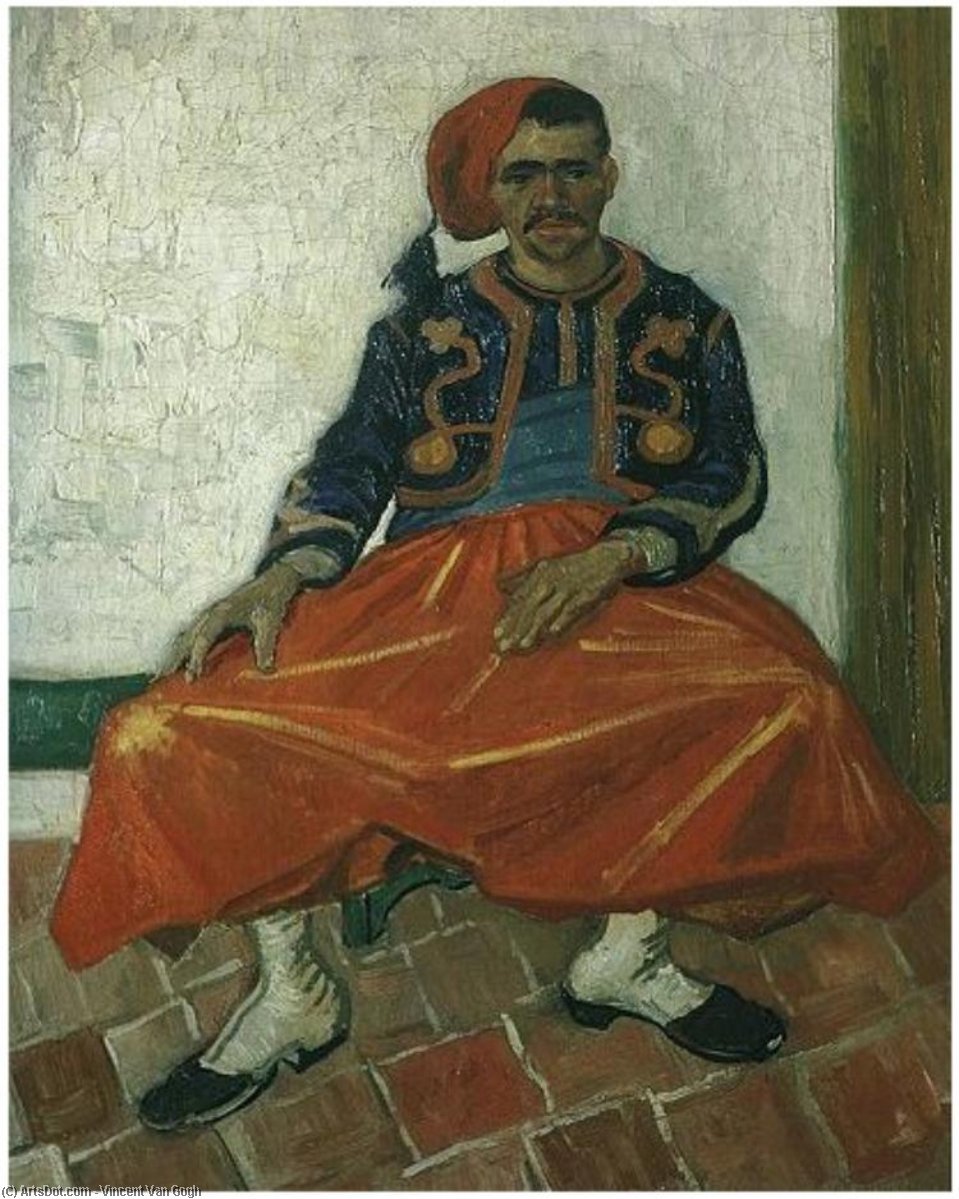
Seated Zouave, The
Vincent van Gogh’s Seated Zouave is a captivating portrait that transcends mere representation—it embodies the spirit of Post-Impressionism and captures the essence of a pivotal moment in artistic history.
Painted in 1888 during his stay in Arles, France, this oil on canvas masterpiece showcases Van Gogh’s unparalleled ability to infuse emotion into visual form. More than just depicting a soldier, it's an exploration of color, texture, and psychological depth—elements characteristic of the artist’s distinctive style.
Post-Impressionism and its Influence on Van Gogh's Style
Post-Impressionism emerged as a reaction against Impressionists’ focus on capturing fleeting moments of light. Artists like Cézanne, Gauguin, and Van Gogh sought to express subjective experience rather than objective observation. They experimented with bolder colors, simplified forms, and expressive brushstrokes—techniques that profoundly impacted the trajectory of modern art.
Van Gogh himself was deeply influenced by Japanese woodblock prints – Ukiyo-e – which captivated him with their flattened perspectives and vibrant hues. This fascination translated into his artistic practice, evident in the deliberate use of color and composition to convey mood and emotion.
The Seated Zouave: A Study of Van Gogh's Masterpiece
The portrait depicts Lieutenant Milliet, a Zouave officer who served as a model for Van Gogh. The artist employed a striking palette—primarily reds, blues, greens, and yellows—to create an arresting visual experience. Thick brushstrokes dominate the canvas, layering color and texture to convey both physical presence and psychological intensity.
The Zouave’s uniform – blue with red-orange braids, a red cap adorned with two yellow stars – is positioned against a muted brick wall backdrop. This juxtaposition emphasizes the soldier's musculature and resilience while simultaneously grounding him in a tangible environment. Van Gogh’s meticulous attention to detail—particularly in capturing the nuances of facial expression—reveals his profound understanding of human psychology.
Key Features
- Bold Color Palette: The vibrant reds, blues, greens, and yellows contribute to an emotionally charged atmosphere.
- Expressive Brushwork: Thick impasto creates texture and dynamism, conveying movement and energy.
- Symbolic Composition: The placement of the Zouave against the brick wall symbolizes strength and stability amidst a turbulent backdrop.
Currently housed in the Van Gogh Museum in Amsterdam, this painting stands as a testament to Van Gogh’s artistic genius and enduring legacy.
For those seeking to immerse themselves in the beauty of Post-Impressionism and explore reproductions of iconic artworks like Vincent van Gogh’s masterpieces, visit ArtsDot.com.