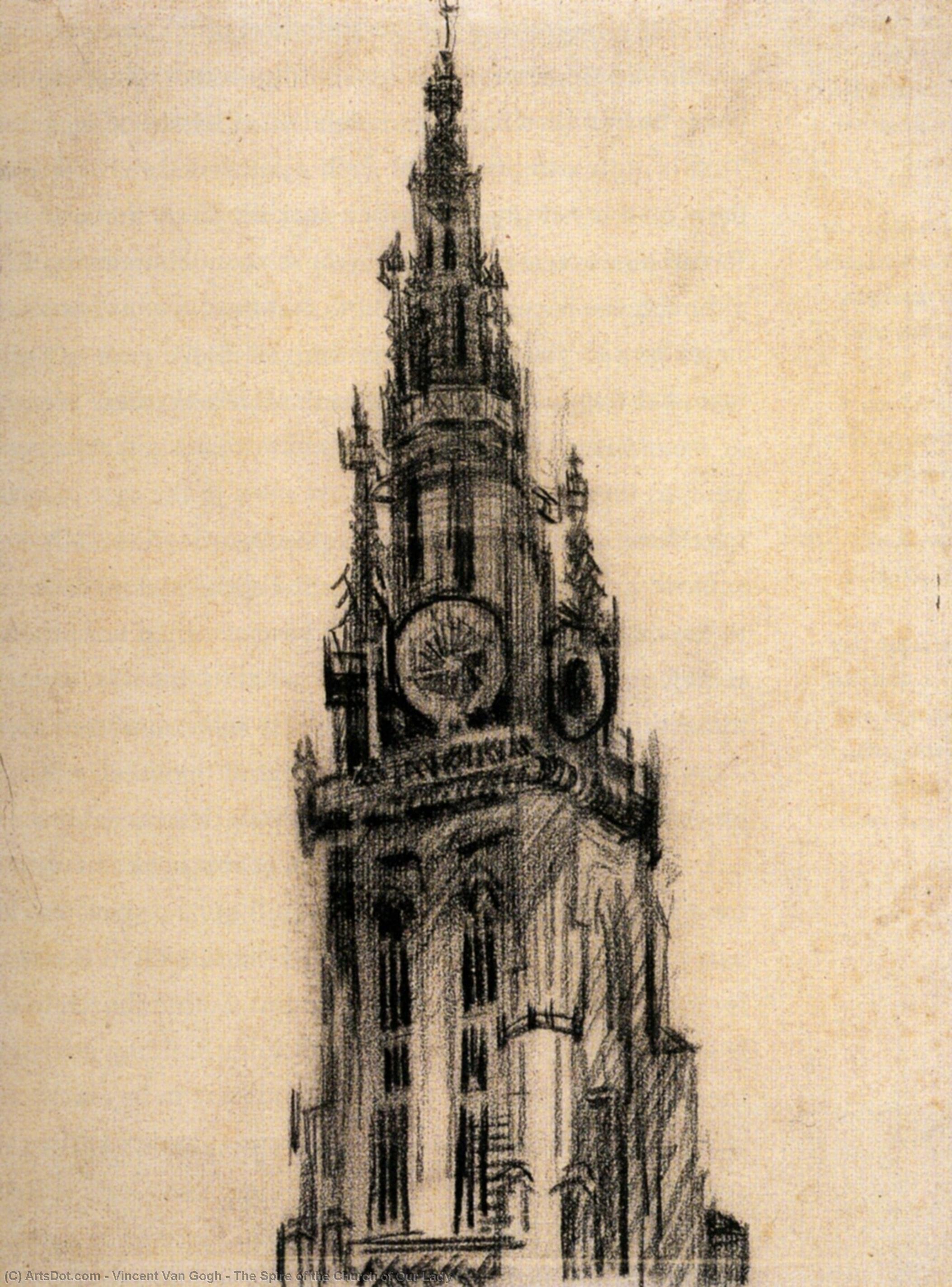
The Spire of the Church of Our Lady
Vincent van Gogh’s
The Spire of the Church of Our Lady stands as a testament to his unparalleled ability to distill complex architectural forms into emotionally resonant sketches. Created in 1885 during his formative years in Antwerp and Paris, this drawing embodies the artist’s pioneering approach to Realism—a stylistic choice that prioritized truthful representation over idealized beauty. It's more than just a depiction of stone; it’s an exploration of light, shadow, and texture, reflecting Van Gogh’s profound engagement with the visual world around him.
Artistic Style and Technique
Van Gogh’s masterful use of chalk—a medium he favored for its immediacy and tonal versatility—allowed him to capture the spire of Our Lady’s Church with remarkable precision. The monochrome palette—primarily shades of grey and white—immediately establishes a mood of solemn contemplation, mirroring the spiritual significance of the building itself. Unlike Impressionists who sought to convey fleeting impressions of light, Van Gogh meticulously rendered every detail: the weathered stone surface, the delicate tracery of the windows, and crucially, the clock face perched atop the tower. This deliberate attention to architectural specifics underscores his conviction that art could illuminate the essence of everyday life and elevate it into something sublime. The artist’s expressive brushstrokes—loose, agitated lines—inject a palpable energy into the drawing, conveying not merely what he saw but also how he felt observing the spire.
Historical Context and Symbolism
The painting emerged from Van Gogh's period of intense artistic experimentation following his move to Paris in 1886. Influenced by Japanese woodblock prints—particularly their flattened perspectives and bold compositional arrangements—he sought to break free from academic conventions and forge a new visual language. The spire itself represents aspiration, faith, and permanence – qualities that Van Gogh wished to convey through his art. Its upward thrust symbolizes spiritual elevation, while the clock face serves as a reminder of time’s relentless passage and the inevitability of mortality—themes recurrent in many of his works. Considering these elements contributes to a deeper understanding of Van Gogh's artistic intentions and his desire to communicate profound emotional truths.
Similar Works by Van Gogh
Exploring Van Gogh’s oeuvre reveals a remarkable consistency in his stylistic choices and thematic preoccupations. Pieces like
Lap with Hands and
Peasant Woman Binding Sheaves exemplify his ability to depict human figures with sensitivity and compassion—often rendered in muted colors and simplified forms. Similarly,
Woman Preparing a Meal showcases his fascination with domestic scenes—captured with meticulous detail and imbued with an understated emotional resonance. These paintings demonstrate Van Gogh’s unwavering commitment to portraying the human condition with honesty and empathy.
Museums and Collections
The
Oskar Reinhart Collection Winterthur, Switzerland houses a significant collection of Van Gogh’s drawings and prints—a treasure trove for scholars and admirers alike. Visiting this museum offers an unparalleled opportunity to immerse oneself in the artist's artistic vision and appreciate the enduring beauty of his creations. For more information on Van Gogh’s life and legacy, consult
Vincent van Gogh on Wikipedia.