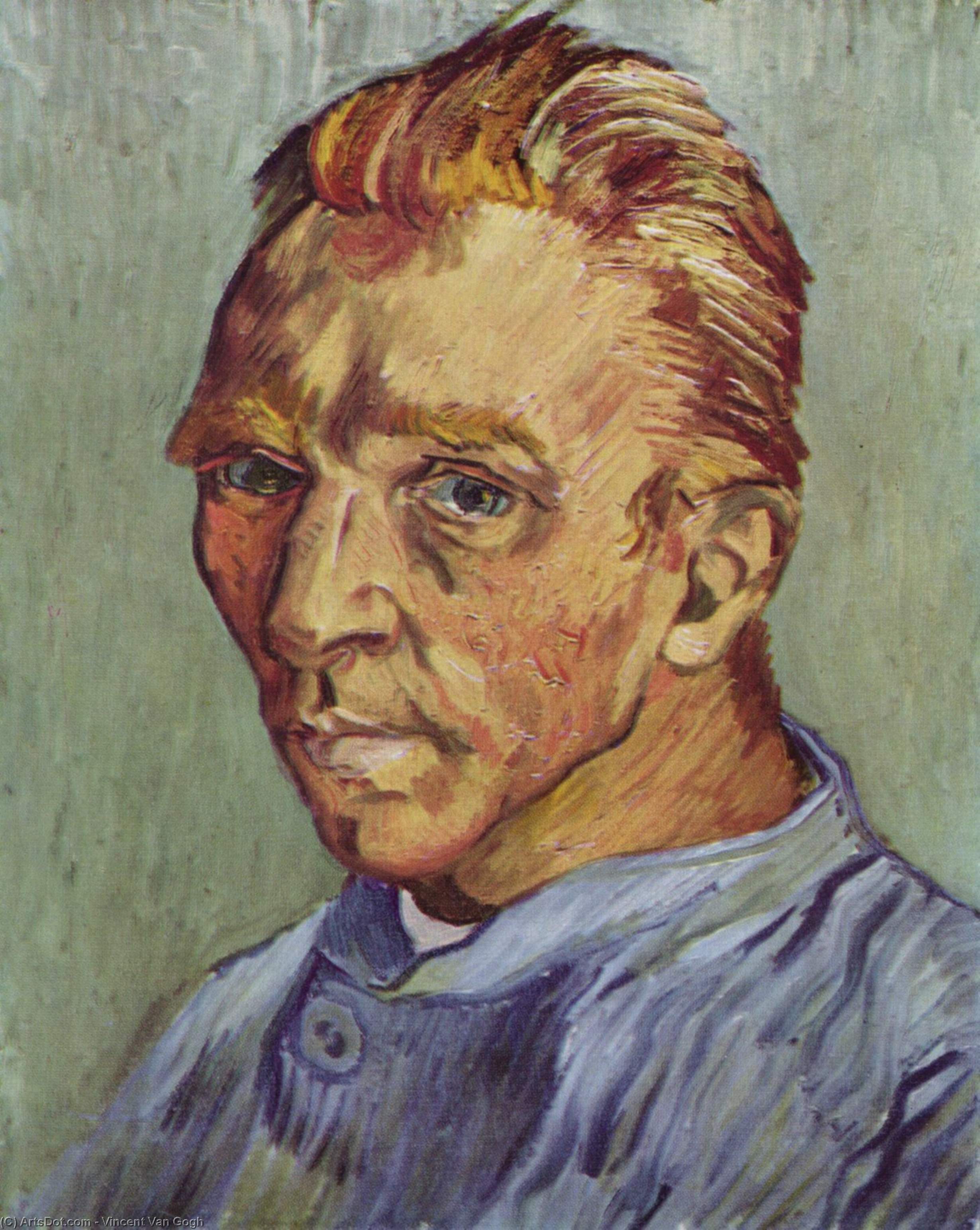
Self-Portrait
Vincent van Gogh’s Self-Portrait, created in 1889, is a captivating piece that offers a glimpse into the artist's inner world. This oil on canvas painting, measuring 40 x 31 cm, is a quintessential example of Post-Impressionism, characterized by bold colors and expressive brushwork. It resides within the Musée d’Orsay in Paris, showcasing one of Van Gogh’s most poignant self-representations—a testament to his unwavering dedication to capturing emotion on canvas.
Artistic Context
Van Gogh's self-portraits are renowned for their emotional depth and introspection. The artist frequently depicted himself in varied settings and attire, reflecting his evolving moods and artistic explorations during a period marked by significant personal turmoil. This particular Self-Portrait stands out due to its simplicity and directness; he wears a blue shirt adorned with white trim—a deliberate choice that contributes to the painting’s understated elegance. The stylistic influence of Impressionism is palpable, yet Van Gogh transcends mere replication, forging his own distinctive path toward conveying profound psychological states.
Symbolism and Expression
The wide-eyed stare of Van Gogh in this painting communicates an intense focus and unwavering gaze—a characteristic that speaks volumes about the artist’s mental state during this formative period. Minute details like his beard and mustache are meticulously rendered, adding to the overall sense of realism and grounding the image in tangible observation. The masterful use of vibrant colors, particularly the dominant blue hue of his shirt, creates a striking contrast against the muted background—a technique designed to heighten emotional impact and draw the viewer’s eye inward. This deliberate juxtaposition underscores Van Gogh's desire to express inner feelings through visual language.
Artistic Influences
Van Gogh’s artistic journey was profoundly shaped by movements like Impressionism and Expressionism, yet he achieved unparalleled originality. He absorbed inspiration from masters such as Rembrandt van Rijn and Frans Hals, artists who prioritized capturing light and emotion with remarkable precision. However, Van Gogh decisively diverged from his contemporaries, establishing a unique visual vocabulary that would become synonymous with Post-Impressionism. The Rijksmuseum Vincent Van Gogh in Amsterdam serves as an invaluable resource for understanding the artist’s life and creative process—a place where visitors can immerse themselves in the legacy of this artistic visionary.
Legacy and Impact
Van Gogh's influence extends far beyond his own lifetime, resonating through generations of artists who embraced his bold color palette and expressive brushstrokes. Artists like Henri Matisse and Edvard Munch recognized Van Gogh’s pioneering spirit and incorporated elements of his style into their own works—a clear indication of his enduring impact on modern art history. Today, his paintings command extraordinary prices at auction, securing prominent positions in museums worldwide—a testament to the universal appeal of his artistic vision and its ability to evoke profound emotional responses. The Musée d’Orsay houses a remarkable collection of Van Gogh's masterpieces, allowing audiences to experience firsthand the transformative power of his art.
References: