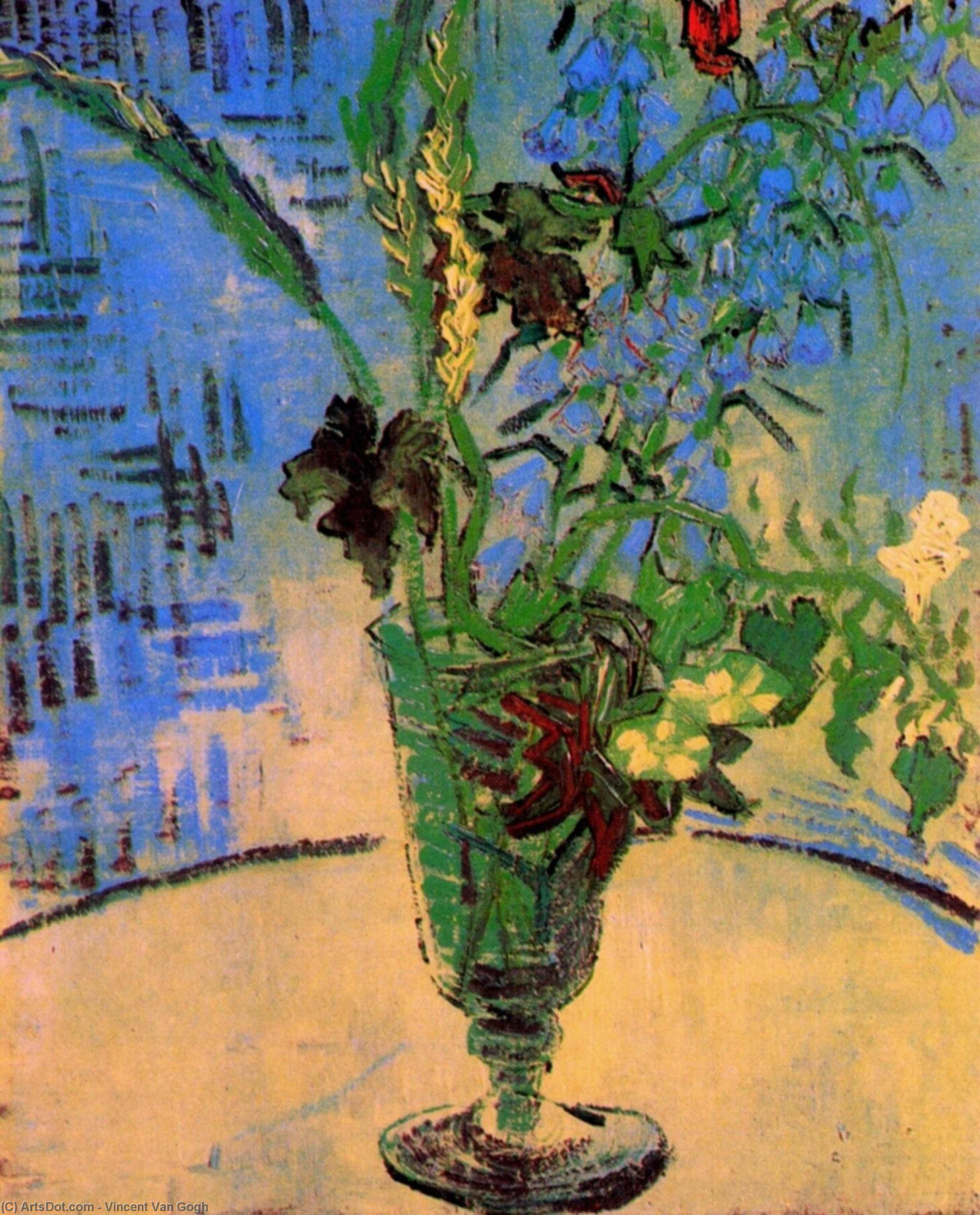
Vincent van Gogh's "Still Life Glas mit Wild Blumen" beeindruckt durch lebendige Farben und expressive Pinselstriche – ein Meisterwerk des Postimpressionismus im Musée Réattu. Entdecken Sie die Schönheit dieser Naturdarstellung!
Vincent van Gogh (1853-1890): Niederländischer Postimpressionistischer Meister, der für kräftige Farben, emotionale Landschaften und ikonische Werke wie 'Sternennacht' bekannt ist. Erkunden Sie seine Sonnenblumen, Porträts und seinen bleibenden Einfluss auf die moderne Kunst bei ArtsDot.
Still Life Glass with Wild Flowers – A Window Into Van Gogh’s Soul
Vincent van Gogh's "Still Life Glass with Wild Flowers," painted in 1890 during his stay at Saint Rémy Hospital, transcends mere representation; it embodies the artist’s profound emotional response to the natural world and serves as a poignant emblem of his inner turmoil. This deceptively simple composition—a vase brimming with vibrant wildflowers against a luminous yellow backdrop—holds layers of meaning that continue to fascinate art historians and inspire collectors alike.
The Painting's Composition and Technique
Executed in oil on canvas, the artwork showcases Van Gogh’s signature impasto technique – thick brushstrokes piled upon brushstrokes – creating a palpable sense of texture and movement. The dominant yellow hue isn’t merely decorative; it symbolizes optimism and warmth, attempting to counterbalance the pervasive melancholy that characterized his mental state at the time. Careful observation reveals meticulous detail in the depiction of each wildflower—delicate petals rendered with painstaking precision—a testament to Van Gogh's unwavering dedication to capturing the essence of his subjects. The vase itself is subtly positioned, drawing the viewer’s eye into the heart of the scene and emphasizing the fragility of beauty amidst adversity.
Post-Impressionism: Bridging Impressionism and Expressionism
“Still Life Glass with Wild Flowers” firmly establishes Van Gogh within the Post-Impressionist movement. While influenced by Impressionistic principles—particularly the use of light and color—he decisively rejected Impressionism’s fleeting depiction of reality, opting instead for a subjective expression of emotion. This stylistic choice aligns perfectly with his psychological struggles, reflecting his yearning for solace and connection to nature as he battled depression. The painting anticipates the expressive fervor of Expressionism, foreshadowing artists who would prioritize conveying inner feelings over objective observation.
Historical Context: Auvers-sur-Oise and Artistic Isolation
Painted during Van Gogh’s self-imposed exile in Auvers-sur-Oise—a rural commune north of Paris where he sought respite from his mental illness—the artwork speaks to the broader context of artistic innovation within late 19th-century Europe. Gauguin's presence in Saint Rémy created a dynamic tension between two artists grappling with similar existential questions, and Van Gogh’s relentless pursuit of artistic truth mirrored the spirit of the era. The painting captures a moment of quiet contemplation amidst the turbulent landscape of his personal life—a visual manifestation of his desire to find beauty and serenity despite overwhelming despair.
Symbolism: Wildflowers as Representations of Hope
The wildflowers themselves carry symbolic significance, representing resilience, purity, and fleeting beauty—themes that resonate deeply with Van Gogh’s emotional landscape. Their vibrant colors serve as a counterpoint to the muted tones of his inner world, suggesting an aspiration for joy and vitality. The vase acts as a container, holding these flowers captive yet simultaneously allowing them to radiate their luminescence outwards—a visual metaphor for Van Gogh's struggle to express himself authentically while confronting his demons.
A Legacy Enduring Inspiration
“Still Life Glass with Wild Flowers” remains a cornerstone of Van Gogh’s oeuvre and an enduring symbol of artistic courage and vulnerability. Its influence extends far beyond the confines of Post-Impressionism, inspiring generations of artists who strive to convey emotion through visual language. For those seeking to experience the transformative power of this masterpiece, reproductions crafted by skilled artisans at ArtsDot.com offer a remarkable opportunity to immerse oneself in Van Gogh’s visionary aesthetic.